



Un escritorio no es simplemente una superficie para colocar un ordenador portátil. Es el lugar donde comienzan las jornadas laborales, donde las ideas cobran forma y donde tienen lugar los pequeños rituales que favorecen la concentración. A la hora de elegir entre chapa de roble y roble macizo, la diferencia no es solo estética. Influye en el tacto del escritorio, en cómo envejece, en cómo resiste el uso diario y en cómo se ganará un lugar en tu hogar durante muchos años.
Ambos materiales pueden resultar muy bonitos. Ambos pueden encajar en un espacio de trabajo danés bien pensado. Pero su estructura es diferente, y esa estructura es mucho más importante de lo que puede reflejar la imagen de un producto.
Chapa de roble frente a roble macizo: la construcción
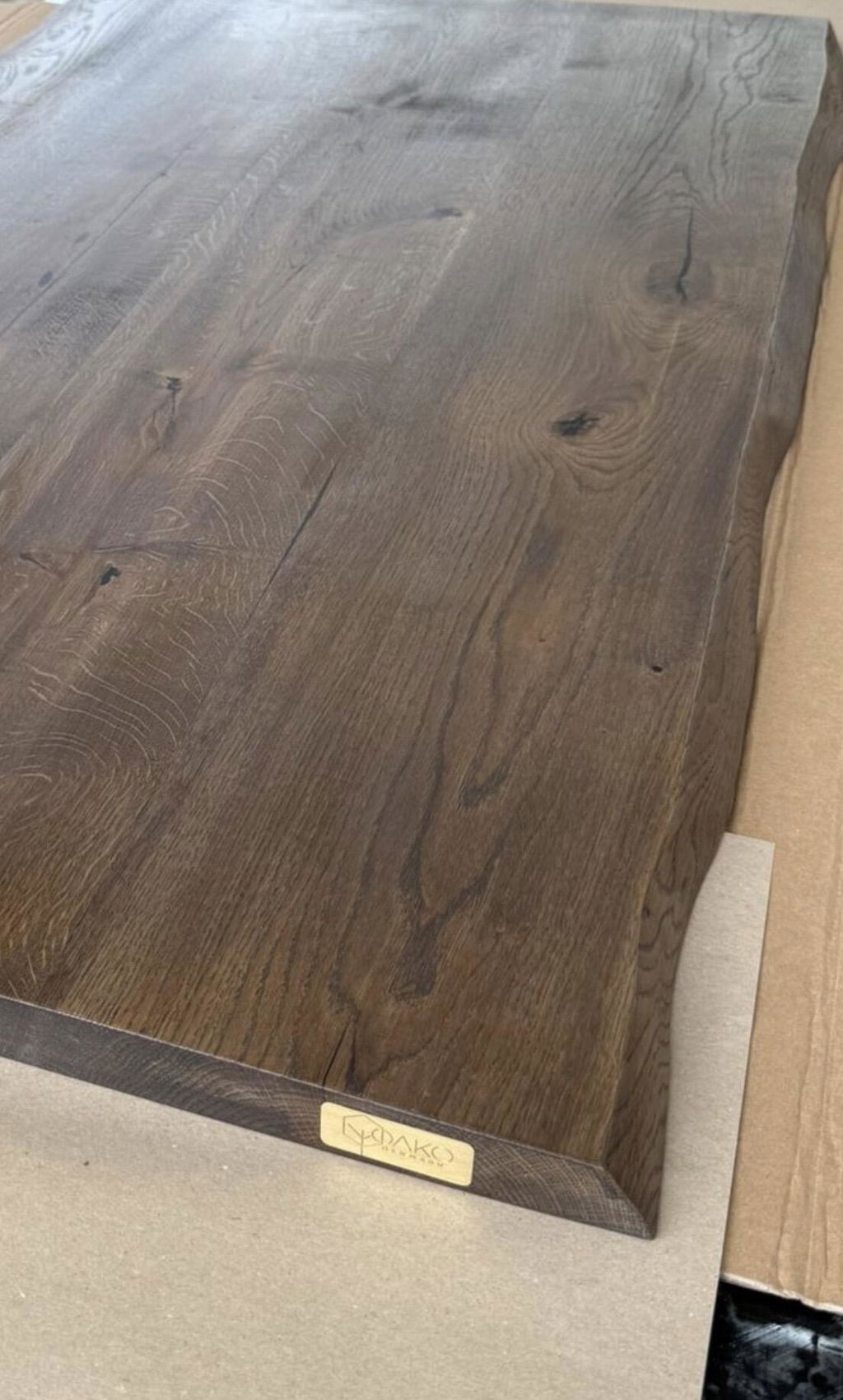
El roble macizo es exactamente lo que su nombre indica: un tablero fabricado con tablones de roble auténtico, unidos y acabados para crear una superficie sólida. La veta recorre todo el grosor del tablero. Una pequeña marca, un borde desgastado o un futuro repintado revelarán el mismo material que hay debajo.
La chapa de roble es una fina capa de roble auténtico, que suele estar adherida a un núcleo de MDF, aglomerado o contrachapado. La chapa no es lo mismo que el laminado. Un escritorio de chapa de roble bien fabricado contiene madera auténtica en su superficie visible y puede ofrecer un aspecto convincente y refinado. La calidad depende del grosor de la chapa, de la estabilidad de su núcleo, del proceso de unión y del cuidado con el que se hayan acabado sus bordes.
Vale la pena hacer esta distinción porque, a menudo, se habla de la chapa como si fuera sinónimo de mala calidad. No es así. La chapa tiene un lugar legítimo en la fabricación de muebles, sobre todo cuando se necesitan paneles grandes y estables o se busca un precio más asequible. Sin embargo, sigue siendo un tratamiento superficial sobre un núcleo de madera compuesta. El roble macizo es un material que se extiende por toda la pieza.
En el caso de un escritorio de altura regulable, esta diferencia se hace especialmente patente. Una encimera gruesa de roble macizo aporta un peso visual y una presencia natural que combina a la perfección con la precisión de la estructura de acero de un escritorio de pie. Aporta calidez a la tecnología sin que el espacio de trabajo resulte excesivamente decorativo.
Lo que ves, tocas y con lo que convives
El roble tiene carácter: vetas variables, rayos medulares, pequeños nudos, variaciones de color y alguna que otra veta mineral más oscura. En el caso del roble macizo, esos detalles no están impresos ni seleccionados a partir de una capa visual limitada. Forman parte de cada una de las tablas. Cada tablero tiene su propio ritmo.
Una superficie de chapa puede resultar más uniforme, lo que puede resultar atractivo si se busca un acabado muy homogéneo en armarios, mesas de reuniones o varios escritorios. Los fabricantes pueden hacer que las láminas de chapa coincidan a la perfección, creando una superficie ordenada con menos variaciones. El roble macizo es menos predecible en ese sentido, pero tiene más vida. Cambia sutilmente con la luz, adquiere un tono más intenso con el paso del tiempo y gana carácter gracias al trabajo que se le aplica.
El tacto es otra diferencia sutil. Un escritorio de roble macizo con un buen acabado transmite una sensación de calidez y solidez en los bordes, sobre todo cuando la superficie tiene el grosor suficiente como para apreciar su estructura. Es el tipo de material que se nota al apoyar el antebrazo junto al teclado o al ajustar el brazo del monitor al final del día.
La durabilidad tiene que ver con los años que están por venir
El argumento más sólido a favor del roble macizo no es que nunca se marque. La madera auténtica puede rayarse, abollarse y verse afectada por un derrame de café si no se trata adecuadamente. La ventaja es que la madera maciza puede recuperarse.
Un pequeño arañazo suele poder repararse con los cuidados adecuados. Una marca más profunda puede lijarse y restaurarse. Tras muchos años, una superficie de roble macizo puede restaurarse en lugar de sustituirse. Este es el significado práctico de los muebles fabricados para durar toda la vida: están diseñados para ser mantenidos, no para ser tratados como productos desechables cuando aparecen los primeros signos de desgaste.
La chapa tiene sus limitaciones. Si su superficie presenta arañazos leves, es posible que se pueda mejorar su aspecto. Sin embargo, dado que la capa de roble es fina, hay que lijar con mucha precaución. Si se lija más allá de la chapa, queda al descubierto el núcleo subyacente, lo cual es difícil de reparar de forma convincente. Los daños por impacto a lo largo de los bordes también pueden dejar al descubierto el sustrato subyacente.
Esto no significa que todos los escritorios de roble macizo vayan a durar más que todos los de chapa. La construcción, el acabado, el cuidado y el entorno son factores importantes. Una superficie de chapa fabricada de forma responsable, con un núcleo de contrachapado resistente, puede ofrecer un buen rendimiento durante muchos años. Pero cuando la facilidad de reparación y la durabilidad a largo plazo son prioritarias, el roble macizo te ofrece más margen para la vida cotidiana.
Estabilidad en una oficina en casa danesa
La madera reacciona a su entorno. Los cambios estacionales en la humedad pueden hacer que el roble macizo se expanda y se contraiga ligeramente. Esto es normal, no es un defecto. Una buena fabricación de muebles tiene en cuenta estos movimientos mediante un secado adecuado y unos métodos de ensamblaje y montaje que permiten que la madera se comporte de forma natural.
Los paneles chapados suelen ser más estables dimensionalmente, ya que sus núcleos de ingeniería resisten los movimientos. Esto puede resultar útil para superficies muy anchas, muebles empotrados o estancias con condiciones variables. Si un escritorio va a colocarse justo al lado de un radiador, en una casa de verano mal ventilada o pegado a una pared exterior húmeda, cualquier mueble de madera merece una atención especial.
Para la mayoría de los hogares daneses con calefacción y los espacios de trabajo profesionales, un escritorio de roble macizo bien elaborado resulta totalmente adecuado. La clave está en una ubicación adecuada y un acabado de calidad. Evita el agua estancada durante mucho tiempo, el calor directo intenso y los cambios bruscos de humedad. A cambio, el roble aporta una calidad natural que los paneles sintéticos no pueden reproducir por completo.
La cuestión del valor va más allá del precio de venta
La chapa suele ser más económica porque se utiliza menos madera maciza y la producción de paneles es eficiente a gran escala. Para una instalación temporal, una estancia secundaria o un proyecto en el que la uniformidad visual sea más importante que una futura restauración, puede ser una decisión acertada.
La madera maciza de roble requiere más material, más tiempo de secado, más trabajo artesanal y más atención durante la fabricación. Suele tener un coste inicial más elevado. Sin embargo, hay que valorarla a lo largo de toda su vida útil, no solo en el momento de la compra. Un escritorio que se mantenga en buen estado estructural, que se pueda restaurar y que siga teniendo un aspecto actual tras una mudanza, un nuevo puesto de trabajo o una reforma de la oficina en casa puede ofrecer un tipo de valor muy diferente.
También está la cuestión de la durabilidad emocional. Es más fácil cuidar un espacio de trabajo cuando uno siente que merece la pena cuidar el mobiliario. El roble natural suele crear esa conexión. No requiere una atención especial, pero hace que la estancia resulte más tranquila, más sólida y más intencionada.
¿Es el roble macizo siempre la mejor opción?
No. La elección adecuada depende de cómo pienses utilizar el escritorio, qué esperas de él y cuánto tiempo quieras conservarlo.
Elige una encimera con chapa de roble de calidad cuando necesites una solución más económica, prefieras un aspecto muy uniforme o necesites un panel grande y especialmente estable. Fíjate bien en las especificaciones. Una chapa de madera auténtica más gruesa, un núcleo de contrachapado y unos bordes cuidadosamente acabados son indicios de un producto mejor elaborado que una chapa fina sobre aglomerado.
Elige el roble macizo cuando el escritorio vaya a formar parte de tu hogar o negocio a largo plazo, cuando valores un material natural con un tacto agradable y cuando la facilidad de reparación sea importante. Es especialmente adecuado para un puesto de trabajo principal: el lugar que se utiliza a diario para trabajar con concentración, realizar videollamadas, escribir, diseñar, planificar y todo lo demás. Combinado con un bastidor fiable de doble motor, el roble macizo da lugar a un escritorio regulable en altura que favorece tanto el movimiento ergonómico como un aspecto estético duradero.
En OAKO Dinamarca, se elige el roble europeo macizo precisamente por este motivo. No se trata de una imitación de la experiencia que ofrece el material. Es la propia experiencia del material, plasmada en un espacio de trabajo concebido para el uso diario.
Un cuidado que mantiene el roble con su aspecto natural
La madera maciza de roble no requiere un mantenimiento complicado, pero agradece un poco de cuidado. Limpia inmediatamente cualquier derrame con un paño suave y ligeramente humedecido y, a continuación, seca la superficie. Utiliza posavasos debajo de las bebidas calientes y evita los productos de limpieza agresivos, los sprays de silicona o los estropajos abrasivos, que pueden opacar el acabado.
Una alfombrilla de escritorio puede proteger la zona situada debajo del teclado, mientras que las almohadillas de fieltro colocadas debajo de los accesorios ayudan a evitar pequeñas marcas de presión. Si la superficie está aceitada, puede ser conveniente volver a aceitarla periódicamente, dependiendo del uso y del acabado especificado por el fabricante. El objetivo no es conservar una superficie impecable, como la de una sala de exposición, sino permitir que la madera envejezca bien y permanezca protegida.
El mejor material para un escritorio es aquel que se adapta al estilo de vida que quieres construir a su alrededor. Si buscas una superficie que pueda acumular las huellas auténticas del trabajo, que se pueda cuidar y que, además, adquiera un aspecto más atractivo con el paso del tiempo, el roble macizo es difícil de superar. Colócalo en un lugar bien iluminado, dale buen uso y deja que se convierta en parte del ritmo de tu trabajo.



Dejar un comentario
Este sitio está protegido por hCaptcha y se aplican la Política de privacidad de hCaptcha y los Términos del servicio.