

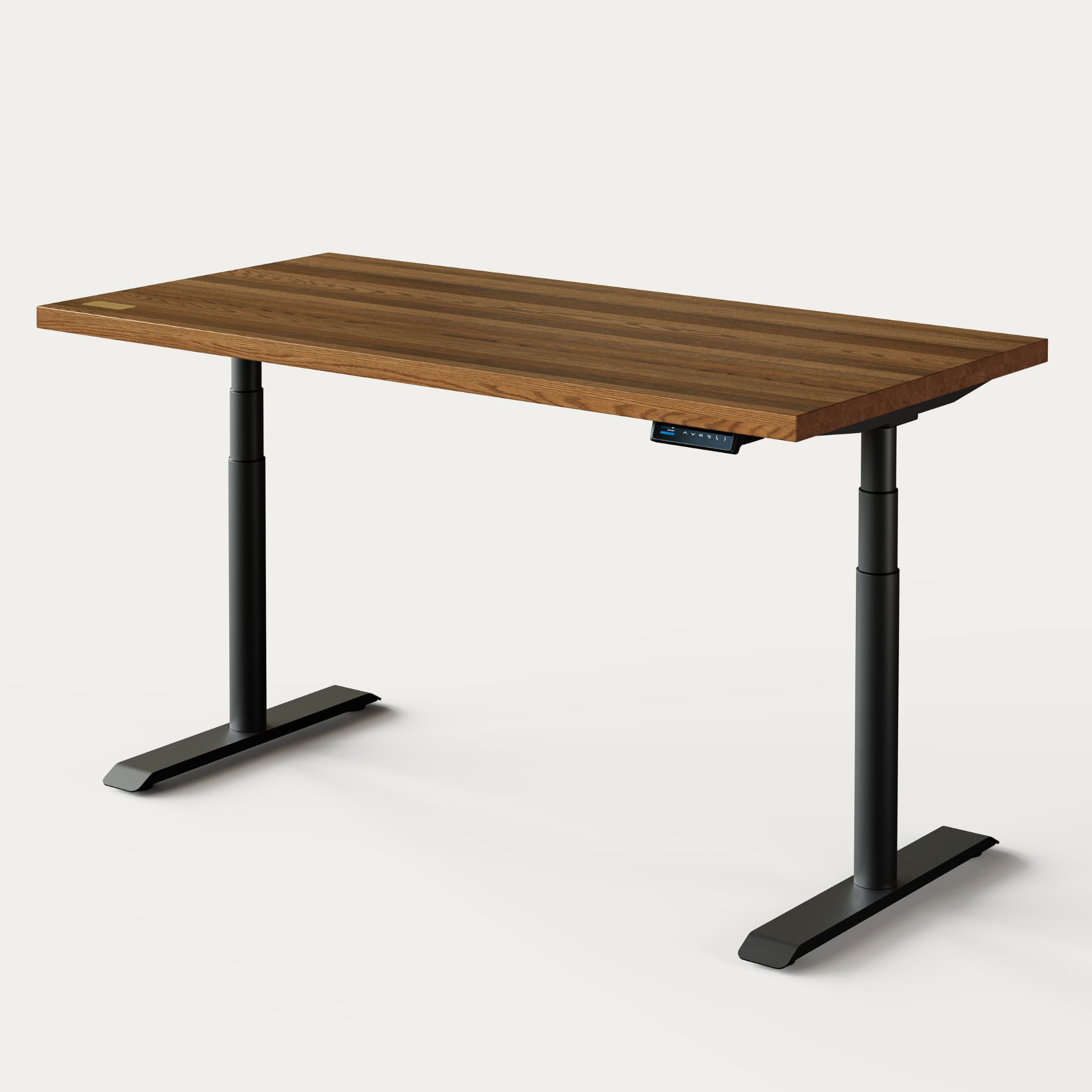
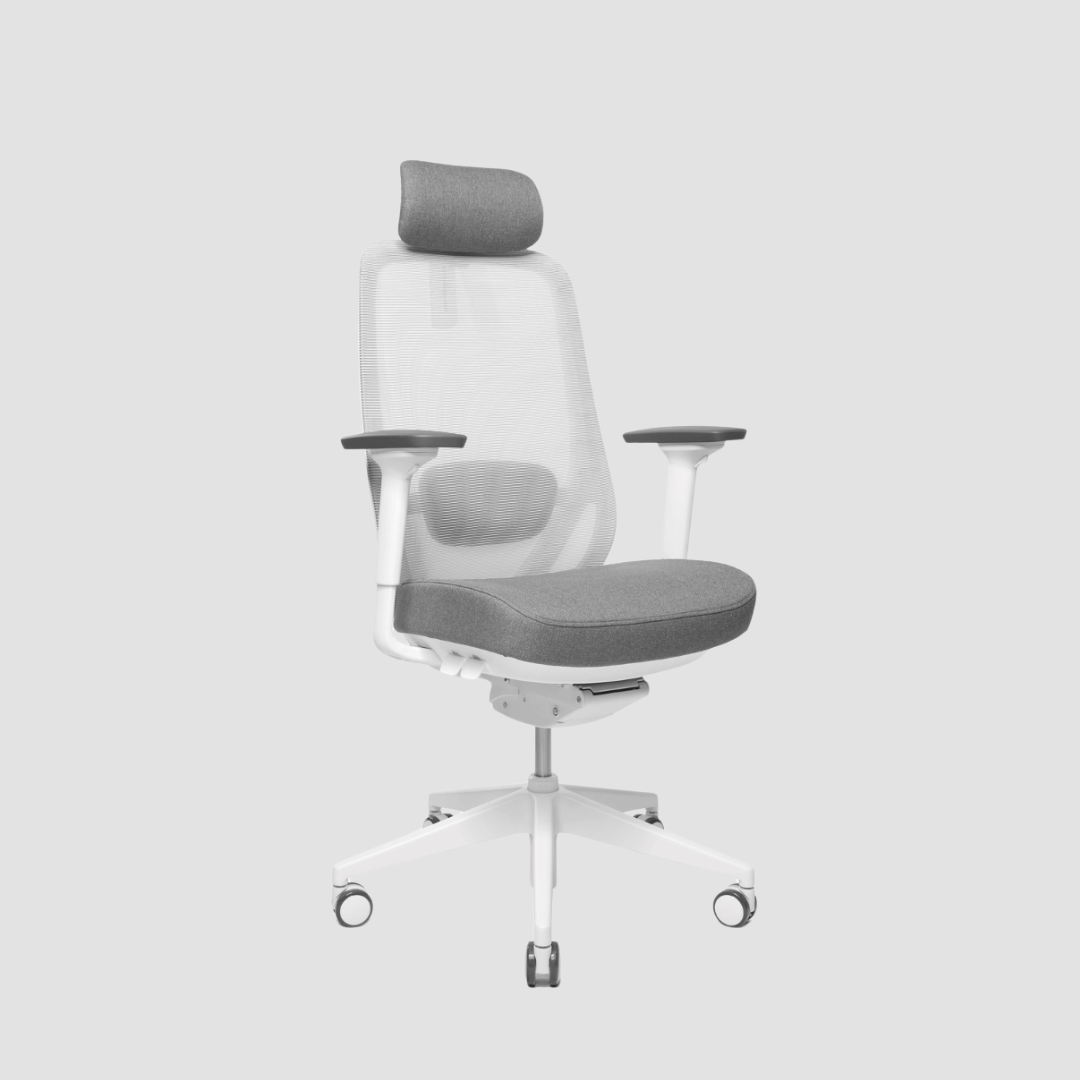
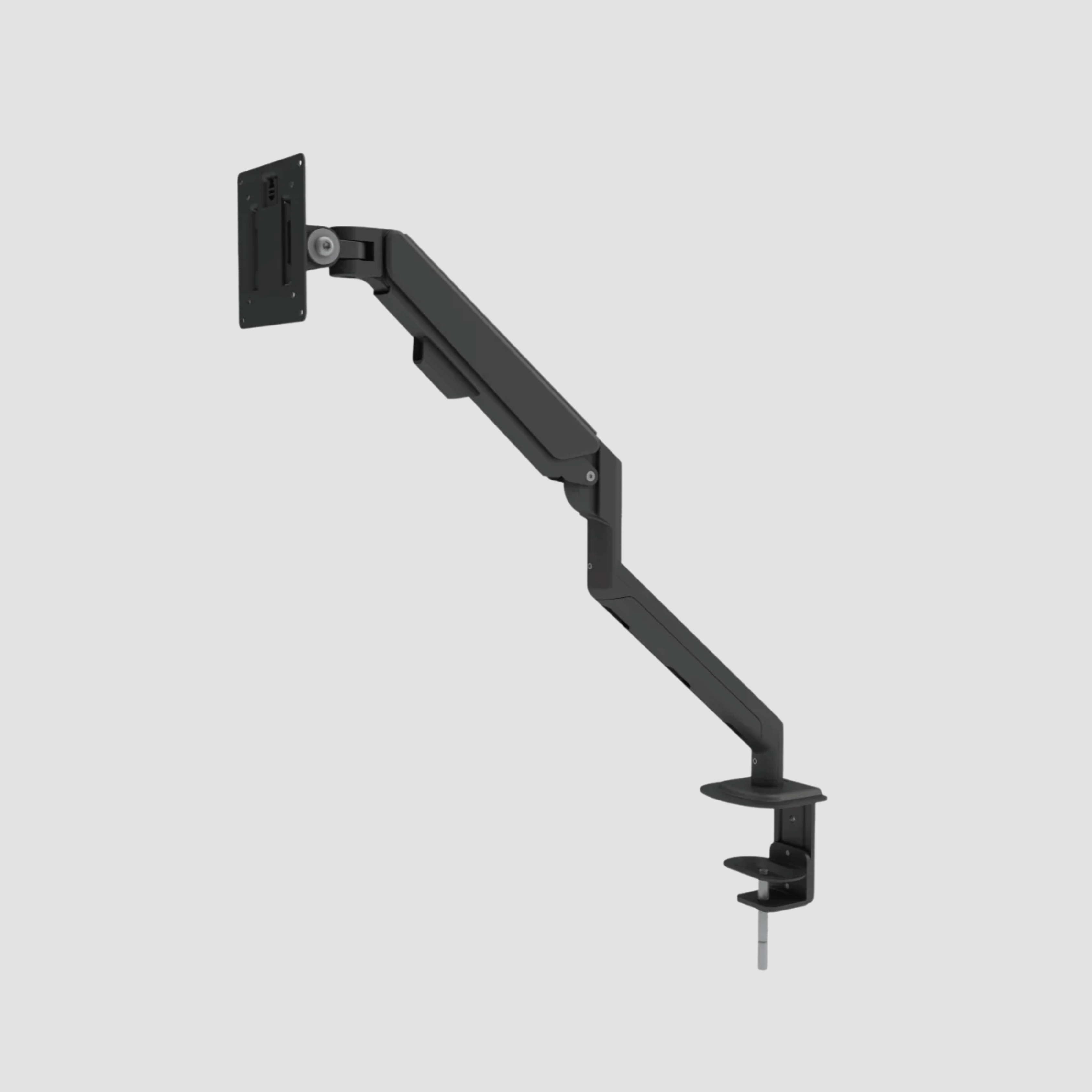

A premium standing desk usually reveals itself in the first few seconds. You raise it, lean into it, rest your wrists on the front edge, and notice whether the surface feels hollow or grounded. That is why the search for the bedste premium hæve sænkeborde is rarely about specs alone. It is about how a desk lives with you - through long workdays, video calls, focused creative sessions, and years of daily use.
Cheap desks tend to win on paper. They often offer a wide height range, a memory handset, and a large top for a lower price. But once you use them every day, the trade-offs appear quickly: visible wobble at standing height, thin tops that sound and feel synthetic, motors that strain under load, and finishes that age badly. A premium desk should do the opposite. It should disappear into your workflow while quietly improving it.
What defines the bedste premium hæve sænkeborde
The best premium standing desks are not simply electric desks with nicer marketing. They combine material honesty, mechanical reliability, and visual restraint. If one of those elements is missing, the product may still be expensive, but it is not truly premium.
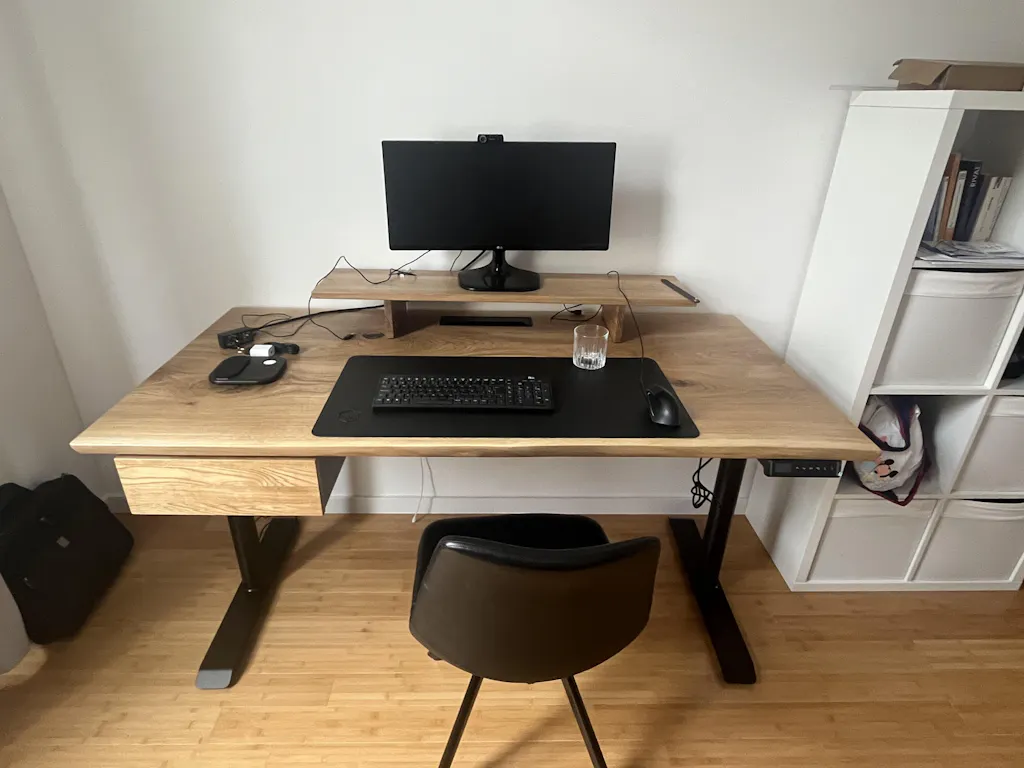
Material quality is the first dividing line. A real wood top, especially solid oak, brings weight, warmth, and texture that laminate cannot imitate for long. It changes how the desk feels under your hands and how the room feels around it. Grain variation, edge detailing, and thickness all matter here. A substantial desktop does more than look better - it resists the temporary, disposable feel that defines much of the category.
Then there is the frame. A premium frame should move smoothly, stop accurately, and remain composed at standing height. Dual motors are often the minimum expectation in this tier, but motor count alone is not enough. The quality of the steel, the design of the lifting columns, and the tuning of the control system all affect whether the desk feels refined or merely functional.
Finally, premium design is about proportion. A beautiful wood top paired with an awkward base still feels unresolved. The best desks balance visual lightness with structural confidence. They belong in a home office, a studio, or a client-facing workspace without looking like imported office equipment.
Why materials matter more than most buyers expect
When people compare desks online, they often focus on frame specs because they are easy to measure. Height range, lifting speed, and load capacity all have their place. But the desktop is the part you actually live with.
A solid oak top offers a very different experience from particleboard or MDF with a veneer wrap. It has depth, natural variation, and a tactile quality that improves with age instead of declining. Minor marks can become part of its character rather than a sign that the desk is wearing out. That alone changes the ownership experience.
Thickness also matters. A thicker top looks more architectural, but it also tends to feel more stable and substantial. In premium setups, that sense of permanence is part of the appeal. People who invest in a better workspace are often trying to get away from furniture that feels temporary. They want a desk that anchors the room.
There is a trade-off, of course. Solid wood is heavier, more expensive, and requires a little more care than synthetic surfaces. If someone wants the cheapest path to an adjustable desk, this category is not for them. But if the goal is long-term satisfaction, material quality is where much of the value lives.
Stability is the real daily luxury
A desk can have elegant finishes and still disappoint if it shakes every time you type. This is one of the clearest differences between entry-level and premium models.
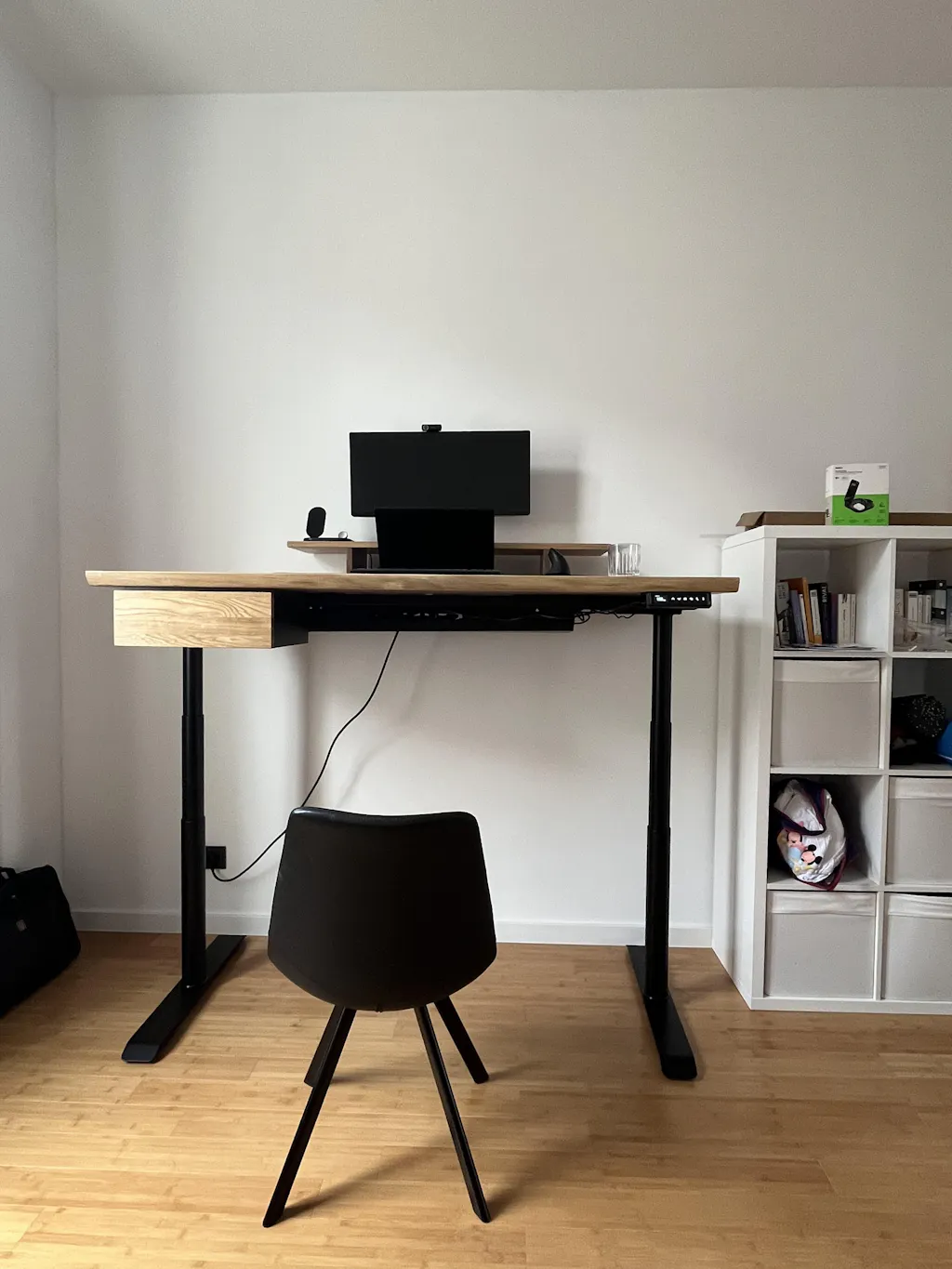
At seated height, many desks feel acceptable. At standing height, weaknesses show up quickly. A monitor arm adds leverage, a larger screen increases perceived movement, and even normal keyboard use can expose flex in the frame. The best premium standing desks feel composed under real conditions, not only in a showroom or spec sheet.
That is why frame geometry deserves attention. Wider feet, well-engineered columns, and a properly matched top can all reduce movement. Weight distribution matters too. A large solid wood top needs a frame that was built to support it, not just technically lift it. Premium desks are often more convincing because the whole system feels considered from the start.
For people who spend six to ten hours at a desk, this is not a minor detail. Less wobble means less distraction. It also makes the shift from sitting to standing feel natural rather than performative.
Motors, controls, and the feel of movement
The lifting mechanism is easy to overlook until it becomes annoying. Cheap motors can be loud, inconsistent, or slightly jerky. You may still get from sitting to standing, but the experience never feels polished.
In the premium category, movement should feel controlled and confident. Dual motors generally offer better balance and smoother adjustment, especially on larger tops. Memory presets are useful, but only if the desk reaches them reliably and without hesitation. Noise level matters more in shared homes and open workspaces, where the desk may move multiple times a day.
There is also a psychological side to this. A desk that adjusts smoothly invites use. One that feels strained or noisy often gets left in one position. Premium furniture should make good habits easier, not more cumbersome.
Design matters because your desk is part of the room
A standing desk is no longer just a task tool. For many professionals, it is visible in every call, integrated into a living space, or placed in a studio where aesthetics influence concentration. That changes what people expect from the bedste premium hæve sænkeborde.
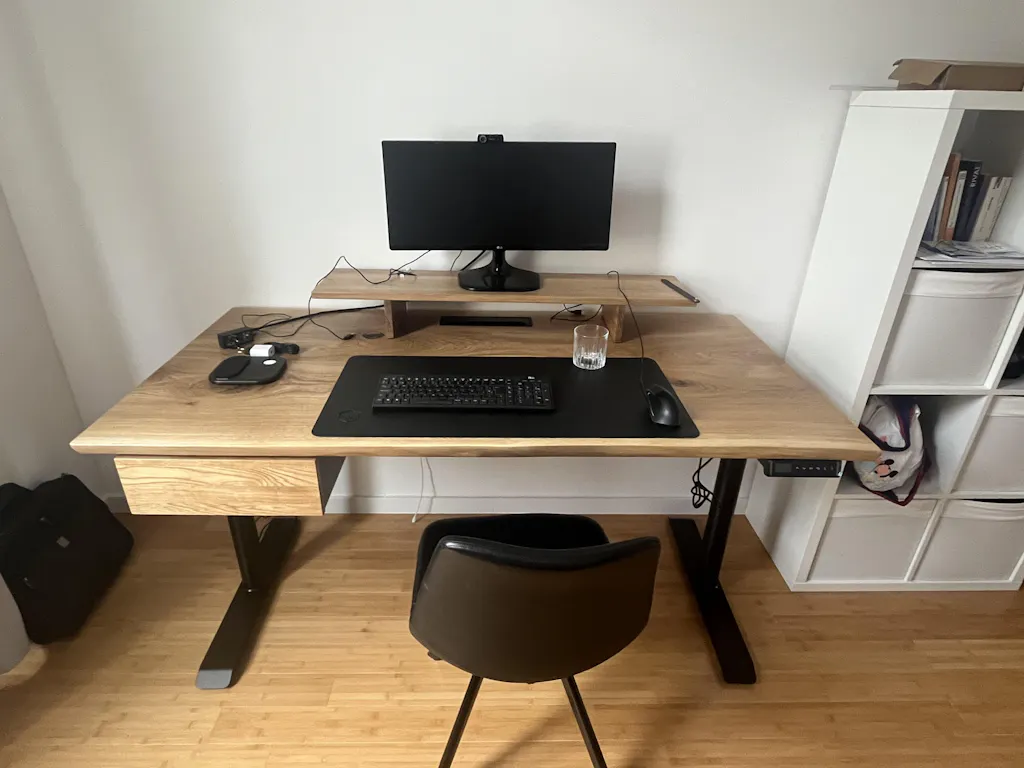
Good design in this category is rarely flashy. It is quiet, balanced, and confident. Natural wood tones pair well with muted frame finishes because they let the material lead. Clean lines matter, but so do the details you notice after a month rather than on day one - edge profiles, cable management options, handset placement, and how easily the desk works with storage or monitor arms.
This is where premium brands tend to separate themselves from generic desk sellers. They think beyond the desk as a single object and consider the full workspace. That makes a difference if you want a setup that feels intentional rather than assembled from unrelated parts.
When a higher price is justified
Not every expensive desk is worth the money. Some brands charge a premium for styling while cutting corners on construction. Others offer strong mechanics but pair them with tops that feel generic. The price only makes sense when quality is visible in both what you see and what you feel.
A higher price is easier to justify when the desk is made from authentic materials, produced with real manufacturing control, and supported by a warranty that reflects confidence rather than risk management. Handcrafted European production, durable finishes, and a meaningful warranty all suggest the product was built for long-term ownership.
This matters more than many buyers initially think. A desk is one of the most heavily used pieces of furniture in modern life. If you work from home or run a business, it is not occasional furniture. It is infrastructure.
That is also why a premium desk can be the less expensive choice over time. Replacing a lower-tier desk every few years, dealing with cosmetic wear, or tolerating daily frustration has a cost of its own. The better investment is often the one you stop thinking about because it simply continues to perform.
Who should actually buy a premium standing desk
A premium desk is not automatically the right answer for everyone. If your setup is temporary, your budget is tight, or your desk is used only occasionally, there are more practical options. The premium tier becomes compelling when the workspace is central to your life.
If you are a founder, designer, architect, remote professional, or anyone building a home office that needs to support both focus and visual quality, the case becomes stronger. The same is true if you have grown tired of laminate furniture that looks worn too quickly or never quite feels settled in the room.
For buyers in that position, the decision often comes down to one question: do you want a desk that solves the problem for now, or one that becomes part of the space for years? Brands like OAKO Denmark appeal to the second group because they treat the desk as a lasting piece of furniture, not a short-cycle office product.
How to choose well without getting distracted
The smartest way to compare premium standing desks is to look at the full experience. Start with the top. Ask what it is actually made from, how thick it is, where it is produced, and whether the finish will age well. Then evaluate the frame with real-world use in mind, especially stability at standing height.
After that, look at the details that shape daily life: warranty length, cable management, compatibility with accessories, and whether the desk fits the room as naturally as it fits your workflow. If a desk looks good in a product photo but feels generic in every practical detail, it is probably not in the top tier.
The best workspace purchases tend to feel obvious after the fact. They reduce friction, elevate the room, and make daily work more comfortable without asking for attention. If you are choosing among the bedste premium hæve sænkeborde, that is the standard worth using - not just whether the desk goes up and down, but whether it feels built to stay.


Leave a comment
This site is protected by hCaptcha and the hCaptcha Privacy Policy and Terms of Service apply.