




A desk is rarely just a work surface. It sits in your field of view for hours each day, carries the tools of your work, and sets the material tone of the room. When comparing a solid oak desk vs walnut, the question is not simply which timber looks better. It is whether you want a workspace that feels light and architectural, or one that feels deep, tailored and quietly dramatic.
Both are genuine hardwoods with the substance to outlast flat-pack alternatives. Both can become more beautiful with age. Yet their colour, grain, hardness and relationship with the rest of your interior create two distinctly different desk experiences.
Solid oak desk vs walnut: the visual difference
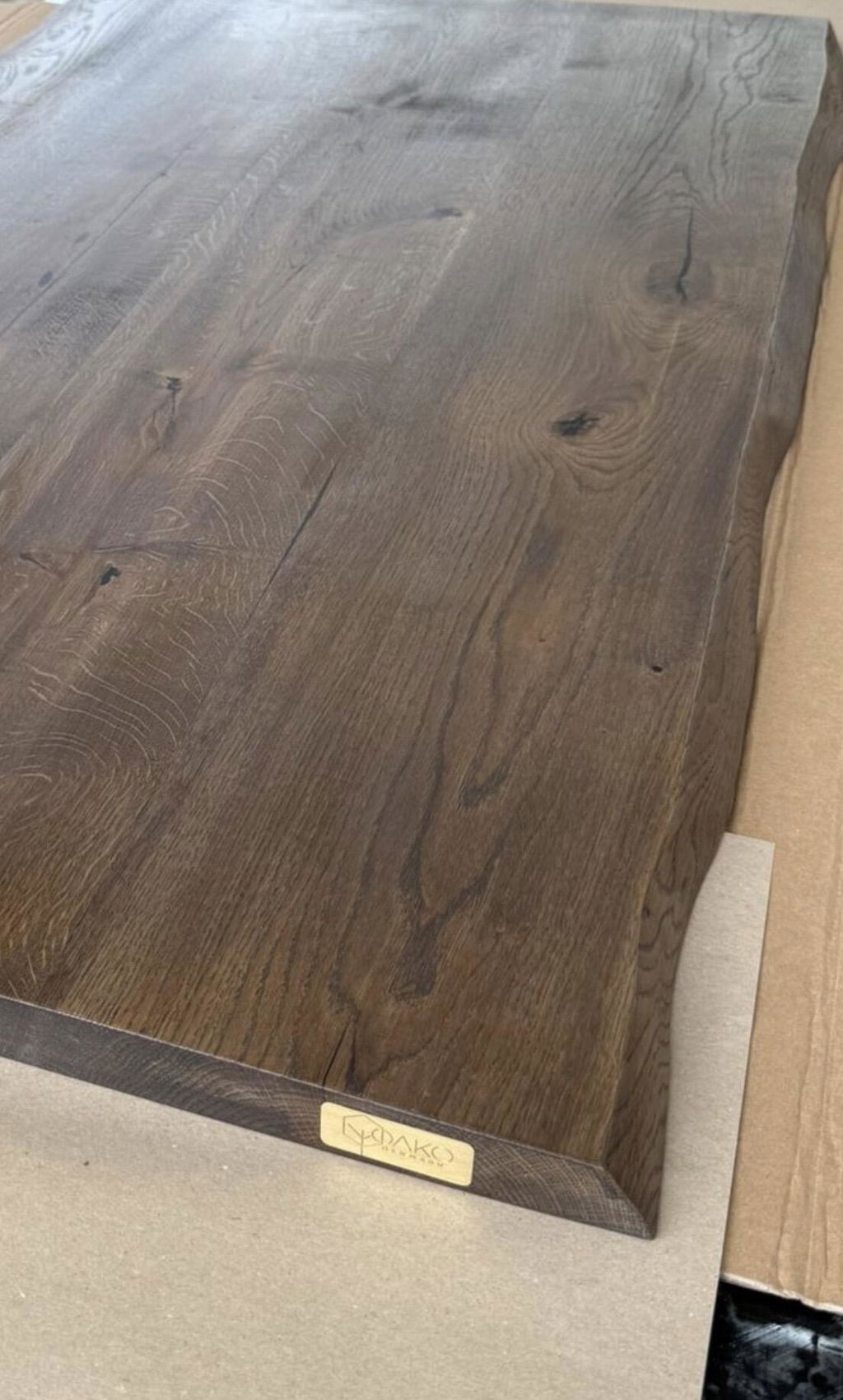
Oak has an immediately recognisable presence. European oak tends to range from pale honey to warm, natural brown, often with visible grain lines, medullary rays and small knots that make each tabletop individual. It brings light into a home office and works naturally with Scandinavian interiors, soft textiles, neutral walls, black steel and the restrained palette common in Danish homes.
Walnut is darker from the start. Its colour can move from chocolate brown to purple-brown, with flowing grain that often feels smoother and more formal than oak. A walnut desk has a certain depth that suits considered, moody interiors: dark joinery, leather, brass details or rich, saturated tones.
Neither is objectively more premium. The difference is in the atmosphere you want to create. Oak feels open, grounded and tactile. Walnut feels refined, intimate and more visually concentrated. In a compact room with limited daylight, oak will usually make the workspace feel less heavy. In a larger room where the desk is intended as a statement piece, walnut can provide striking contrast.
Grain is more than decoration
Solid wood is not printed with a repeating pattern. Every board carries the history of its growth, which is why no two desks should look identical. Oak's grain is generally more pronounced and structured. It suits people who want to see and feel the material clearly rather than hide it beneath a uniform finish.
Walnut grain can be straight, gently wavy or dramatically figured, depending on the cut. This variation can be beautiful, but it also means a walnut tabletop may have stronger natural colour shifts than expected from a small sample image. If consistent tone matters greatly, discuss the character of the timber before ordering.
Durability in a working desk
A beautiful desktop still has to deal with laptop stands, coffee cups, charging cables, notebooks and the occasional hurried meeting. Oak is typically the tougher choice for everyday impact resistance. It is a dense hardwood that handles the normal knocks and pressure of a working life particularly well, making it a natural fit for a desk used by several people or a busy professional setup.
Walnut is also durable furniture timber, but it is generally softer than oak. That does not make it fragile. It simply means it may show small dents or marks sooner if treated roughly. Some owners consider this part of the patina of real wood; others prefer oak's more forgiving character.
The practical distinction is often overstated. A solid walnut desk, properly made and finished, is built for decades rather than a few seasons. Construction, wood drying, tabletop thickness and finish quality matter at least as much as species. A thin veneered top with a dark walnut appearance is not comparable to a properly crafted solid walnut board, just as a solid oak desktop is fundamentally different from oak-effect laminate.
Movement is natural, not a fault
All solid timber responds to humidity and temperature. Wood expands and contracts across the grain through the year, particularly in homes with dry winter heating or fluctuating ventilation. This is normal material behaviour, not a defect.
A well-made desk accommodates that movement through careful construction. Keep either timber away from persistent radiator heat, direct sources of moisture and prolonged standing water. A desk pad under heavy equipment and coasters for drinks are simple habits that protect the surface without turning the desk into something precious and untouchable.
Colour over time: what to expect
Oak generally deepens and warms with exposure to daylight. Its pale, freshly finished appearance becomes richer over the years, often taking on a more golden character. This gradual change is one reason oak develops such an honest, lived-in quality.
Walnut usually changes more visibly in the opposite direction. Fresh walnut can be very dark, but daylight tends to soften and lighten its deepest tones over time. A desk placed near a bright window may develop a gentler, warmer brown appearance than it had on delivery.
For both woods, move desk accessories occasionally during the first months. A monitor riser, desk mat or stationery tray left in exactly one place can create uneven exposure while the surface is settling into its colour. Natural light is part of the material's story, so it is worth allowing the whole surface to age gracefully.
Which wood works best with a standing desk?
For a height-adjustable desk, the tabletop should feel substantial without compromising the performance of the frame. The timber species is only one part of that equation. A reliable dual-motor frame, balanced weight distribution and a correctly sized top have a direct effect on stability at sitting and standing height.
Oak is especially compelling here because its visual solidity matches the engineering beneath it. A thick oak top paired with a clean steel frame creates a workspace that feels anchored even when it moves. The contrast between warm timber and precise technology is practical, but it is also the point: ergonomics should not force you into a workspace that looks temporary.
Walnut creates a more formal version of the same idea. It can be an excellent choice for an executive home office, a creative studio or a client-facing workspace where darker furniture already defines the room. However, if you plan to add matching monitor shelves, drawers and cable-management details over time, oak is often easier to coordinate across a broader range of finishes and accessories.
At OAKO, the focus is solid European oak because it combines enduring strength with a warm, versatile character that belongs naturally in a workspace built for daily use.
Maintenance: simple care, consistently applied
Neither oak nor walnut needs complicated maintenance. The right routine is modest: wipe dust with a soft, dry or lightly damp cloth, clean spills promptly and avoid harsh household chemicals. A finish designed for furniture will provide a practical layer of protection, but no finish makes wood entirely immune to standing water, heat or abrasion.
Oil-finished surfaces can often be refreshed locally or over the full tabletop when they begin to look dry. This repairability is one of solid wood's strongest advantages. Rather than replacing a damaged surface, you can care for it, restore it and continue using it.
Lacquered or hardwax-oiled finishes each have different feel and maintenance requirements. A lacquer may offer a more sealed surface, while oil and hardwax oil preserve a closer connection to the grain. The best choice depends on how you work. Someone sketching, building prototypes or eating lunch at the desk may prioritise protection; someone drawn to a more tactile, natural finish may accept a little more care.
Long-term value is about use, not fashion
Walnut is often more expensive because of its availability, darker colour and position in furniture design. Oak can offer excellent long-term value because it is abundant in European furniture-making traditions, highly durable and visually adaptable. But price alone should not decide the comparison.
Ask what will still suit your home when the room changes. Oak is remarkably adaptable. It can sit beside light ash flooring today, black details next year and softer, more traditional pieces later on. Walnut has stronger visual direction, which is precisely why people love it, but it asks for a little more intention from the surrounding room.
A solid desk earns its value over years of use. It can be refinished, moved to a new home, paired with new equipment and still retain its material integrity. That is a very different proposition from a desktop designed to be replaced when its surface begins to wear.
Choose the timber that supports the room you want to work in
Choose oak if you want a brighter workspace, pronounced grain, high everyday resilience and a material that works easily with modern Nordic interiors. It is the confident, versatile choice for a desk that will see real daily use.
Choose walnut if you are drawn to darker tones, elegant contrast and a more tailored atmosphere. It rewards a carefully composed room and can make a work area feel less like an office and more like considered furniture.
The best desk is the one you will be glad to sit at on an ordinary Tuesday morning. Choose the timber whose colour calms your eye, whose character suits the room, and whose construction gives your work the support it deserves for many years.



Leave a comment
This site is protected by hCaptcha and the hCaptcha Privacy Policy and Terms of Service apply.