


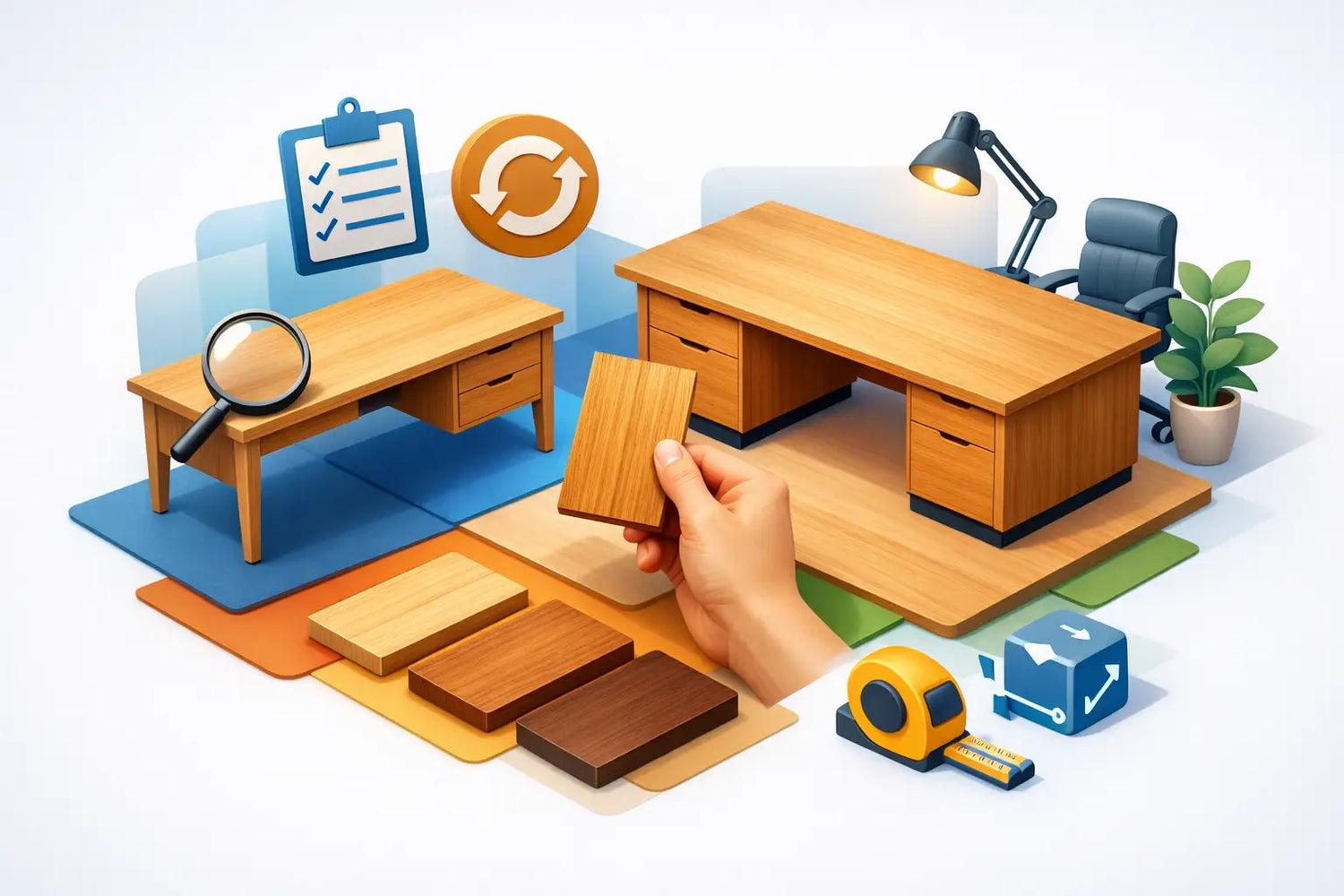
Et skrivebord kan se godt ud på et billede og alligevel føles forkert i hverdagen. Er det for lavt, kommer skærmen for tæt på. Er det for tyndt, mangler bordpladen tyngde. Er det for kunstigt, mister hele rummet sin varme. Hvis du er på udkig efter et skrivebord i massivt egetræ til et hjemmekontor eller et professionelt arbejdsrum, handler det ikke kun om, hvad der ser godt ud – det handler om, hvad der stadig vil føles rigtigt efter mange års brug.
Massivt egetræ har en sjælden fordel i arbejdsmiljøet. Det tilfører rummet, der ofte er fyldt med plastik, kabler og fladskærme, en visuel ro, taktil dybde og en ægte tyngde. Men ikke alle skriveborde i egetræ er fremstillet efter samme standard, og ikke alle smukke skriveborde er det rigtige valg til netop din måde at arbejde på. Det bedste valg ligger i krydsfeltet mellem materialets ægthed, ergonomisk funktion og proportioner, der passer til dit rum.
Sådan vælger du et skrivebord i massivt egetræ til daglig brug
Start med dine arbejdsvaner, ikke med det færdige resultat. Et skrivebord er først og fremmest et redskab, derefter et designobjekt. Hvis du tilbringer hele dagen ved din arbejdsplads, tager telefonopkald, bruger flere skærme eller skifter mellem koncentreret arbejde og kreative opgaver, skal dit skrivebord give plads til bevægelse og udstyr uden at virke overfyldt.
For nogle købere betyder det et fast skrivebord med ren, arkitektonisk enkelhed. For mange andre, især i et hjemmekontor, giver en højdejusterbar løsning mere mening. Muligheden for at stå ændrer skrivebordets funktion over tid. Det kan mindske den statiske belastning, der opbygges gennem lange timer i siddende stilling, og det giver arbejdsområdet et mere dynamisk rytme. Ulempen er, at rammen får langt større betydning. En svag ramme under en smuk bordplade af egetræ er stadig et svagt skrivebord.
Derfor er det en god idé at betragte skrivebordet som et samlet system. Bordspladen i egetræ, konstruktionen nedenunder, kabelhåndteringen og tilbehøret omkring det – alt dette har indflydelse på det endelige resultat.
Massivt egetræ er mere end blot et egetræslook
En af de største forskelle på markedet er kløften mellem ægte massivt træ og overflader, der blot efterligner det. Finér, laminat og spånplader kan ved første øjekast ligne eg, især på nettet. I daglig brug bliver forskellen tydelig.
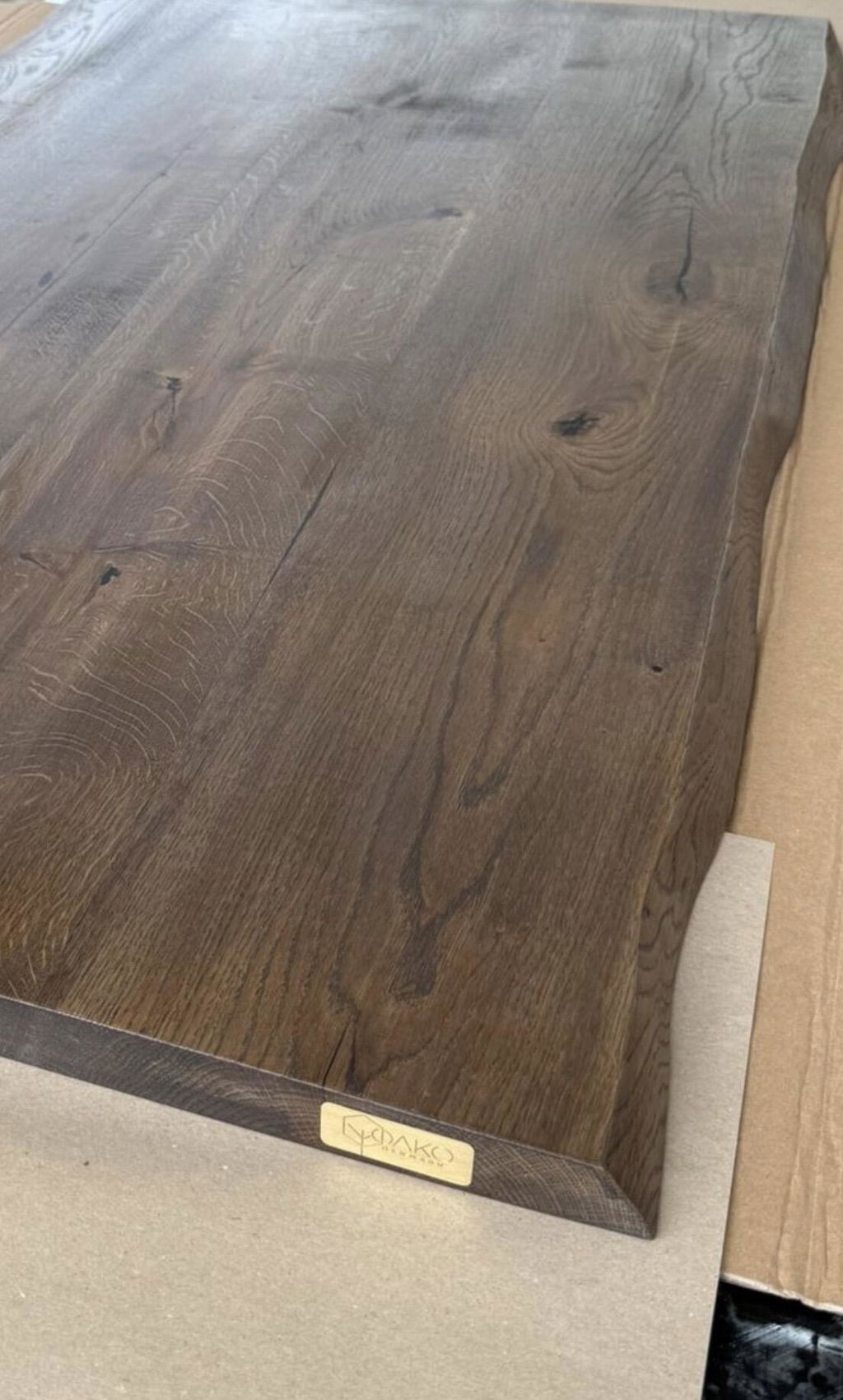
Massivt egetræ har dybde i årerne, naturlige farvevariationer og en fysisk konsistens, som ikke kan efterlignes af trykte overflader. Det ældes med karakter i stedet for blot at blive slidt ned. Små mærker kan blive en del af dets historie, og i mange tilfælde kan overfladen vedligeholdes eller efterbehandles i stedet for at blive udskiftet.
Når det er sagt, handler massivt egetræ ikke om perfektion i den forstand, man kender fra massemarkedet. Man skal forvente variationer i åretegningen, farveforskelle og et mere organisk udtryk. Hvis man ønsker en helt ensartet bordplade uden nogen form for bevægelse i træet, kan massivt egetræ faktisk virke for »levende«. For de fleste designbevidste købere er netop denne »livskraft« pointen.
Når du sammenligner skriveborde, skal du også lægge mærke til bordpladens tykkelse. En tykkere bordplade af massivt egetræ giver som regel en mere solid og eksklusiv fornemmelse. Den ændrer rummets visuelle balance og giver skrivebordet en stabilitet, som lettere konstruktioner ofte mangler.
Vær opmærksom på selve egetræet
Ikke alle egesorter er ens. Europæisk eg er især værdsat for sin tæthed, holdbarhed og raffinerede årestruktur. Den har en rolig, arkitektonisk udstråling, der passer godt til skandinavisk-inspirerede interiører uden at virke kold. Den fungerer lige så godt i minimalistiske hjem, kreative atelierer og mere formelle kontormiljøer.
Også udskæringen og finishen spiller en rolle. En glat, omhyggeligt bearbejdet bordplade kan fremstå elegant og moderne, mens en mere udtryksfuld udskæring – herunder varianter med naturlige kanter – fremhæver materialet på en mere markant måde. Ingen af delene er bedre i alle tilfælde. Rette kanter passer som regel bedst til rene interiører og stramme indretninger. Bordplader med naturlige kanter tilfører mere personlighed, men kræver lidt mere visuelt rum omkring sig.
Det er størrelsen, der ofte er årsagen til, at mange købsbeslutninger går galt
Et skrivebord i massivt egetræ bør passe både til dit rum og til dit arbejde. Det er ikke altid det samme. Mange køber ofte et for lille skrivebord, fordi de er bange for, at det vil fylde for meget i rummet, eller et for stort, fordi de kun tænker på det visuelle indtryk.
Hvis du hovedsageligt arbejder på en bærbar computer, skriver i hånden og foretrækker et overskueligt arbejdsområde, kan en mere kompakt bredde være tilstrækkelig. Hvis du bruger en eller to skærme, højttalere, tilbehør eller teknisk udstyr, har du brug for mere bordplads, end du måske tror. Dybden er lige så vigtig som bredden. Et skrivebord, der er for lavt, kan medføre en uhensigtsmæssig afstand til skærmen og en krampagtig kropsholdning.
I et hjemmekontor bør skrivebordet også give plads til, at resten af omgivelserne kan ånde. Eg har en vis visuel tyngde. Det er en del af dets charme. Men en stor bordplade i massivt træ i et lille rum kan virke dominerende, hvis proportionerne ikke er i orden.
En god regel er at planlægge ud fra din nuværende indretning og lægge lidt plads til fremtidig vækst. Det rigtige skrivebord skal give en følelse af ro og orden, ikke bare lige akkurat være stort nok.
Sådan vælger du et skrivebord i massivt egetræ med den rigtige ramme
Når du vælger et ståbord, fortjener rammen lige så stor opmærksomhed som træet. Det er her, æstetik og teknik mødes. En veludført bordplade i massivt egetræ kombineret med en stabil stålramme med to motorer skaber den balance, som mange moderne erhvervsfolk søger – naturlige materialer ovenpå og pålidelig bevægelse nedenunder.
Stabilitet er afgørende. Et skrivebord skal føles stabilt både i siddende og stående højde, især hvis du skriver meget, bruger skærmarme eller arbejder med større skærme. Motorens kvalitet er også vigtig. Jævn justering, ensartet løftekraft og lav driftsstøj er alt sammen med til at afgøre, om skrivebordet føles eksklusivt i praksis – ikke kun på produktbillederne.
Her ligger der også et designvalg. Nogle rammer virker visuelt tunge og tekniske. Andre er mere rene og tilbageholdende, så egetræet forbliver i centrum. For købere, der lægger vægt på harmoni i indretningen, er denne forskel vigtig.
Overflade, farve og rummets stemning
Eg ændrer udseende afhængigt af overfladebehandlingen. Det samme træ kan fremstå lyst og luftigt, dybt og solidt eller noget derimellem, alt efter behandling og farvenuance. Dette er ikke blot en ubetydelig kosmetisk detalje. Det har indflydelse på, hvordan skrivebordet harmonerer med gulvet, vægfarverne, reolerne og lyset i løbet af dagen.
En lysere farve giver som regel et åbent og roligt indtryk i arbejdsrummet. Den passer særligt godt til nordisk indretning og mindre rum. En mørkere nuance kan virke mere fyldig og eksklusiv, men vil også fylde mere visuelt.
Du bør også tage højde for vedligeholdelsen. En velbehandlet overflade af massivt egetræ bør beskytte træet og samtidig bevare dets taktile karakter. Hvis en bordplade ser alt for overfladebehandlet eller plastikagtig ud, kan den miste den naturlige ægthed, der netop gør egetræ så tiltalende.
Tænk ud over skrivebordet
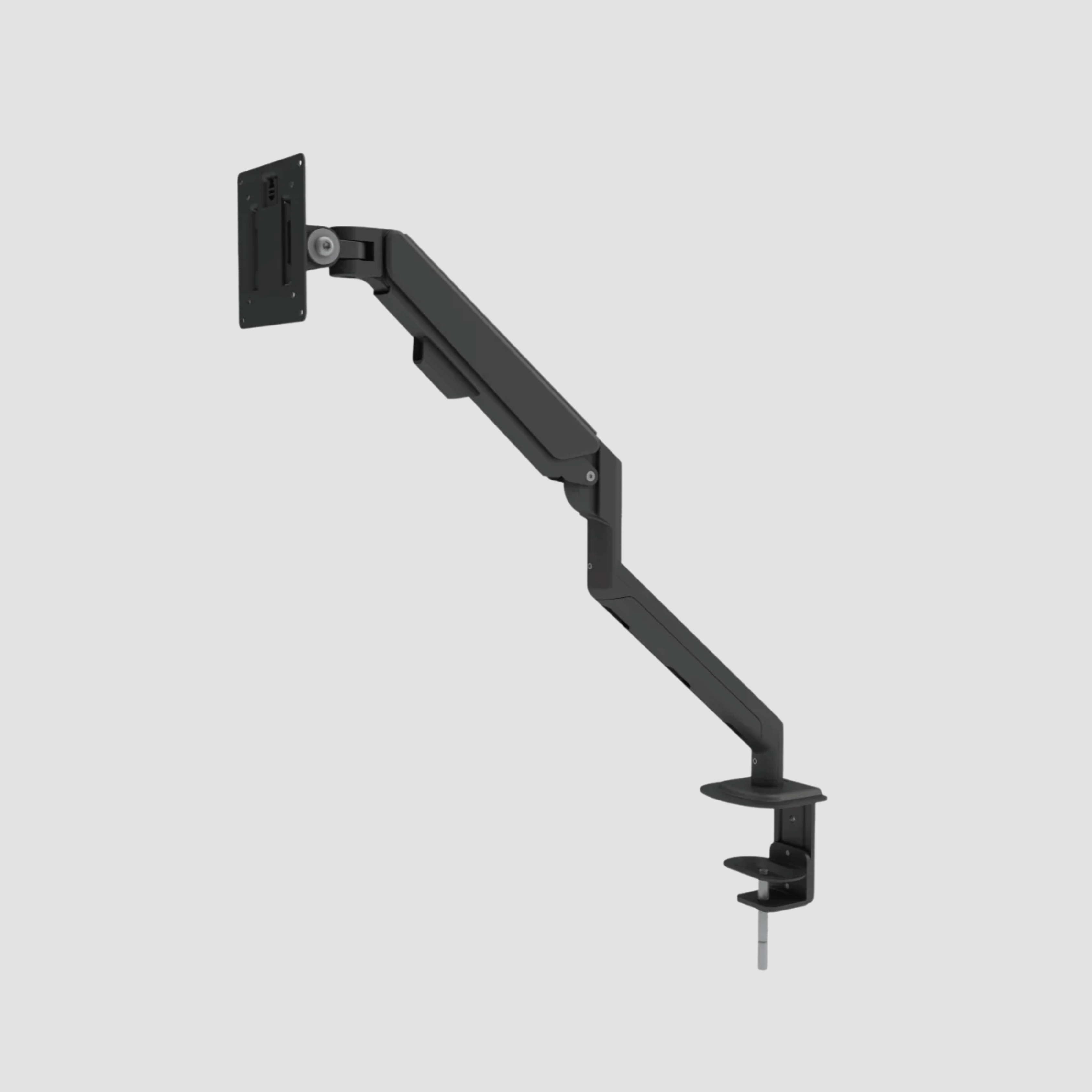
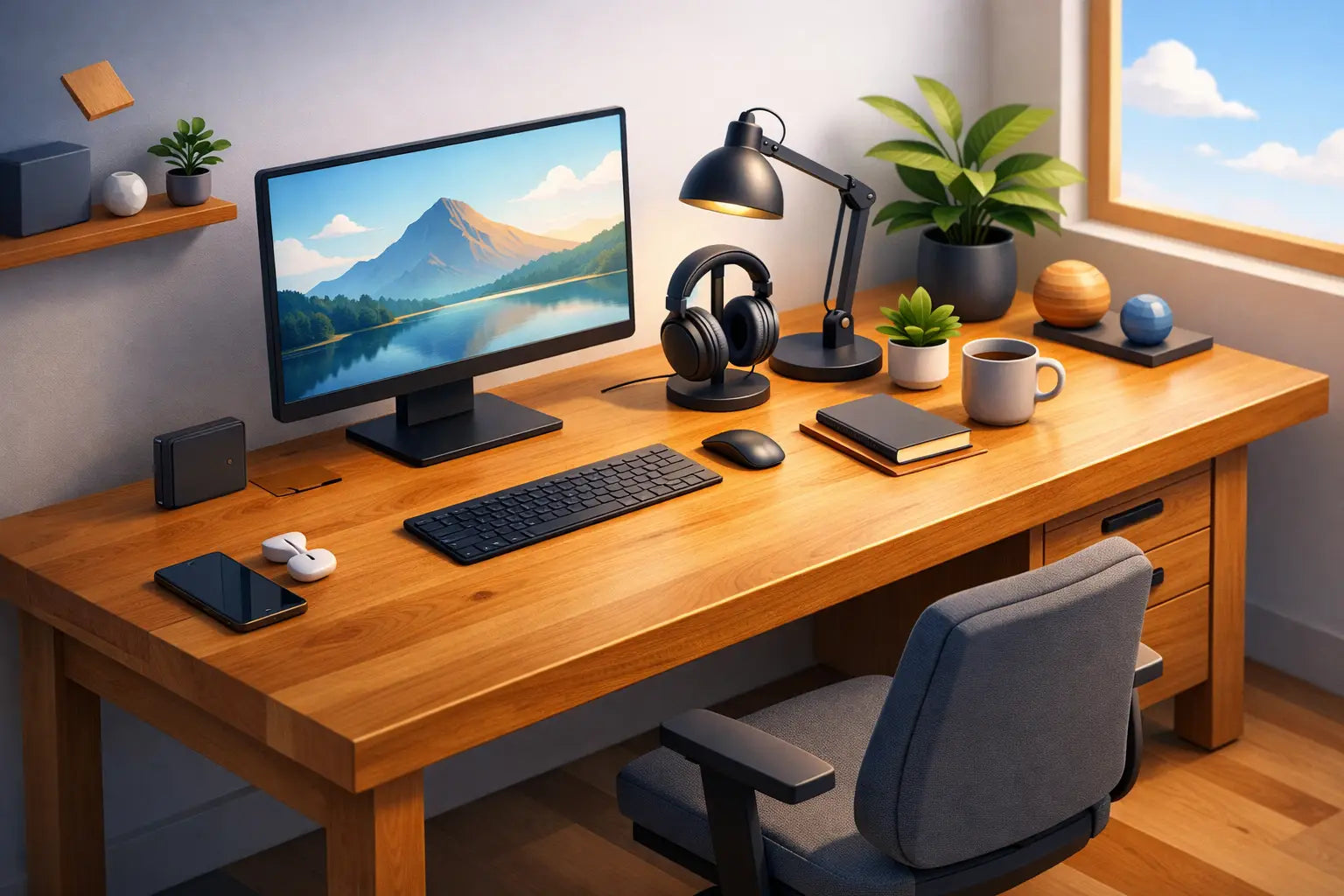
Et skrivebord står sjældent alene. Skærmarme, kabelkanaler, opbevaringsløsninger, gulvbeskyttelse og stole er alle med til at bestemme, hvordan den endelige indretning opleves. Et skrivebord i massivt egetræ fortjener tilbehør, der understøtter den samme fornemmelse af orden og holdbarhed.
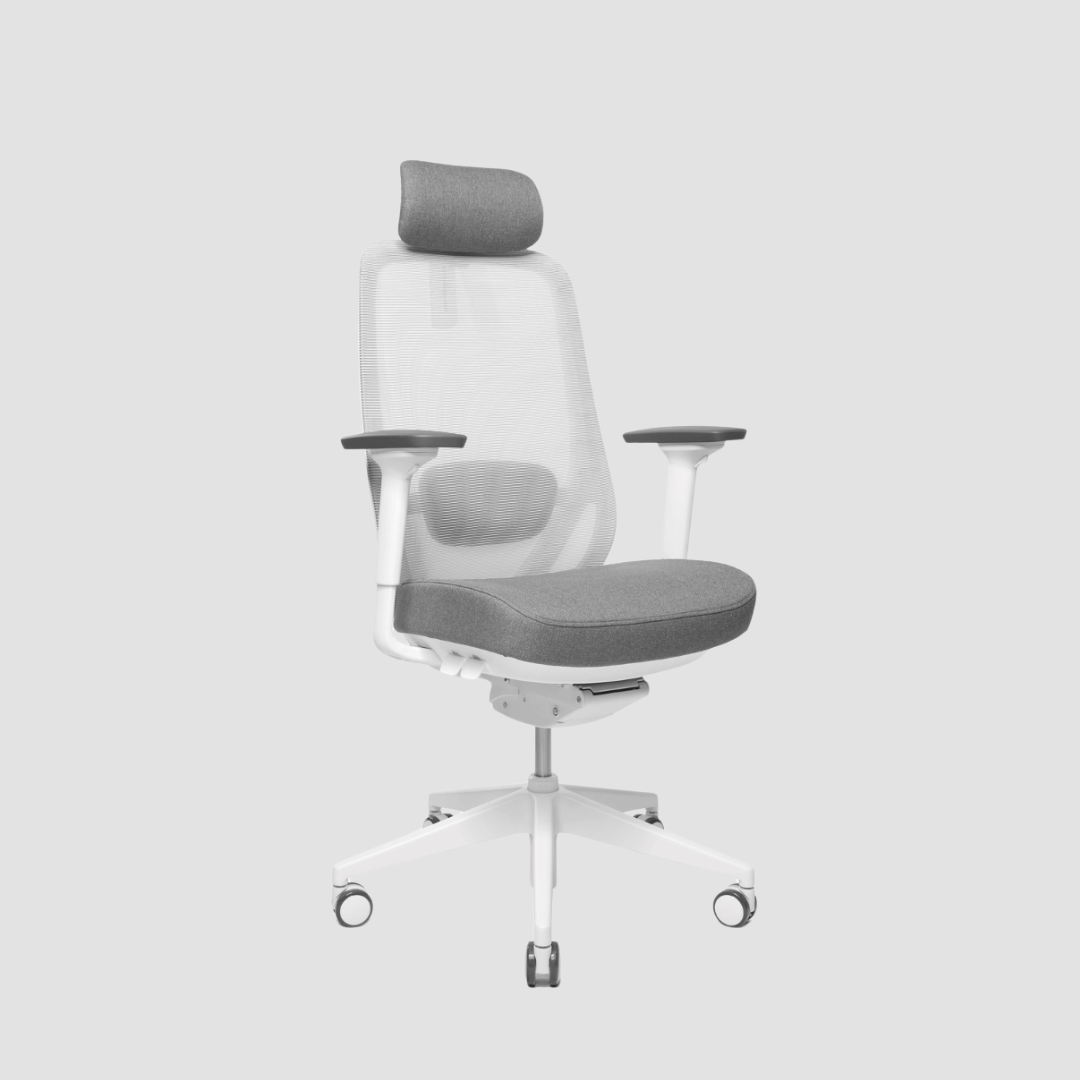
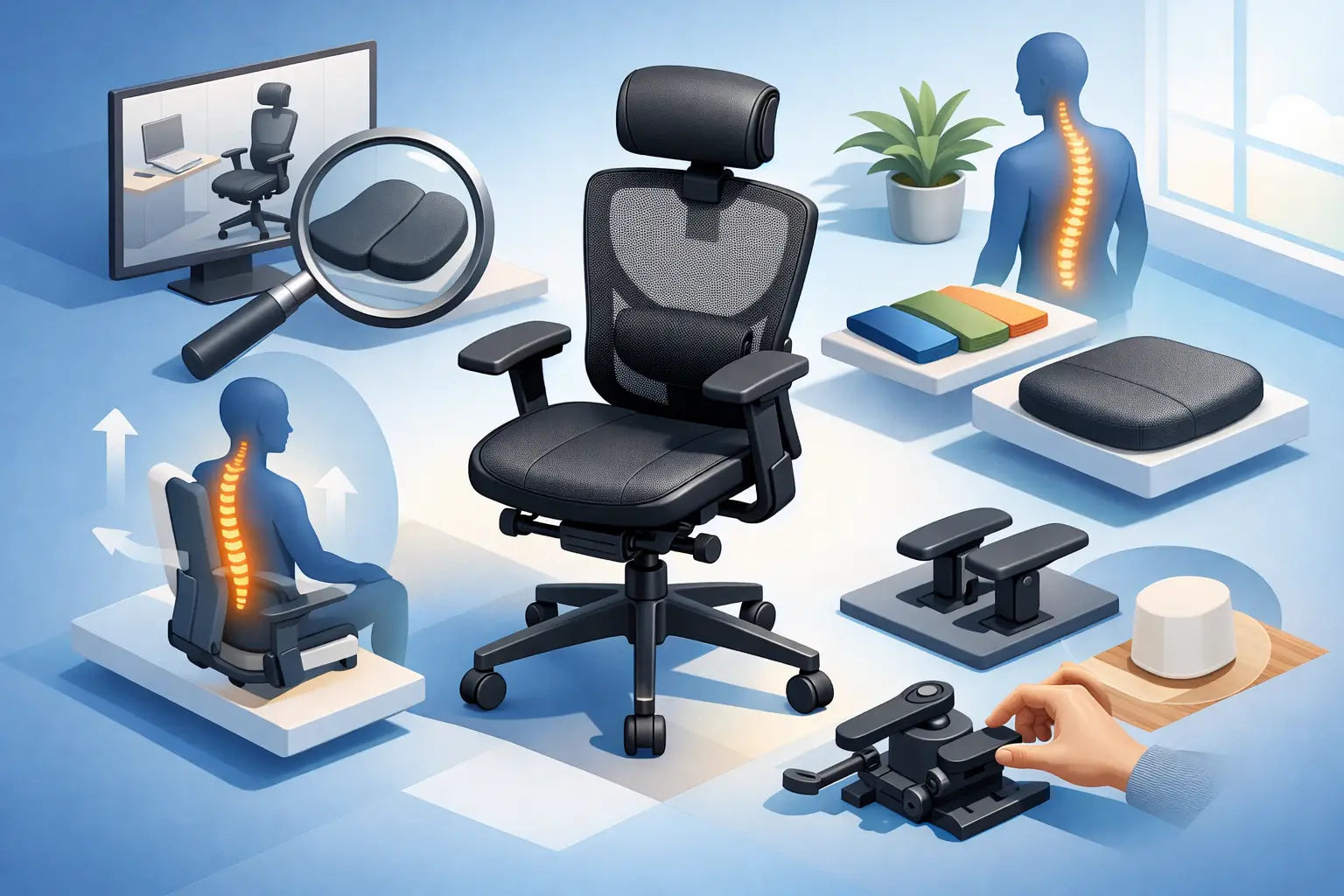
Dette gælder især i et designorienteret hjemmekontor, hvor visuelt rod hurtigt kan ødelægge selv de bedste materialer. God kabelstyring sikrer, at skrivebordets udformning forbliver ren og overskuelig. En ergonomisk stol beskytter din investering i en god kropsholdning. Tilbehør, der passer sammen, skaber et arbejdsområde, der fremstår gennemtænkt, i stedet for at være sammensat over tid af urelaterede elementer.
For købere, der ønsker en sammenhængende løsning, giver denne systemtilgang ofte bedre værdi på lang sigt end at købe skrivebordet først og så sammensætte resten senere.
Håndværket kommer til syne, hvis man ved, hvor man skal kigge
Møbler i premium-klassen afslører sig som regel selv. Det er detaljerne, der afslører, om et skrivebord er fremstillet med omhu eller blot er blevet markedsført godt.
Se på kantafslutningen, kvaliteten af snedkerarbejdet, konstruktionen på undersiden og hvordan bordpladen møder rammen. Tjek, om mærket giver klare oplysninger om materialer, oprindelse og produktion. Ærlige mærker er som regel meget konkrete. De forklarer, hvilket træ der er brugt, hvordan møblet er bygget, hvordan mekanismen fungerer, og hvad der ligger bag designvalgene.
Man kan også ofte fornemme, om et skrivebord er designet til at holde eller til at sælge hurtigt. Møbler, der holder hele livet, følger ikke modetrends alt for aggressivt. De bygger på proportioner, materialets kvalitet og pålidelig funktionalitet. Det er netop her, massivt egetræ adskiller sig fra engangs-kontormøbler.
Hos OAKO Denmark er det netop her, at denne kategori bliver virkelig spændende – skrivebordet er ikke blot en overflade, men et stykke hverdagsarkitektur, der bygger på ægte egetræ, ergonomiske bevægelser og europæisk håndværk.
Det rigtige valg skal virke roligt, ikke prangende
Det bedste skrivebord i massivt egetræ er sjældent det, der larmer mest. Det er det, der passer perfekt ind i dit rum, understøtter din måde at arbejde på og bliver bedre og bedre med tiden. Vælg det skrivebord, der tager hensyn til både din krop og din indretning, og du vil mærke forskellen hver eneste dag – ikke som noget dramatisk, men som en diskret selvfølge, du ikke længere kan undvære.

Efterlad en kommentar
Dette websted er beskyttet af hCaptcha, og hCaptchas privatlivspolitik og servicevilkår gælder.