


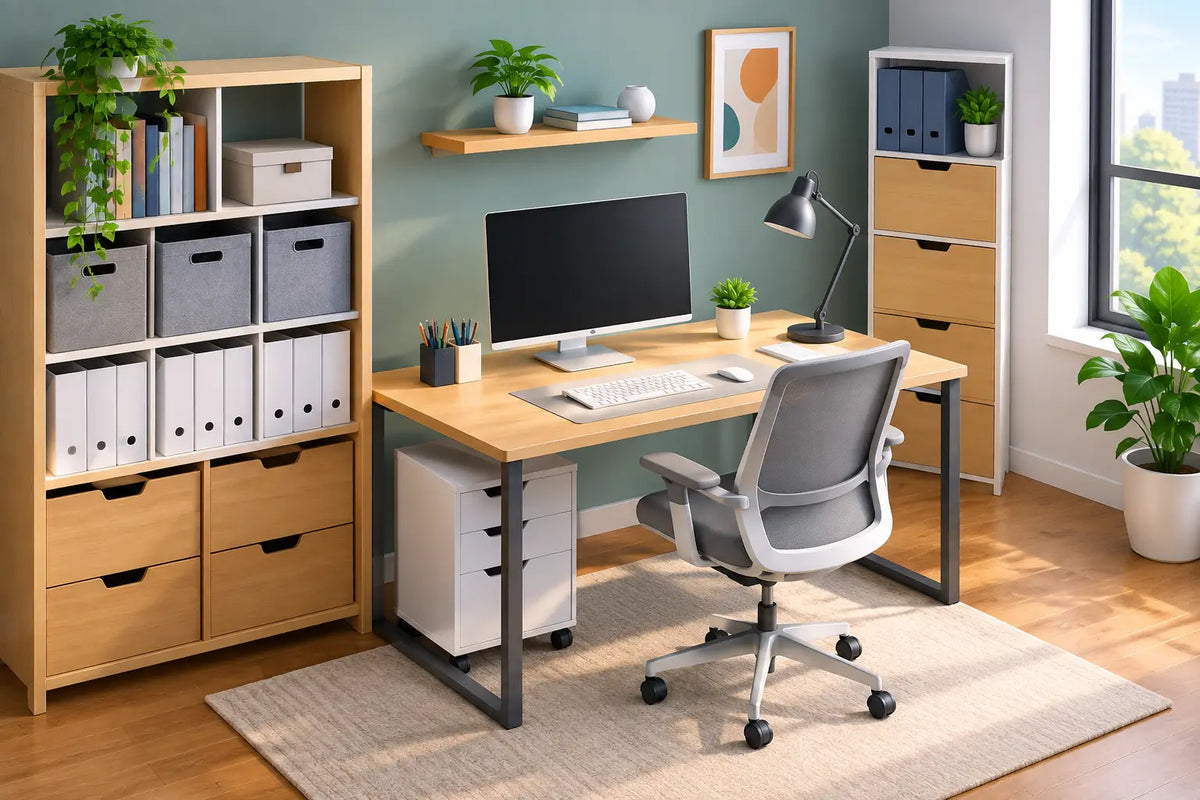
A desk can be made from the finest solid oak and still feel wrong if cables spill from every edge, paperwork has no home, and the surface becomes a holding area for everything except work. The best home office storage does more than hide clutter. It protects your focus, gives every working tool a considered place, and lets the materials in the room breathe.
For a workspace that is part of your home, storage deserves the same care as your desk or chair. The right pieces should support the rhythm of your day: open enough for the tools you reach for, closed enough for the visual noise you do not need to see, and substantial enough to remain useful as your work changes.
What Makes the Best Home Office Storage?
The strongest storage plan begins with a simple distinction: what must stay close, what can live nearby, and what should disappear entirely. A pen, notebook, charger and headphones may earn a place within arm’s reach. Archived documents, spare cables and equipment used once a month do not.
This matters because storage is not only about capacity. It is about reducing small decisions. When every object has a home, clearing the desk at the end of the day takes minutes rather than willpower. The next morning begins with a calm work surface instead of a visual reminder of unfinished tasks.
For a premium home office, material also matters. Thin plastic drawers and lightweight shelving can solve a temporary problem, but they often introduce another: a workspace that feels pieced together and disposable. Solid wood, durable steel and well-finished components bring a sense of permanence. They are better suited to the weight of books, technology and daily use, and they sit naturally beside a desk designed to last.
The best choice depends on the room. A dedicated office can carry a full-height cabinet or credenza. A desk in a bedroom or living room needs storage that is quieter in both scale and appearance. In a shared space, closed storage is often worth prioritising because it allows work to be put away when the day is done.
Start With the Desk, Not the Cabinet
A common mistake is choosing a large storage unit first, then trying to make the desk fit around it. Your desk is the active centre of the room, particularly when it is height-adjustable. It needs room to move, clear leg space when seated, and a cable route that does not pull or snag as the frame rises.
Begin by measuring the footprint of the desk at its widest working position. Allow space for your chair to roll back comfortably, and check where drawers can open. A pedestal placed too close to a desk frame can restrict movement. One tucked beneath an oak top may look neat but reduce the natural flexibility that makes a standing desk valuable.
For many setups, the better answer is a low mobile drawer unit positioned beside rather than underneath the desk. It keeps essential items close while preserving the open, architectural feel beneath the worktop. If you prefer storage under the desk, choose a compact unit with a stable base and modest height, then ensure it will not interfere with knees, foot placement or the desk’s lifting columns.
Keep the desktop deliberately sparse
Desktop organisers are useful, but they can become an attractive form of clutter. Limit them to objects you use several times a day. A tray for keys and small adapters, a pen holder, and a document stand may be enough. If an item does not support your work daily, place it in a drawer or nearby cabinet.
The goal is not an empty desk for the sake of a photograph. It is a surface with enough open space to write, think, sketch or simply pause. The grain of a solid oak desk is part of the experience. Covering it with stacked accessories removes the warmth and clarity you chose it for.
Choose Storage by Work Zone
Think of the room in three zones. The first is the immediate zone: everything reachable without leaving your chair. The second is the support zone: items you need during the week but not each hour. The third is the archive zone: supplies, records and equipment that should be accessible without occupying the visual centre of the room.
Immediate storage works best in shallow drawers, a modest desk organiser or a slim side unit. Shallow storage is especially effective for stationery, external drives, charging leads and notebooks because these objects are easily lost in a deep drawer. Use simple dividers rather than filling the space with multiple containers. The point is to see what you own at a glance.
The support zone may be a low cabinet, a shelving unit or a credenza. This is the right place for printer paper, reference books, camera equipment, client folders and a laptop stand that is not currently in use. Closed cabinets keep the room composed, while open shelving can work beautifully if you have a small, disciplined collection of books and objects worth displaying.
Archive storage should sit away from the desk where possible. A taller cabinet, built-in storage or a storage bench can hold records, spare technology and seasonal office supplies. In smaller Danish homes, a bench with concealed storage can be particularly useful, offering a place to sit while quietly carrying the less attractive parts of work life.
Open shelves need an editing rule
Open shelving is not automatically more stylish. It asks for restraint. Fill it with a considered mix of books, a few useful boxes, and objects with texture or personal meaning. Leave some negative space between groups. When every shelf is full, even beautiful materials begin to feel busy.
If your work involves files, samples or technical equipment, closed storage will usually serve you better. There is no loss of character in choosing a clean cabinet over exposed clutter. The design strength comes from proportion, finish and how naturally the piece relates to the desk, not from displaying every possession.
Solve Cables Before They Become Storage
Cables are often treated as an afterthought, then end up coiled in drawers, on the floor, or gathered in a box that makes every future adjustment difficult. A better approach is to give technology its own storage route from the beginning.
Start at the desktop with a discreet cable entry or tray. From there, guide power strips and chargers beneath the desk rather than allowing them to rest on the floor. A cable spine or flexible sleeve is especially valuable with a sit-stand desk because it accommodates movement while keeping the route controlled. Leave a little service loop for adjustment, but not enough cable to create a visible tangle.
Keep spare adapters and rarely used leads together in one labelled box within your support or archive zone. Avoid the familiar drawer full of unidentified cables. If you cannot name a cable’s purpose, test it, label it, or let it go. This small act has an outsized effect on how manageable a home office feels.
Match Scale, Finish and Longevity
Storage should not compete with the desk. If the desk is the anchor, the surrounding pieces should reinforce its proportions and material story. Warm oak pairs naturally with matte black or soft neutral metal, wool floor accessories and restrained cabinet fronts. Matching timber does not need to be identical, but it should feel intentional rather than accidental.
Consider visual weight as carefully as physical size. A bulky dark cabinet can overpower a compact room, while a slender open shelf may disappear beside a substantial oak worktop. Low, horizontal storage often makes a room feel wider. Taller pieces use vertical space efficiently, but they should be balanced with enough empty wall area to keep the office calm.
Durability is also practical. Drawer runners should feel controlled, handles should withstand daily use, and shelves should not bow under the weight of books. OAKO’s approach to workspace furniture is rooted in this principle: honest materials and thoughtful construction create a setting you can keep refining rather than replacing.
A home office is rarely static. You may add a second monitor, change roles, begin a creative project or share the room with another person. Choose storage with some adaptability: adjustable shelves, mobile units, or a cabinet with room for both files and equipment. Flexibility is useful, but avoid buying a complicated system simply because it offers every possible configuration. The most enduring setup is usually the one that is easy to use well.
Before choosing another box or drawer, clear your desktop and work through one ordinary day. Notice what you reach for, what distracts you, and what has been sitting untouched for months. Let those observations shape the storage you bring into the room. A well-made workspace should leave more room for the work itself - and a little more quiet around it.

Leave a comment
This site is protected by hCaptcha and the hCaptcha Privacy Policy and Terms of Service apply.