




A solid oak desk earns its character through use: the changing light across the grain, the quiet marks of a working day, the warm surface beneath your hands. Choosing among the best oak desk finishes determines how that character develops - and how confidently your desk handles coffee, keyboard wear, sunlight, and everyday life.
For a premium workspace, the right finish should not turn oak into something it is not. It should protect the timber while preserving its depth, tactile warmth, and natural movement. The best choice depends on how you work, how much maintenance you welcome, and whether you prefer an oak surface that stays pristine or gains a lived-in patina.
What a finish needs to do on an oak desk
Oak is a remarkably capable material for a desk. Its distinctive grain, density, and natural strength make it well suited to furniture built for daily use. Yet wood remains a living material. It responds to light, moisture, heat, and the small routines that happen at a workstation every day.
A finish controls that relationship. It can sit on top of the timber as a protective film, penetrate into the fibres to nourish the wood, or do a little of both. That distinction matters more than the label on the tin. A highly sealed surface may resist spills exceptionally well, but can feel less like raw oak. A penetrating oil leaves the grain wonderfully present, but asks for occasional care.
For most home offices, the ideal balance is straightforward: honest material expression, enough protection for real work, and a repair path that does not involve replacing the whole top.
Best oak desk finishes, compared
Natural oil: the most tactile choice
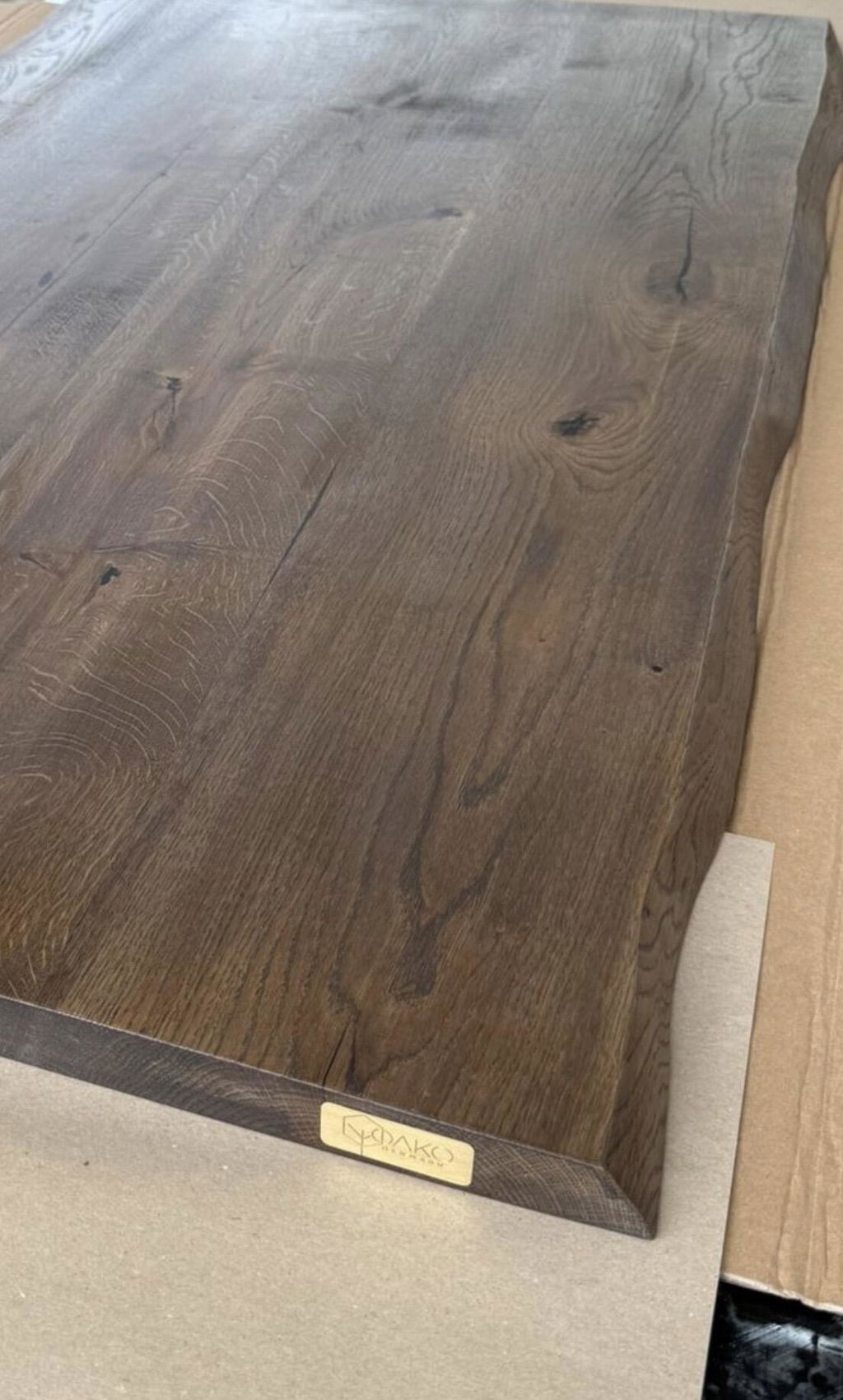
Natural oil penetrates the oak rather than covering it with a thick layer. It brings out the grain, deepens the colour slightly, and leaves a low-sheen surface that feels close to unfinished timber - only far better protected. On a light European oak top, it creates the warm, calm look many people associate with Scandinavian interiors.
This is an excellent finish for design-led workspaces where the desk is part of the room, not merely a piece of equipment. It suits people who value a natural matte appearance and do not mind giving the surface occasional attention. Depending on use, an oiled desk may benefit from a refresh coat every year or two.
Its main trade-off is spill resistance. A wiped-up coffee splash is rarely an issue, but standing water, ink, or a wet plant pot should not be left in place. Natural oil rewards good habits and gives something back: small scratches and dry areas can often be spot-repaired without refinishing the entire desktop.
Hardwax oil: the best all-round finish for daily work
For many solid oak standing desks, hardwax oil is the strongest all-round answer. It combines penetrating oils with waxes that strengthen surface protection. The result is a matte, natural-looking desk with greater resistance to moisture, light abrasion, and everyday marks than a simple oil treatment.
Hardwax oil retains the grain's texture instead of burying it beneath a plastic-looking coat. That matters on a desk you see and touch for hours at a time. It keeps oak warm and substantial while giving the surface the resilience expected from a professional workspace.
It is particularly well suited to a desk that shifts between focused laptop work, family administration, drawing, and the occasional lunch at the screen. It also makes practical sense for a height-adjustable desk intended to last through changing homes and working routines. A local scuff can usually be cleaned, lightly abraded, and re-oiled with far less disruption than a damaged lacquer finish.
Hardwax oil still needs sensible care. Use coasters for drinks, felt pads beneath accessories, and a desk mat where heavy writing or equipment creates repeated pressure. These are small rituals, not restrictions, and they help the oak age evenly.
Lacquer: maximum barrier protection, less natural feel
Lacquer creates a protective film over the oak. In a high-quality matte formulation, it can look refined and offer excellent defence against stains, moisture, and regular cleaning. It is a practical option for a shared office, a household with young children, or a desk exposed to frequent spills.
The compromise is feel and repairability. Even a very good matte lacquer separates your hand slightly from the timber, whereas oil and hardwax oil allow the oak's texture to remain more immediate. If lacquer is deeply scratched or chipped, a local repair can be harder to blend invisibly. Larger damage may require professional refinishing across a broader area.
Lacquer is not the wrong choice. It is simply the choice for buyers who place maximum day-to-day barrier protection above the most natural oak experience.
Soap finish: beautiful, but rarely right for a desk
Soap-finished oak has a pale, almost chalky softness that works beautifully on certain Scandinavian furniture. It gives oak a quiet, untreated appearance and can feel wonderfully understated in a calm interior.
For a working desk, however, it is generally too demanding. Soap finishes offer limited resistance to coffee rings, hand oils, and the constant movement of office equipment. They require regular washing and reapplication, and they are better reserved for furniture with lighter contact than a desktop.
If your desk is a showpiece used only occasionally, soap may fit the look. For a full working week, hardwax oil or a quality oil finish is usually the more considered investment.
Choose the finish by how you use your workspace
A desk finish should support the way you actually work, not an imagined version of it. If your workspace is a carefully maintained studio with a monitor arm, cable management, and a dedicated place for every object, natural oil can be deeply satisfying. It lets the oak remain visually open and rewards regular, simple care.
If your desk is the centre of a busy hybrid routine, hardwax oil offers more margin for real life. It is the natural choice for most professionals who want the warmth of solid wood without worrying over every cup of coffee or minor scratch.
Lacquer deserves consideration when several people use the desk, when cleaning must be quick, or when the surface faces more unpredictable use. Think of a shared family workstation, a client-facing office, or a creative space where paints, adhesives, and food appear more often than they should.
Colour also plays a part. Clear finishes preserve the light, golden character of oak. White-pigmented oils can reduce yellowing and maintain a paler Nordic expression, especially in rooms with abundant daylight. Smoked, tinted, or dark oils add drama and can pair beautifully with black steel desk frames, though they often make scratches and dust more visible. A finish sample viewed beside your flooring, wall colour, and monitor is more reliable than any image on a screen.
Care that protects the finish, not just the surface
The simplest daily routine is also the best one: wipe dust with a soft, dry or lightly damp cloth, then dry the surface if needed. Avoid aggressive household sprays, abrasive sponges, and products containing ammonia or silicone. They can dull the finish or leave residue that complicates future maintenance.
A few considered details prevent most visible wear. Keep hot drinks on coasters, avoid leaving moisture beneath desk organisers, and lift equipment rather than dragging it across the top. A large desk pad protects the area where a mouse, notebook, and forearms repeatedly meet the timber, while still allowing the rest of the oak to remain visible.
With an oiled or hardwax-oiled surface, watch for dryness rather than following a rigid calendar. When the wood begins to look pale, absorb liquid too quickly, or lose its gentle sheen after cleaning, it may be ready for a maintenance coat. This is one of the quiet advantages of a finish designed to be renewed: the desk can be cared for rather than discarded.
The finish should let the oak do its work
At OAKO, a desk is intended to bring material substance to the technology-heavy workday. The finish is not an afterthought. It is what allows a solid oak top to remain practical while its grain, colour, and texture continue to make the workspace feel grounded.
Choose hardwax oil when you want the most balanced answer. Choose natural oil when touch, patina, and repairability matter most. Choose lacquer when the conditions call for a tougher sealed barrier. Then use the desk well. A few honest signs of work, cared for properly, are not flaws in oak. They are proof that a well-made surface has become part of your life.



Leave a comment
This site is protected by hCaptcha and the hCaptcha Privacy Policy and Terms of Service apply.