



A desk can quietly shape the quality of your working day. It determines where your shoulders settle during a long call, whether your screen sits at a sensible height, and how your home office feels when work is finished. The standing desk vs fixed desk decision is therefore not simply about adding a motor to a tabletop. It is about choosing a workspace that supports both your body and the way you want to live.
For many Danish homes, the desk now shares space with the dining area, bedroom or living room. It needs to perform professionally without making the room feel like a temporary office. That is where ergonomics, proportion and material honesty need to work together.
Standing Desk vs Fixed Desk: The Real Difference
A fixed desk has one permanent working height. Its appeal is immediate: it is straightforward, visually calm and often less expensive. If the height happens to fit you well, and your work is limited to shorter sessions, a fixed desk can be a perfectly sensible choice.
A standing desk adjusts between seated and standing positions. This gives you the freedom to set the desk to your own body rather than adapting your body to a standard measurement. It also makes it easier to change position during the day, which can be welcome when concentration fades or your lower back begins to complain.
The distinction matters because no single posture is ideal for eight hours. Sitting all day is not improved simply by replacing it with standing all day. The more useful goal is variation: seated work for deep concentration, standing for a change of pace, and regular movement away from the desk altogether. A height-adjustable desk makes that rhythm easier to maintain without interrupting your workflow.
When a Fixed Desk Makes Sense
A well-made fixed desk is not an inferior piece of furniture. In the right setting, it can be the most considered option. If you use your desk occasionally for personal admin, writing or a few weekly video calls, the additional mechanism of a standing desk may offer little practical value.
Fixed desks can also suit rooms where visual simplicity is the priority. There is a certain permanence to a solid oak tabletop on a carefully chosen frame. It can read as furniture first and office equipment second, particularly in a compact apartment or a shared living space.
The key question is whether the desk height suits you. Standard desk heights are commonly around 72 to 75 cm, but bodies are not standard. A tall person may end up lifting their shoulders to type. A shorter person may work with forearms angled upward, which can create tension over time. A chair, footrest and monitor arm can improve the setup, but they cannot change the height of the work surface itself.
A fixed desk is strongest when it is chosen deliberately, not because it is the default. Measure your seated elbow height, consider the thickness of the tabletop, and think about the chair you will use with it. A beautiful desk that is 3 cm too high can become a daily compromise.
Why Height Adjustment Changes the Working Day
The strongest case for a standing desk is not that you will stand constantly. It is that your workstation can follow your energy.
During focused tasks such as financial work, writing or detailed design, many people prefer sitting. For a short meeting, reviewing documents, answering messages or resetting after lunch, standing can feel more alert and open. Moving the desk takes seconds on a quality dual-motor frame, so changing position does not need to become a decision you postpone.
There is also an important fit benefit for households with more than one user. A shared home office often has different people working from the same desk - partners, teenagers, visiting colleagues. With a fixed desk, one person’s comfortable height may be another person’s awkward setup. An adjustable desk gives each user a more appropriate starting point.
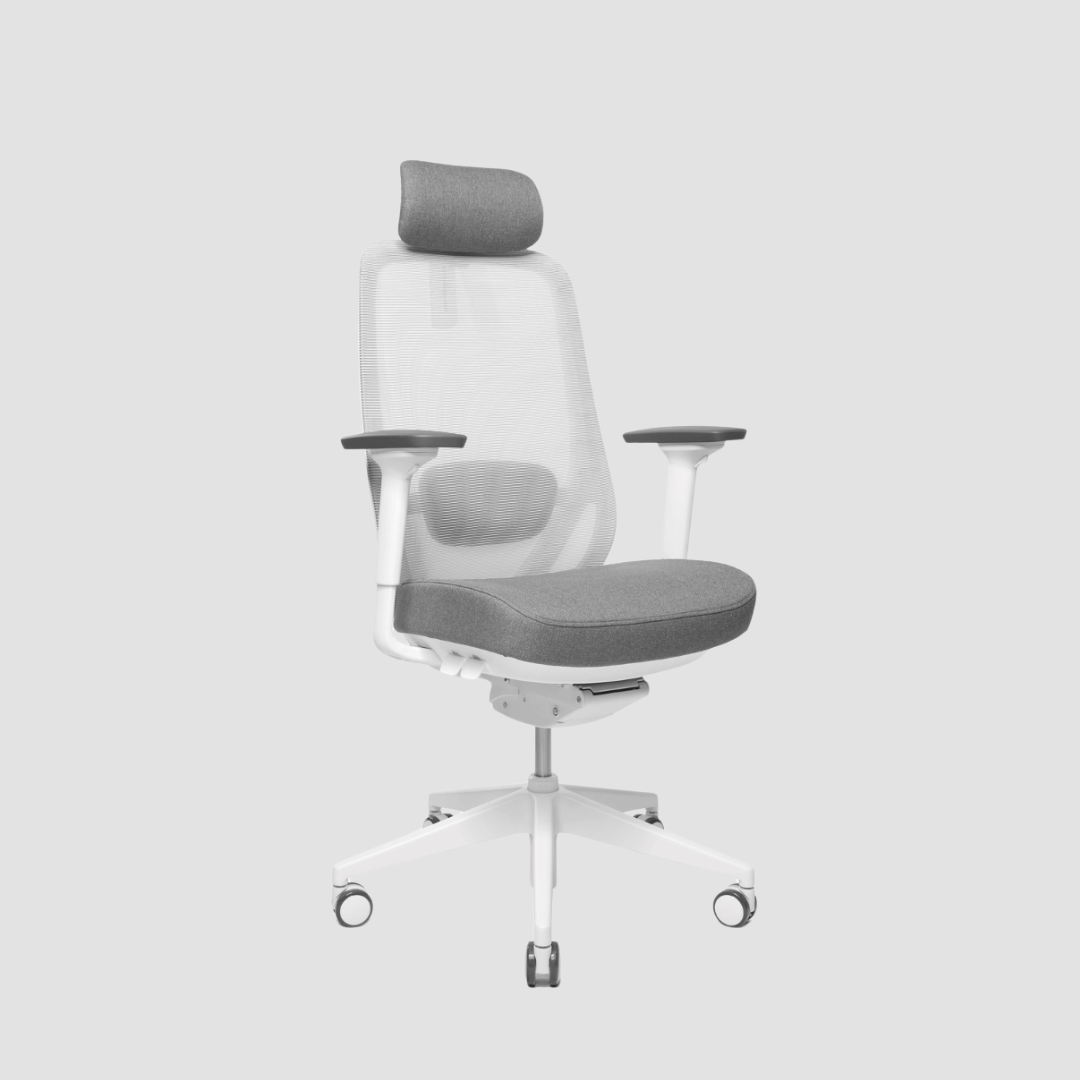
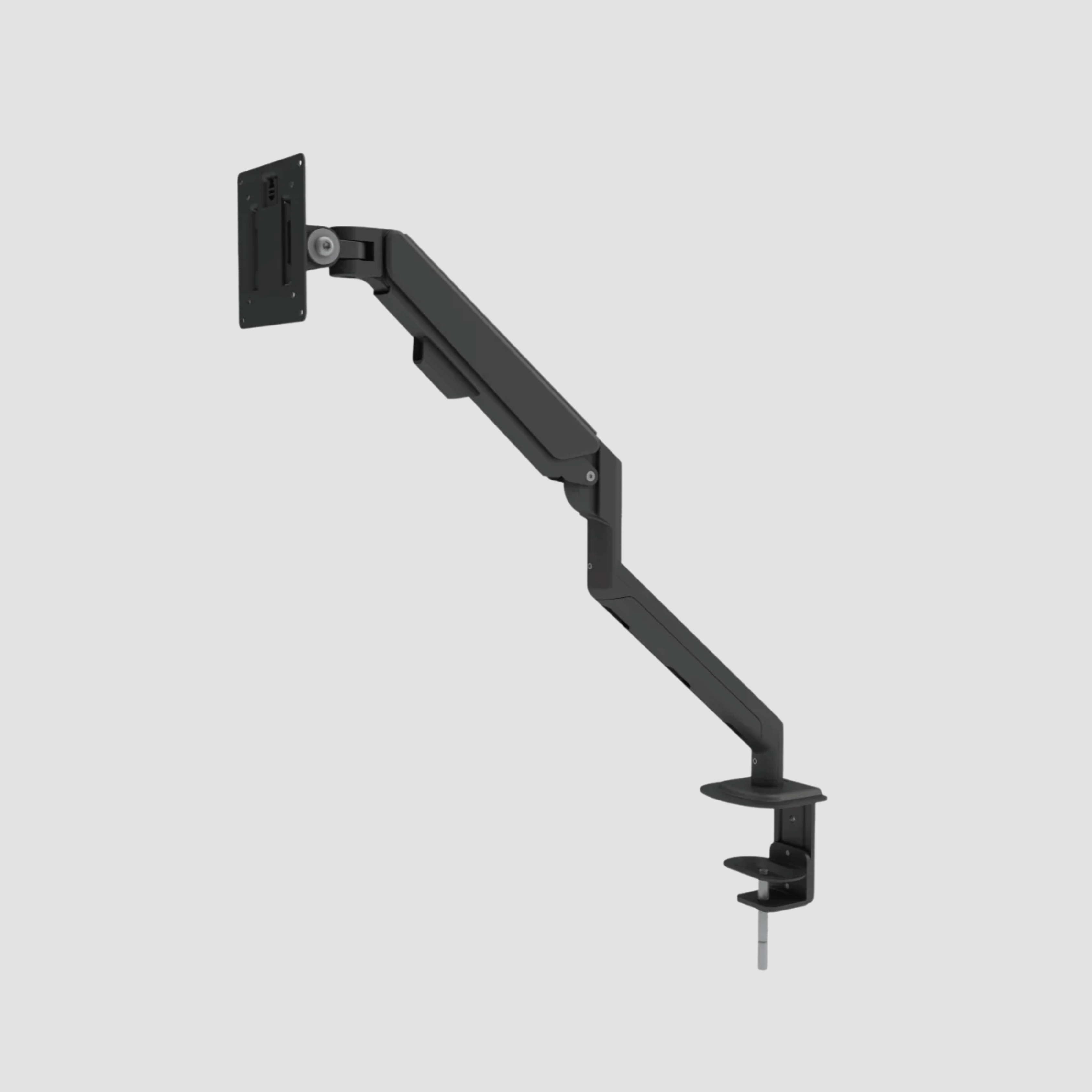
That said, a standing desk only works well when the rest of the workstation follows. Your monitor should rise with the desk or sit on an adjustable monitor arm. Cables need enough slack and sensible routing. A supportive ergonomic chair still matters because you will continue to spend meaningful time seated. Height adjustment is a foundation, not a complete ergonomic solution on its own.
The case for a solid wood top
A desk’s mechanism may be modern, but the material above it determines much of the experience. A thick solid oak top adds warmth, visual depth and a feeling of permanence that laminated boards rarely achieve. Every grain pattern is individual, and the surface develops character through years of use rather than looking tired after a season.
This matters especially in a home office. A desk is constantly in view, often from the moment the day begins until the evening meal. Natural oak brings a quieter, more settled presence to the room, while a steel frame provides the strength and precision needed for daily height adjustment. Where oak meets technology, the result can feel less like office equipment and more like a piece of furniture built for a modern life.
Solid wood does ask for respect. Oak is a living material that responds naturally to changes in light, temperature and humidity. It should be protected from prolonged spills and treated with suitable care. In return, it can be maintained and renewed rather than discarded. That is a meaningful difference from disposable desk surfaces designed around a short replacement cycle.
Comparing Cost Beyond the Purchase Price
At first glance, a fixed desk generally costs less than a standing desk. The latter includes motors, controls, lifting columns and a more complex frame. Yet purchase price is only one part of value.
Consider how often you work at the desk and how long you expect to keep it. A cheap desk that wobbles under a monitor, limits your posture or no longer suits a new job can become an expensive short-term decision. A stable adjustable frame paired with a durable tabletop can serve through changing routines, homes and professional needs.
For premium workspace furniture, stability deserves close attention. The frame should feel composed at both sitting and standing height, even with monitors, a laptop, task lighting and daily equipment in place. Dual motors offer smooth, even lifting and are especially reassuring with a substantial solid wood top. Look for a desk that is designed as a complete construction, rather than a generic frame with a surface added as an afterthought.
OAKO approaches this balance through solid European oak worktops and strong dual-motor steel frames, bringing crafted material and practical movement into the same workspace. It is an investment in something you use daily, not a temporary fix for a spare corner.
How to Choose for Your Space and Routine
Start with your actual working pattern, not the version of yourself who promises to stand for half the day. If you work at a desk for six or more hours most weekdays, a standing desk is likely to earn its place. If the desk is used occasionally, a fixed design may be enough - provided its height is appropriate.
Then look at the room. A height-adjustable desk needs clear vertical space above it, especially if shelves, art or a window ledge sit close behind the screen. Measure the desk footprint with the chair pulled back, not only the tabletop itself. In smaller rooms, thoughtful cable management and a monitor arm can make an adjustable desk feel notably lighter and less cluttered.
Finally, decide what you want the desk to become over time. A fixed desk can be a beautiful, stable anchor in a room. A standing desk offers greater flexibility as your work changes, your body changes, or the desk moves between users. Neither choice is automatically better. The right one is the desk that you will enjoy using often enough to justify its place in your home.
A workspace should not ask you to tolerate it. Choose a desk with the right proportions, genuine materials and a working height that lets your attention stay on the work in front of you. Over years of ordinary mornings and demanding afternoons, that quiet sense of fit becomes one of the most valuable things in the room.



Leave a comment
This site is protected by hCaptcha and the hCaptcha Privacy Policy and Terms of Service apply.