


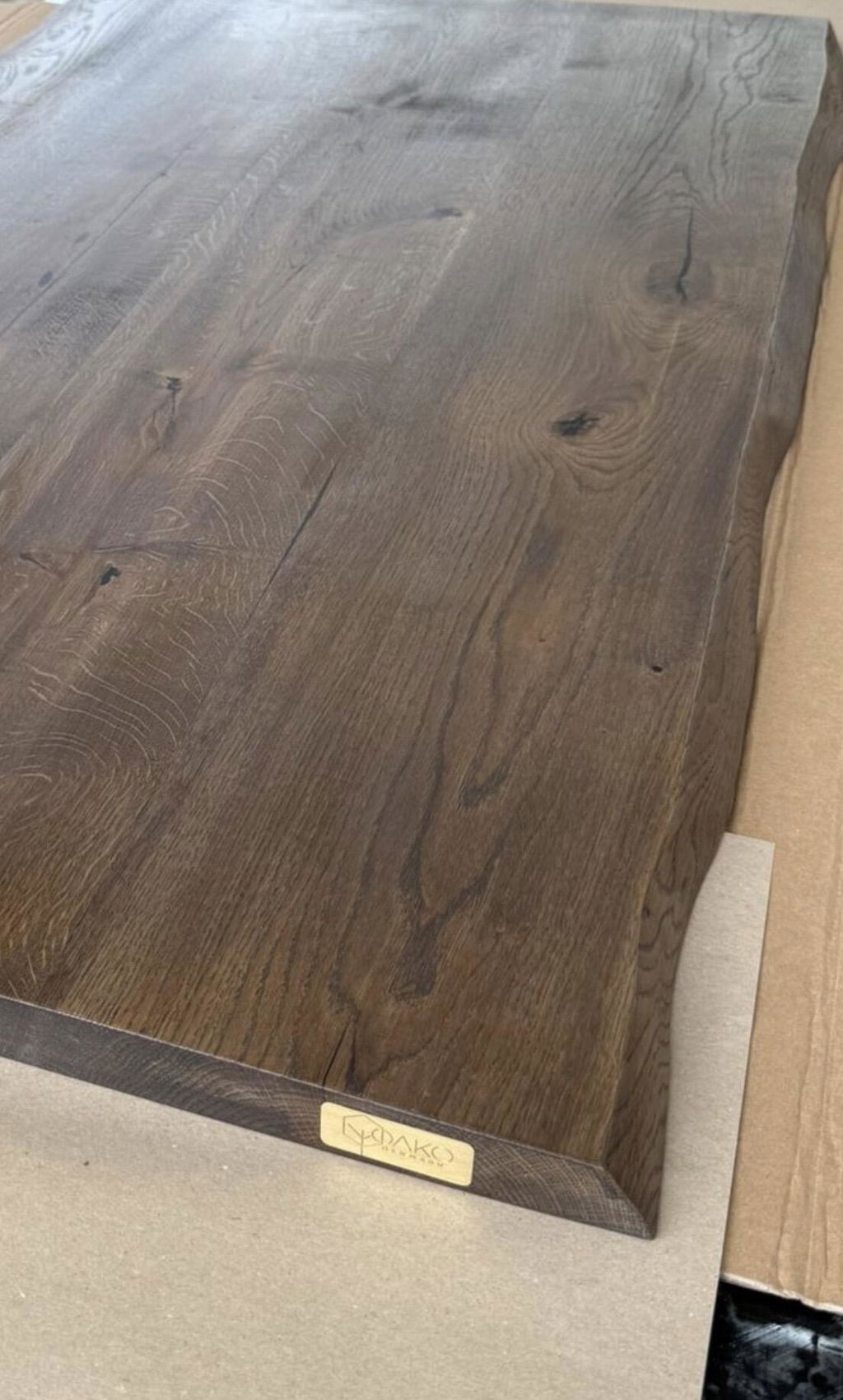
Et skrivebord i massivt egetræ giver i sig selv rummet karakter. Træets årer, tyngde og varme farvevariationer gør det til mere end blot en overflade til en bærbar computer – det er det visuelle omdrejningspunkt i din arbejdsdag. At indrette et arbejdsområde i egetræ handler derfor ikke så meget om at tilføje dekoration, men snarere om at træffe gennemtænkte valg omkring det: belysning, proportioner, funktionalitet og de genstande, du rent faktisk bruger.
De bedste arbejdsmiljøer ser ikke overdrevent designede ud. De fremstår afbalancerede. Eg er et materiale med tilstrækkelig karakter til at bære et rum, så målet er at lade denne karakter komme til udtryk, samtidig med at der skabes et ergonomisk miljø, der understøtter seriøst og behageligt arbejde.
Start med egetræet, ikke tilbehøret
Hver eneste egeplade er lidt forskellig. Nogle er lyse og afdæmpede med en fin, jævn årestruktur. Andre er varmere, mere udtryksfulde og præget af knaster eller naturlige farvevariationer. Før du vælger en stol, en lampe eller en vægfarve, bør du se nøje på netop den egeplade, der findes i dit rum.
Et arbejdsområde i lysere egetræ passer smukt sammen med bløde hvide, varme grå, sandfarvede og dæmpede stenfarver. Disse nuancer bevarer rummets luftige udtryk, især i kompakte københavnske lejligheder eller hjemmekontorer, hvor dagslyset skifter hurtigt i løbet af året. Mørkere egetræ kan kombineres med dybere farver: lerfarvet, skovgrøn, koksgrå eller en afdæmpet marineblå. Målet er kontrast med tilbageholdenhed, ikke et ensfarvet sæt i træ og beige, der mister al karakter.
Undgå at forsøge at få alle træoverflader til at matche hinanden helt præcist. Et skrivebord, en hylde og et gulv i næsten identisk egetræ kan virke ensformigt i stedet for gennemtænkt. Lad i stedet der være lidt variation. Egetræ kan sagtens kombineres med ask, detaljer i valnød, hør, uld og keramik, forudsat at undertonerne er varme, og materialerne virker ægte.
Opbyg arbejdsområdet lag for lag
Et velindrettet skrivebord skal fungere, uanset om det er helt ryddeligt, når du er midt i en deadline, eller når et videomøde starter uden forvarsel. Start med det praktiske: skærmens placering, siddeplads, kabelføring og opbevaring. Indretningen kommer først efter disse beslutninger, ikke før.
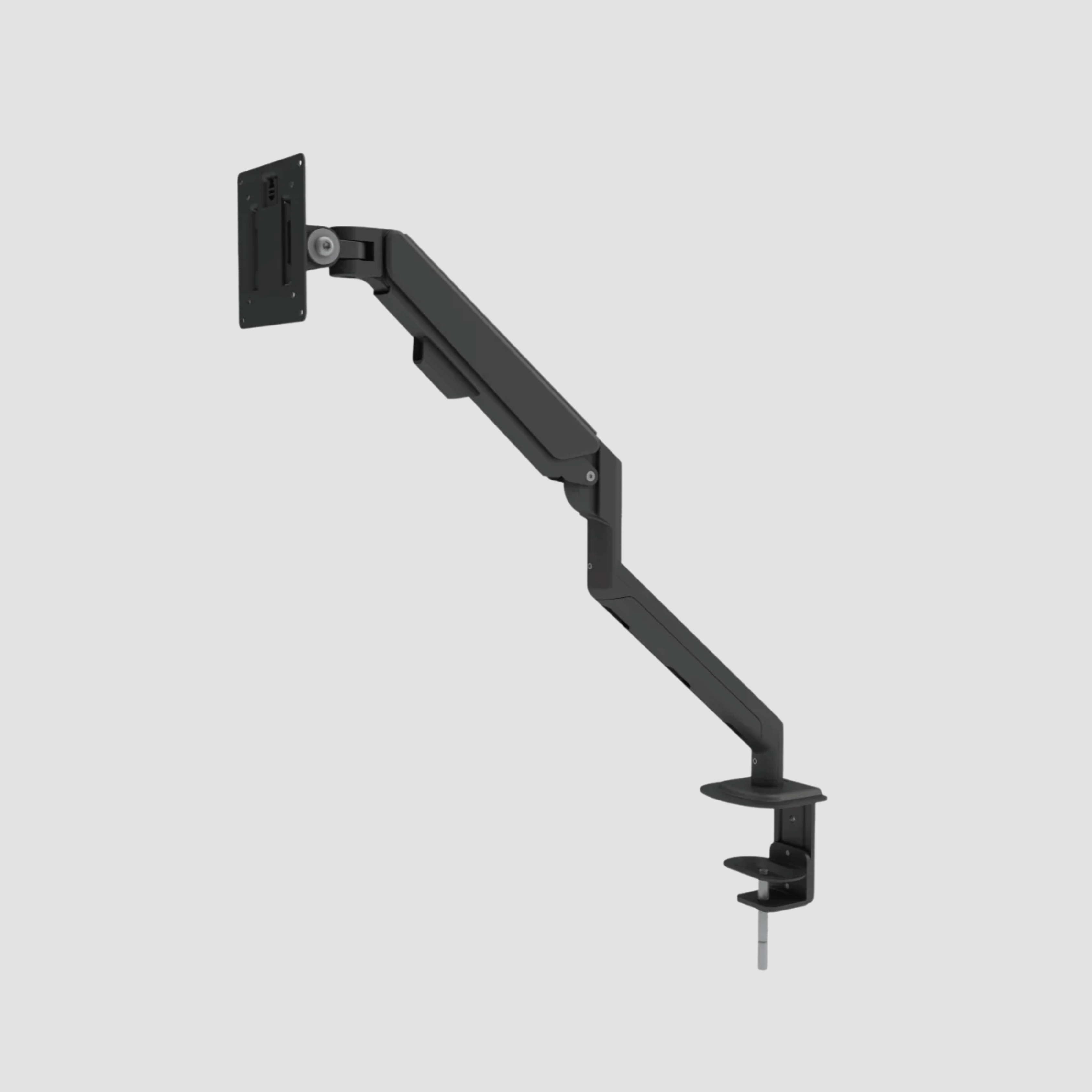
Hvis du har et skrivebord med en skærm, bør du bruge en skærmarm eller et forhøjet stativ, så skærmens øverste kant befinder sig omtrent i øjenhøjde. Det sikrer en mere behagelig kropsholdning og frigør mere af egeoverfladen nedenunder. Et ryddeligt skrivebord er ikke blot et spørgsmål om æstetik – det mindsker antallet af konkurrerende signaler, der distraherer dine øjne og din opmærksomhed.
Vælg en skrivebordsunderlag med omhu. Læder eller et vegansk alternativ af høj kvalitet i cognac, sort, mørkebrun eller varm grå kan indramme arbejdsområdet uden at skjule skrivebordet. Hvis egeåren er særlig smuk, bør du vælge et mindre underlag i stedet for at dække halvdelen af bordpladen. Filt kan tilføre blødhed og forbedre akustikken, men det giver et mere afslappet, atelieragtigt udtryk end læder.
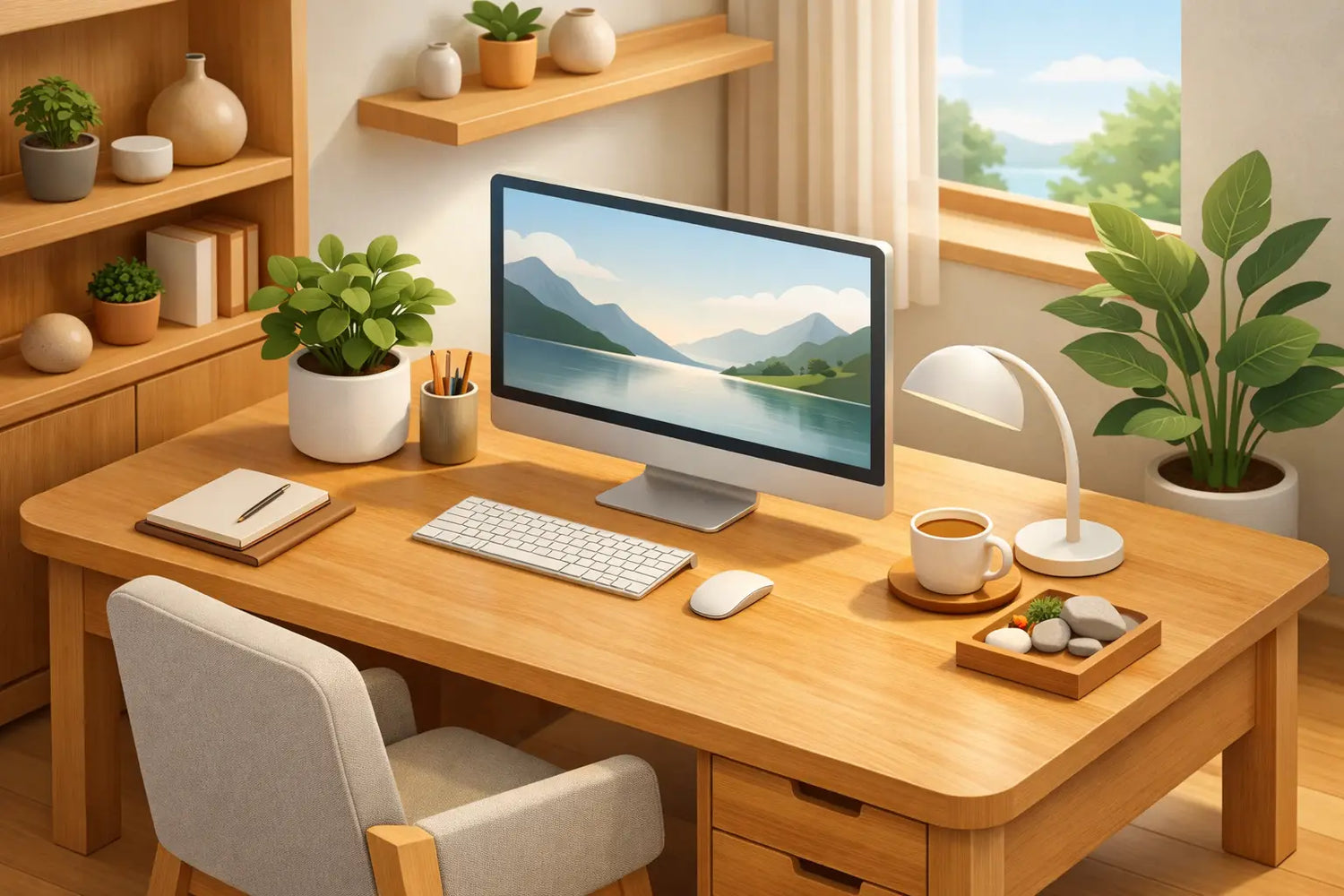
Indfør derefter et begrænset antal nyttige genstande. En penneholder, en notesbog, en opladningsstikdåse og en veludført bordlampe er som regel nok. Åbne bakker er at foretrække frem for en samling af små beholdere, fordi de gør det muligt at have de daglige redskaber inden for rækkevidde uden at skabe visuelt rod.
Sørg for, at teknologien ikke forstyrrer det visuelle udtryk
Eg giver varme; teknologi medfører ofte sort plast, kabler og blinkende lys. Kontrasten kan fungere godt, men det kræver en vis disciplin. En slank sort skærm, et skrivebord med sort stålstel og en matchende skærmarm skaber en bevidst grafisk linje i kontrast til træet. Det er her, eg og teknologi mødes på bedste vis: naturligt materiale ovenpå, teknisk ydeevne nedenunder.
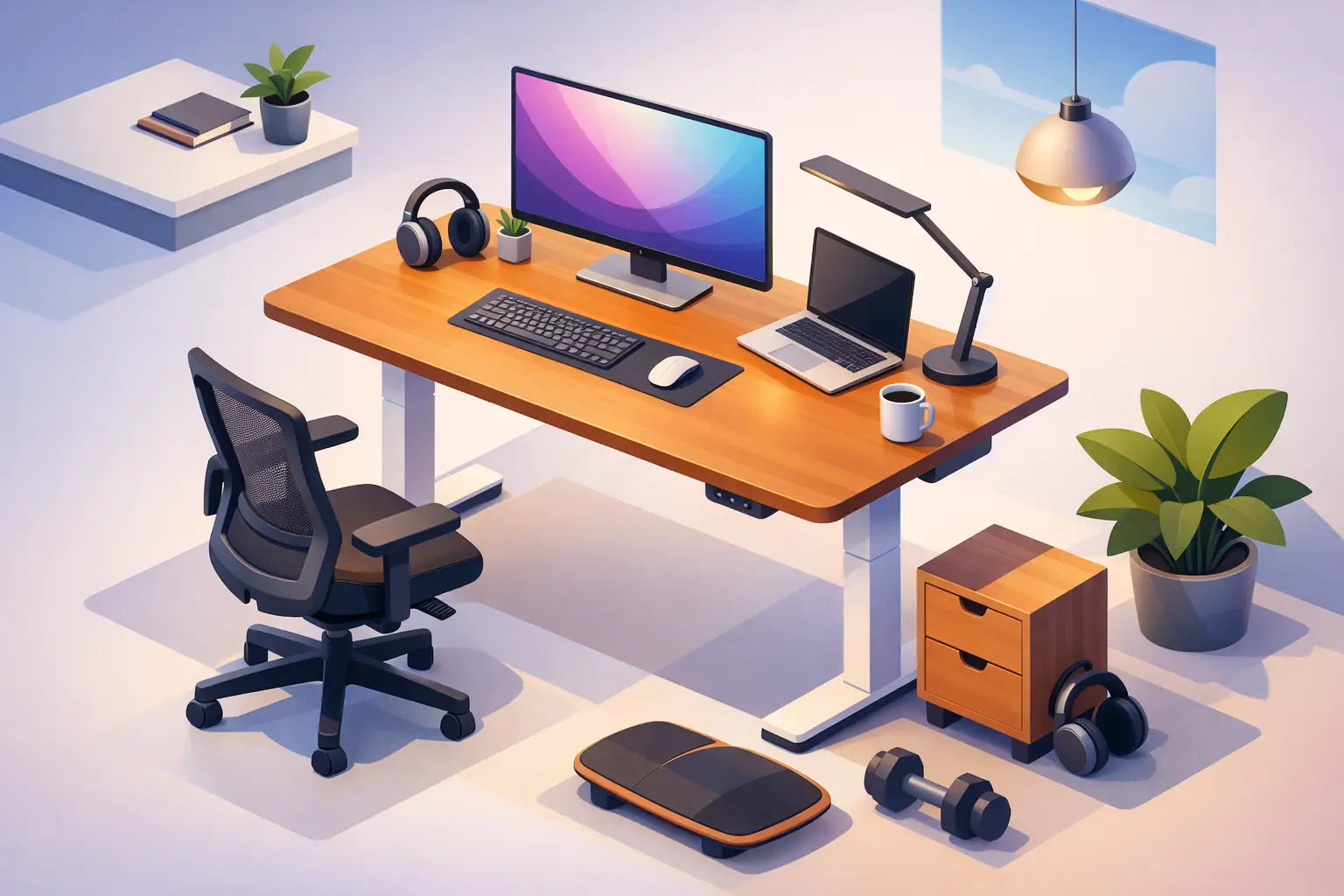
Før kablerne under skrivebordet, og sørg for, at der kun er én diskret ledning synlig, hvor det er nødvendigt. Brug en kabelbakke, klemmer og en skjult stikdåse i stedet for at bruge en dekorativ kasse på gulvet. Et højdejusterbart skrivebord kræver tilstrækkelig kabellængde for at kunne bevæges frit, så sørg for at efterlade en kontrolleret serviceløkke, og afprøv den fulde stående højde, inden du fastgør noget.
Hvis du bruger en bærbar computer som din primære computer, skal du placere den på et stativ og bruge et eksternt tastatur og en ekstern mus. Det forbedrer din kropsholdning og får opsætningen til at virke gennemtænkt i stedet for midlertidig.
Vælg en stol, der skaber kontrast og byder på komfort
Stolen er det næststørste visuelle element på de fleste arbejdspladser, og den bør gøre sig fortjent til den plads, den indtager. En tung direktørstol kan virke for dominerende i forhold til et elegant skrivebord af egetræ i et lille rum. Omvendt kan en alt for minimalistisk spisestol måske se godt ud på et fotografi, men den vil ikke kunne holde til en otte timers arbejdsdag.
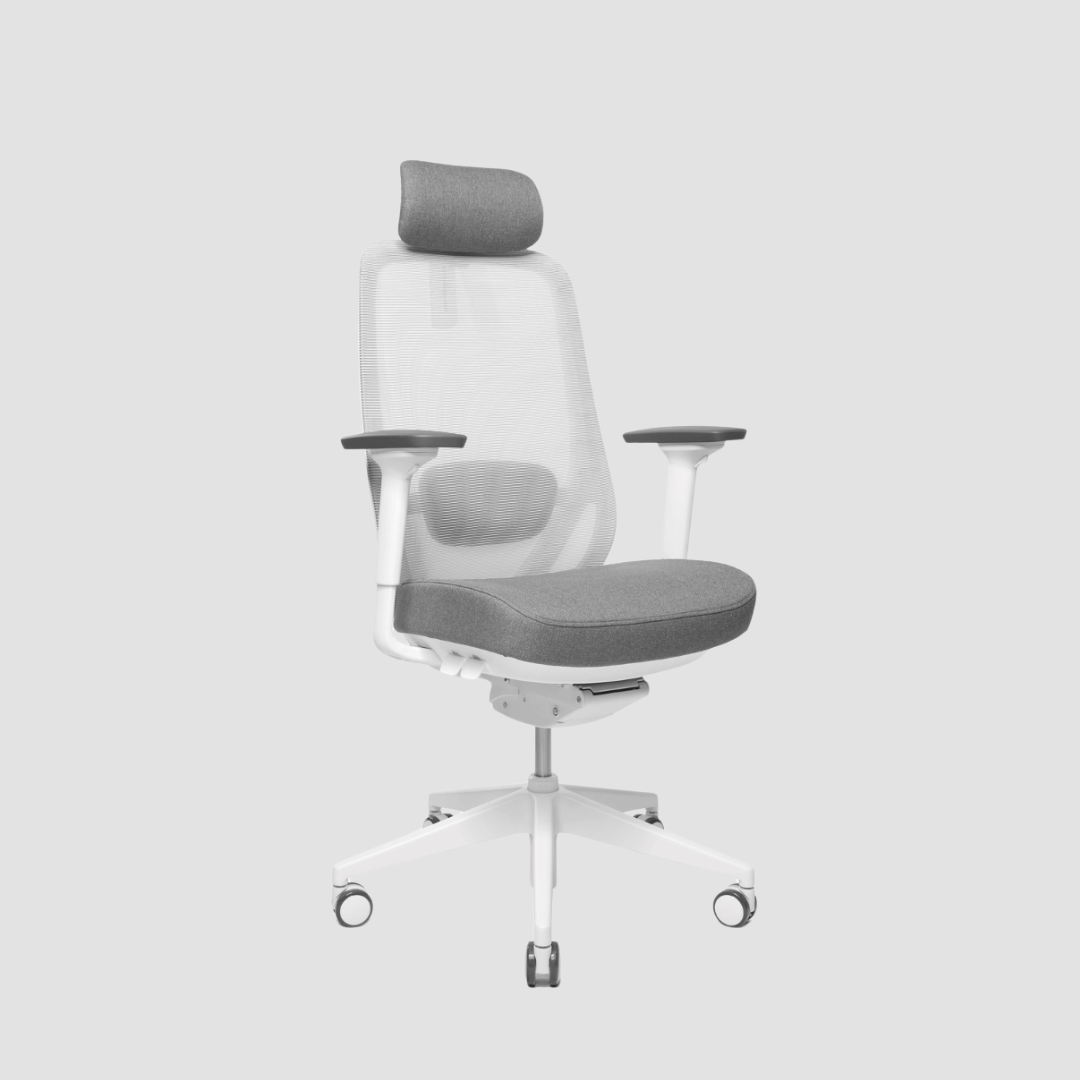
Gå efter en ergonomisk stol med en klar silhuet, justerbar lændestøtte og et polster, der er behageligt at røre ved. Sort eller mørkegrå skaber en skarp, moderne kontrast til egetræ. Uld i farverne havregryn, mos eller grafit giver rummet et blødere og mere hjemligt udtryk. Hvis du foretrækker et lysere skandinavisk udtryk, kan en varmegrå ramme og et neutralt polster fungere godt, men undgå kølige blågrå nuancer, der får gyldent egetræ til at se orange ud i sammenligning.
Der findes ikke én eneste rigtig kombination. Et kreativt studie kan passe godt sammen med en skulpturel stol og en mere udtryksfuld bordplade i egetræ med naturlige kanter. Et kontor med kundekontakt kan drage fordel af renere linjer, en bordplade med lige kanter og diskrete sorte detaljer. Det vigtigste er, at stolen støtter din krop og har den rigtige højde i forhold til skrivebordet.
Brug lys for at fremhæve materialet på den bedste måde
Eg ændrer udseende afhængigt af lyset. Kraftigt, koldt loftlys kan få det til at fremstå blegt og livløst, mens meget gule pærer kan give det et for orange skær. Gå efter et varmt, neutralt lys, typisk omkring 2700 K til 3000 K, med god farvegengivelse. Det fremhæver træets dybde uden at forvrænge det.
Placer skrivebordet vinkelret på et vindue, hvis det er muligt. Det mindsker genskin fra skærmen og giver dig samtidig sidelys på tværs af træets årer. Hvis skrivebordet vender mod en væg, skal du tilføje en fokuseret arbejdslampe med justerbart lampehoved. En lampe i sort metal, børstet stål eller pulverlakeret aluminium i bløde farver tilfører et praktisk, moderne præg. Messing kan også være smukt, men brug det med måde – en kombination af eg, messing og lysebrunt læder kan hurtigt komme til at virke mere traditionel, end det var meningen.
En ekstra gulvlampe eller væglampe er med til at give arbejdsområdet en følelse af at være en del af hjemmet, når mørket falder på. Det forhindrer også, at skrivebordslampen bliver det eneste lyspunkt i rummet, hvilket kan virke skarpt på lange vinteraftener.
Giv rummet personlighed uden at fylde hver eneste overflade
De mest overbevisende arbejdsområder i egetræ bærer præg af, at der står et rigtigt menneske bag. Et indrammet billede, en lille keramikskål, en yndlingsbog eller en plante kan skabe varme, men der bør være plads omkring hver enkelt genstand. Tænk i retning af et eller to blikfang frem for en samling af mange små ting.
Planter er særligt effektive ved siden af egetræ, fordi de fremhæver træets naturlige egenskaber. Vælg en skulpturel plante i en enkel krukke – dybtgrønt løv i en mat sort, stenfarvet eller cremefarvet krukke fungerer godt. Placer den ved siden af skrivebordet eller på et lavt opbevaringsmøbel i stedet for at fylde for meget på arbejdsfladen. Hvis der er begrænset naturligt lys, kan en grenkomposition eller tørrede græsser give den samme fornemmelse af tekstur, selvom de skal støves af en gang imellem.
Vægkunst skal understøtte koncentrationen, ikke kræve den. Abstrakte tryk, arkitekturfotografier eller en enkelt grafisk plakat virker ofte stærkere end en overfyldt gallerivæg bag skærmen. Hvis du jævnligt tager imod opkald, bør du overveje, hvad kameraet fanger: En rolig baggrund, et strejf af egetræ og én personlig detalje fremstår som regel både professionelt og imødekommende.
Indret opbevaringspladsen som en del af rummet
Opbevaring er det, der afgør, om et arbejdsområde forbliver roligt eller langsomt bliver kaotisk. Lukkede opbevaringsløsninger er velegnede til opladere, papirer og diverse genstande, der ikke behøver at være synlige. Åbne hylder bør helst forbeholdes bøger, et par opslagsværker og genstande med ægte æstetisk værdi.
Sørg for, at materialerne hænger sammen. En sort stålskuffeenhed kan afspejle skrivebordets ramme, mens et skab i egetræ kan forstærke træets varme. At kombinere begge dele er ofte den bedste løsning, især hvis man ønsker, at rummet skal fremstå moderne frem for alt for ensformigt. Brug kurve eller stofkasser kun der, hvor de løser et reelt opbevaringsproblem. For mange bløde opbevaringsløsninger kan få et raffineret kontor til at virke midlertidigt.
I små boliger bør man vælge ét stort opbevaringsmøbel i stedet for flere små. En lavere visuel horisont bevarer rummets åbenhed og giver skrivebordet i egetræ plads til at forblive rummets centrale element.
Lad arbejdsområdet udvikle sig i takt med dit arbejde
Et arbejdsområde behøver ikke at være færdigindrettet en gang for alle. Faktisk kommer den bedste udgave som regel først til syne efter et par ugers brug. Læg mærke til, hvor du naturligt placerer din bærbare computer, hvor kablerne samler sig, om lampen kaster skygge på dit tastatur, og om du rent faktisk bruger de ting, du har stillet frem.
Foretag små ændringer i stedet for at købe nyt. Fjern det tilbehør, der hænger fast i din ærme. Flyt planten, hvis den blokerer for dagslyset. Skift skrivebordsunderlaget, hvis det dækker for meget af egetræet. Massivt egetræ er bygget til at holde hele livet, og indretningen bør afspejle den samme tålmodighed: praktisk nok til hver eneste arbejdsdag, men samtidig så personlig, at det at sætte sig ned føles som at komme hjem.


Efterlad en kommentar
Dette websted er beskyttet af hCaptcha, og hCaptchas privatlivspolitik og servicevilkår gælder.