


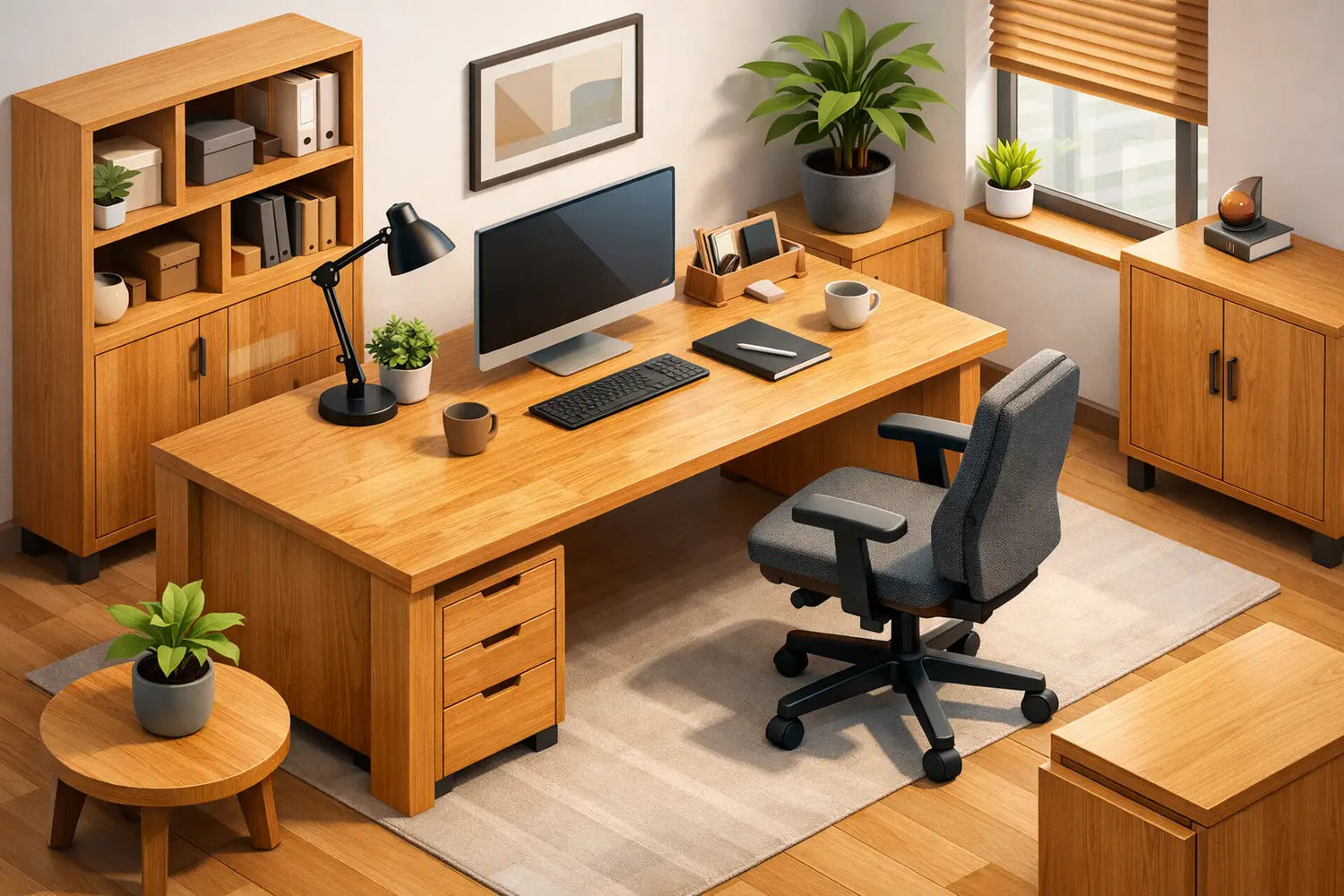
Et skrivebord er stedet, hvor arbejdet foregår, men det er også en af de største synlige flader i dit hjem. Derfor er det værd at overveje, om du skal vælge møbler i massivt egetræ, inden du nøjes med et hurtigt alternativ i form af et samlesæt. Ægte egetræ tilfører arbejdsområdet tyngde, varme og en følelse af varighed – egenskaber, der gør de lange timer ved skrivebordet til en mere gennemtænkt oplevelse.
I mange danske hjem er kontoret ikke længere gemt bag en lukket dør. Det ligger i et soveværelse, en stue eller et særskilt rum, der skal være funktionelt uden at fremstå alt for forretningsmæssigt. Massivt egetræ opfylder disse krav med sin ægte materialekarakter, der ældes med ynde, samtidig med at det imødekommer de praktiske krav i det daglige arbejde.
Hvorfor vælge møbler i massivt egetræ frem for finér eller laminat?
Den tydeligste forskel er ganske enkel: massivt egetræ er egetræ hele vejen igennem. En bordplade af massivt træ er fremstillet af ægte træplanker, ikke af et tyndt dekorativt lag, der er påført spånplade, MDF eller en anden sammensat kerne. Det ændrer møblets udseende, fornemmelse og den måde, det holder sig på med tiden.
Finér kan være flot og er ikke i sig selv af dårlig kvalitet. Det kan være et fornuftigt valg, når budgettet, vægten eller en bestemt konstruktion kræver det. Laminat er også praktisk til meget midlertidige løsninger eller rum, hvor en ensartet og prisbillig overflade er det vigtigste. Men ingen af delene tilbyder den samme dybde, reparationsmuligheder eller naturlige variation som et korrekt fremstillet møbel i massivt egetræ.
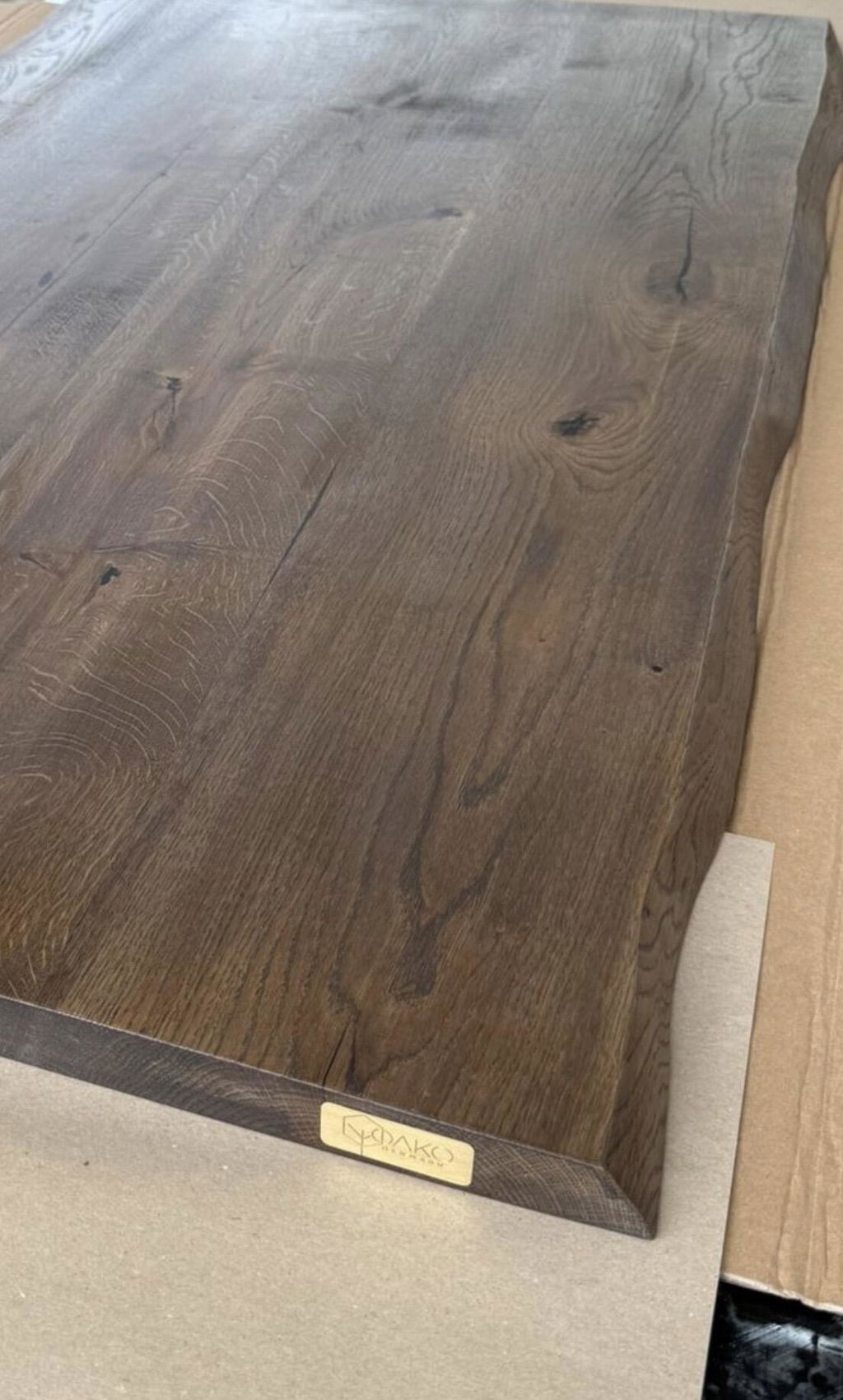
Når man lader hånden glide over massivt egetræ, kan man mærke årerne i stedet for blot at se en trykt gengivelse af dem. Overfladen reflekterer lyset forskelligt i løbet af dagen. Knaster, farvevariationer og subtile vækstmønstre giver hver bordplade sin helt egen identitet. Det er ikke uensartethed. Det er karakteren ved et naturmateriale.
Et skrivebord af massivt egetræ har også en visuel tyngde. Dets tykkelse og kantudformning skaber et mere solidt udtryk end en let bordplade. I et hjemmekontor fyldt med skærme, kabler og opladere udgør den naturlige tyngde en velkommen modvægt til al teknologien.
Fremstillet til mange års brug, ikke til kortvarig brug
Møbler får deres værdi gennem brug. Et skrivebord kan dag efter dag rumme skærme, bærbare computere, kaffekopper, kreative redskaber og en og anden hurtig frokost. Massivt egetræ er et hårdt træ, der er stærkt nok til at klare disse belastninger, når det er omhyggeligt udvalgt, behandlet og vedligeholdt.
Små mærker hører med til at leve med træ, men de behøver ikke at være permanente. I modsætning til en skrammet laminatoverflade eller beskadiget finer kan massivt egetræ ofte friskes op. En let slibning og en passende behandling kan mindske synligheden af ridser, pletter eller slidte områder, da der er ægte materiale under overfladen. Dette giver møbler af massivt træ en længere levetid og gør dem mere modstandsdygtige.
Det betyder dog ikke, at egetræ er uforgængeligt. Det kan få buler ved kraftige stød, og der bør ikke stå vand på overfladen. Træ reagerer på omgivelserne, især ændringer i luftfugtighed og temperatur. Det er rimelige kompromiser for et naturmateriale, og de kan håndteres med daglig pleje: Brug underlag, tør spildt væske straks op, og undgå at placere skrivebordet op ad en radiator eller i direkte, intens sol i længere perioder.
Belønningen er møbler, der kan udvikle en mere karakterfuld patina i stedet for blot at se slidte ud. En bordplade af egetræ behøver ikke at forblive i samme stand som den dag, den blev leveret, for at se godt ud. Med tiden får den mere personlig karakter.
Et bedre argument for langsigtet værdi
Den umiddelbare pris på møbler i massivt egetræ er højere end prisen på spånplademøbler, og det er helt naturligt. Udvælgelse af træ, omhyggelig tørring, bearbejdning, overfladebehandling og fagmæssig samling kræver alt sammen mere arbejde end masseproduktion af tynde laminerede plader. Når man vurderer omkostningerne, er det en fordel at se længere frem end selve købet.
Et billigt skrivebord, der mister sin kant, svulmer op efter en spildt væske eller ikke længere passer ind i dit rum om et par år, medfører endnu en beslutning om udskiftning. Et veludført skrivebord i egetræ er designet til at forblive relevant gennem karriereskift, flytninger og skiftende indretninger. Det kan fungere som en arbejdsplads, der fremmer koncentrationen nu, og senere som en rummelig spise-, atelier- eller mødeflade.
For dem, der bevidst indretter et hjemmekontor, er den fleksibilitet afgørende. De bedste møbler købes ikke blot til et rum. De bliver en del af den måde, rummet forandrer sig i takt med dit liv.
Eg skaber ro i et højtydende arbejdsmiljø
Ergonomi diskuteres ofte i forhold til bevægelse: at stå, at sidde, skærmhøjde og stolens støtte. Disse detaljer er afgørende. Men det materiale, du arbejder i et miljø med, har også indflydelse på rummets atmosfære.
Eg tilfører en organisk blødhed til et miljø, der er domineret af metal, glas og digitale skærme. Dens varme undertoner kan give rummet en rolig atmosfære uden at virke rustikt eller tungt. Kombineret med en ren stålramme til skrivebordet bliver resultatet præcist og moderne: her mødes eg og teknologi.
Dette er især vigtigt i små boliger. Et arbejdsområde med et skrivebord i massivt egetræ kan fremstå som et møbel med et klart formål i stedet for et kontorarrangement, der skal gemmes væk efter kl. 17.00. Kombiner det med en matchende skærmhylde, en opbevaringsløsning eller en kabelstyring i afdæmpede udførelser, så fremstår arbejdsområdet som en sammenhængende del af boligen.
Åretegningen giver også øjet et naturligt sted at hvile. Hvert stykke er unikt, men egetræet fremstår visuelt roligt nok til at fremme koncentrationen. Det tilfører karakter uden at stjæle opmærksomheden fra det arbejde, man har foran sig.
Massivt egetræ og ståborde er en velovervejet kombination
Et højdejusterbart skrivebord kræver mere end blot en flot bordplade. Det kræver en stabil ramme, pålidelig løftekraft og en bordplade, der står i et harmonisk forhold til mekanismen nedenunder. Massivt egetræ skaber en særdeles vellykket balance med en kvalitetsramme af stål med to motorer: Teknologien understøtter bevægelsen, mens træet giver skrivebordet en følelse af holdbarhed og menneskelighed.
Der er et praktisk aspekt, man skal tage højde for. Massivt egetræ vejer mere end kompositplader, så rammen skal være dimensioneret til at bære vægten af bordpladen og det udstyr, der placeres på den. Dette er ikke et kompromis, man bør se bort fra. Det er en god grund til at vælge et stående skrivebordssystem, der er designet som en helhed, frem for at kombinere en tung bordplade af massivt træ med et understel, der ikke er stærkt nok.
Med den rette konstruktion giver det en tryg oplevelse. Skrivebordet forbliver stabilt, når det hæves og sænkes, og den solide bordplade kan bære en opsætning med flere skærme uden at virke overbelastet. For professionelle, der tilbringer en stor del af ugen ved deres skrivebord, er denne tryghed en del af den daglige komfort.
Hos OAKO er det netop dette princip, der ligger til grund for kombinationen af håndlavede bordplader i europæisk eg og robuste stel med to motorer. Målet er ikke blot at tilføje træ til et justerbart skrivebord. Det handler om at skabe et arbejdsområde, der fungerer godt og passer ind i et veldesignet hjem.
Hvad man skal være opmærksom på, når man køber møbler i massivt egetræ
Ikke alle produkter, der beskrives som »eg«, er ens. Spørg, om hovedoverfladen er af massivt træ, finér eller en overfladebehandling, der ligner eg. Se på bordpladens tykkelse, kantbehandlingen og hvordan træet er blevet behandlet. Disse detaljer afslører, om møblet er fremstillet med henblik på en lang levetid eller for at skabe en hurtigere visuel effekt.
Europæisk eg er meget værdsat for sin tætte årestruktur, styrke og afdæmpede farvevariation. Dens udseende passer naturligt ind i skandinaviske interiører, men den er også alsidig nok til mørkere, mere udtryksfulde rum. En ren, lige kant fremstår arkitektonisk og minimalistisk, mens en naturkant bevarer mere af træets oprindelige linjer. Ingen af delene er objektivt set bedre. Valget afhænger af, om du ønsker et mere strømlinet eller et mere organisk udtryk.
Tænk også på proportionerne. Et stort skrivebord i egetræ giver et markant indtryk, men i et kompakt rum kan det være en fordel med et skrivebord med mindre dybde eller et lettere understel for at bevare den visuelle luftighed. Vælg en størrelse, der giver plads til din skærm, dit tastatur, dine noter og din arbejdsstilling, uden at rummet kommer til at ligne en udstillingshal for skriveborde.
Til sidst er det vigtigt at sætte sig ind i anvisningerne vedrørende overfladebehandling og pleje. Oliebehandlinger fremhæver typisk træets naturlige, taktile kvalitet og kan fornyes med tiden. Andre overfladebehandlinger kan give bedre beskyttelse af overfladen, men har en lidt anden fornemmelse. Det rigtige valg afhænger af, hvordan du arbejder, og hvor meget praktisk vedligeholdelse du foretrækker.
Et materiale, der beder dig om at beholde det
Møbler af massivt egetræ udstråler en rolig selvtillid. De behøver ikke at satse på en trendbestemt overflade eller en imiteret åretegning for at overbevise. De byder på ægte materiale, ægte variation og muligheden for et langvarigt forhold til genstanden.
Vælg det skrivebord, der passer til din krop, dit rum og din arbejdsrutine. Vælg derefter en overflade, som du stadig har lyst til at røre ved, se på og passe på, når den første begejstring over det nye hjemmekontor har lagt sig. Det er her, massivt egetræ viser sin værdi: ikke i et enkelt førstehåndsindtryk, men i de mange års arbejde, ideer og hverdagsliv, som det er bygget til at holde til.


Efterlad en kommentar
Dette websted er beskyttet af hCaptcha, og hCaptchas privatlivspolitik og servicevilkår gælder.