

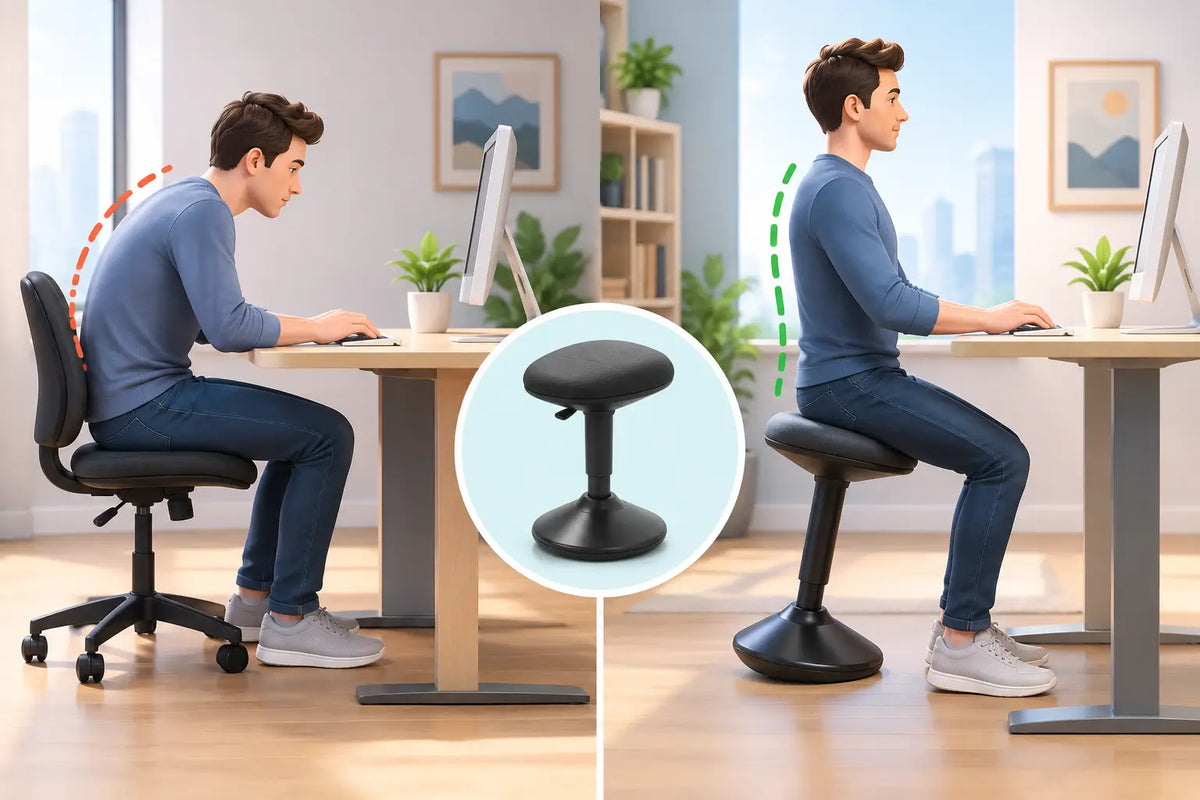
By mid-afternoon, poor posture rarely starts with a lack of willpower. It starts when your body has been asked to hold the same position for too long. So, do active stools improve posture? They can support better movement habits and make slumping less comfortable, but they are not a corrective tool or a substitute for a well-designed workstation.
For design-conscious home offices, that distinction matters. An active stool may look beautifully minimal beside a solid oak standing desk, yet its value is practical: it encourages subtle shifts in position while you work. Used well, it can become one part of a workspace that feels considered, capable and genuinely comfortable through a long day.
What makes a stool “active”?
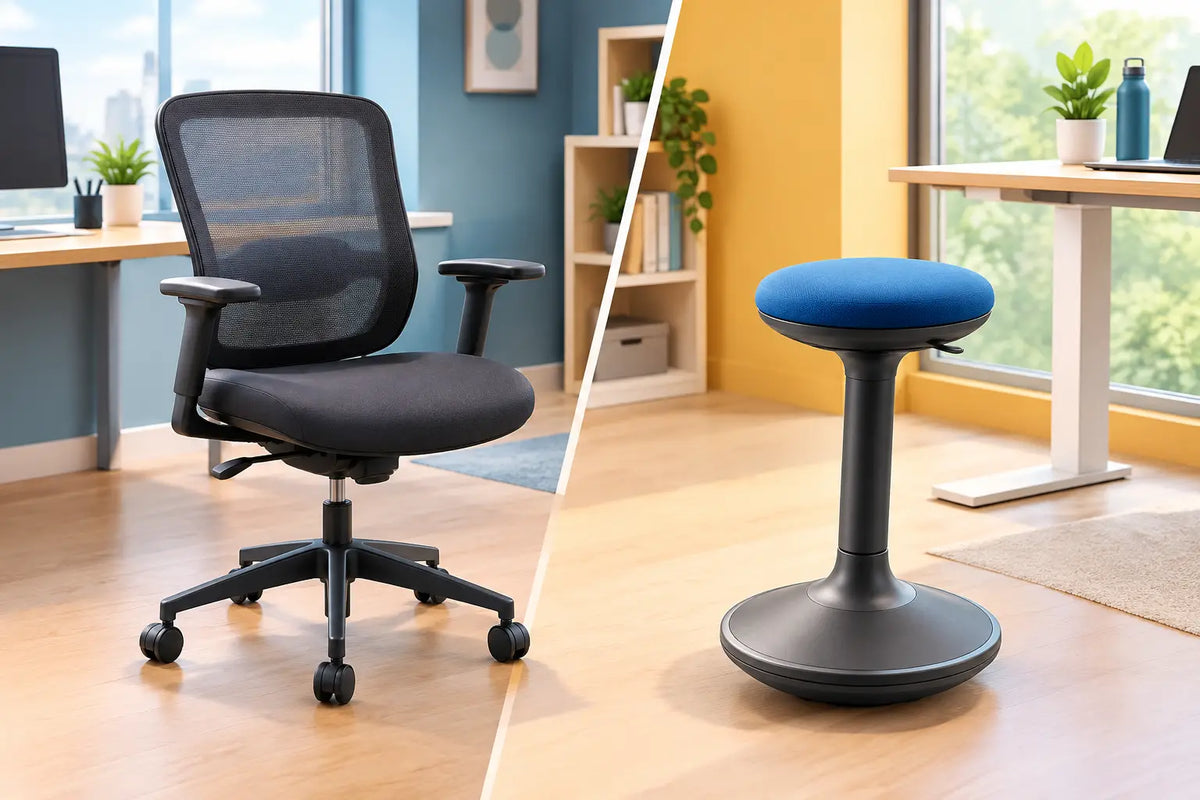
An active stool is designed to allow a degree of movement while seated. Depending on the model, that may mean a gently tilting base, a rounded bottom, a pivoting seat or a height range suited to sit-stand work. Instead of locking the body into the fixed angles of a conventional office chair, it lets the pelvis and torso make small, frequent adjustments.
Those adjustments are the point. Sitting is not automatically harmful, and standing all day is not a perfect answer either. The issue is sustained stillness. A conventional chair can be excellent for focused work, especially when it offers supportive adjustment. An active stool simply introduces a different sitting experience: one that asks the body to participate a little more.
It is worth separating active stools from kneeling chairs and saddle chairs. All can change hip angle and encourage a more upright position, but their support, pressure points and movement patterns are different. The right choice depends on your work, your body and how long you expect to sit at a time.
Do active stools improve posture in practice?
For some people, yes - in a limited and useful sense. An active stool can make it easier to avoid collapsing into the back of a seat, rounding through the lower spine and allowing the head to drift far in front of the shoulders. Because the seat moves, you naturally make small corrections. This may help you maintain a more alert, balanced posture during shorter work periods.
But “better posture” is not one frozen, photogenic position. There is no single arrangement of spine, shoulders and hips that should be held for eight hours. A healthy working posture is one you can change often, without strain. If an active stool gets you moving more frequently, it may improve the quality of your sitting. If it makes you tense your shoulders, grip through your feet or fatigue quickly, it is working against you.
Research around dynamic sitting suggests that moving seats can increase low-level trunk activity and movement variation. That does not mean an active stool will resolve back pain, strengthen your core in a meaningful way or correct longstanding postural habits. Claims that promise a transformed spine from one piece of furniture deserve caution. Ergonomics works best as a system, not as a miracle purchase.
The benefit is movement, not instability
A good active stool should offer controlled movement, not turn desk work into a balancing exercise. You should feel free to shift, tilt and reset your pelvis without feeling that you need to brace constantly to stay upright.
This is where quality matters. A stable, well-built base, a supportive seat and reliable height adjustment create confidence. The stool should move with you, then settle. Excessive wobble may feel novel for five minutes, but it can become distracting during a call, a detailed design task or a concentrated writing session.
Seat height is equally important. At your desk, your elbows should rest comfortably around desk height, with shoulders relaxed rather than lifted. Your feet should reach the floor or a stable footrest. If your knees are pushed high, your hips are cramped; if the stool is too tall and your feet dangle, your lower body loses useful support.
An active stool often works particularly well with a height-adjustable desk because it supports quick changes between sitting, perched sitting and standing. That rhythm is more valuable than attempting to find one flawless seated posture at 09:00 and preserving it until 17:00.
When an active stool is a strong choice
Active stools suit people who already like to change position. They can be especially effective for short tasks between standing periods, informal meetings, creative work and workspaces where a large task chair feels visually heavy. Their compact footprint also makes them practical in a home office where every material and object is visible.
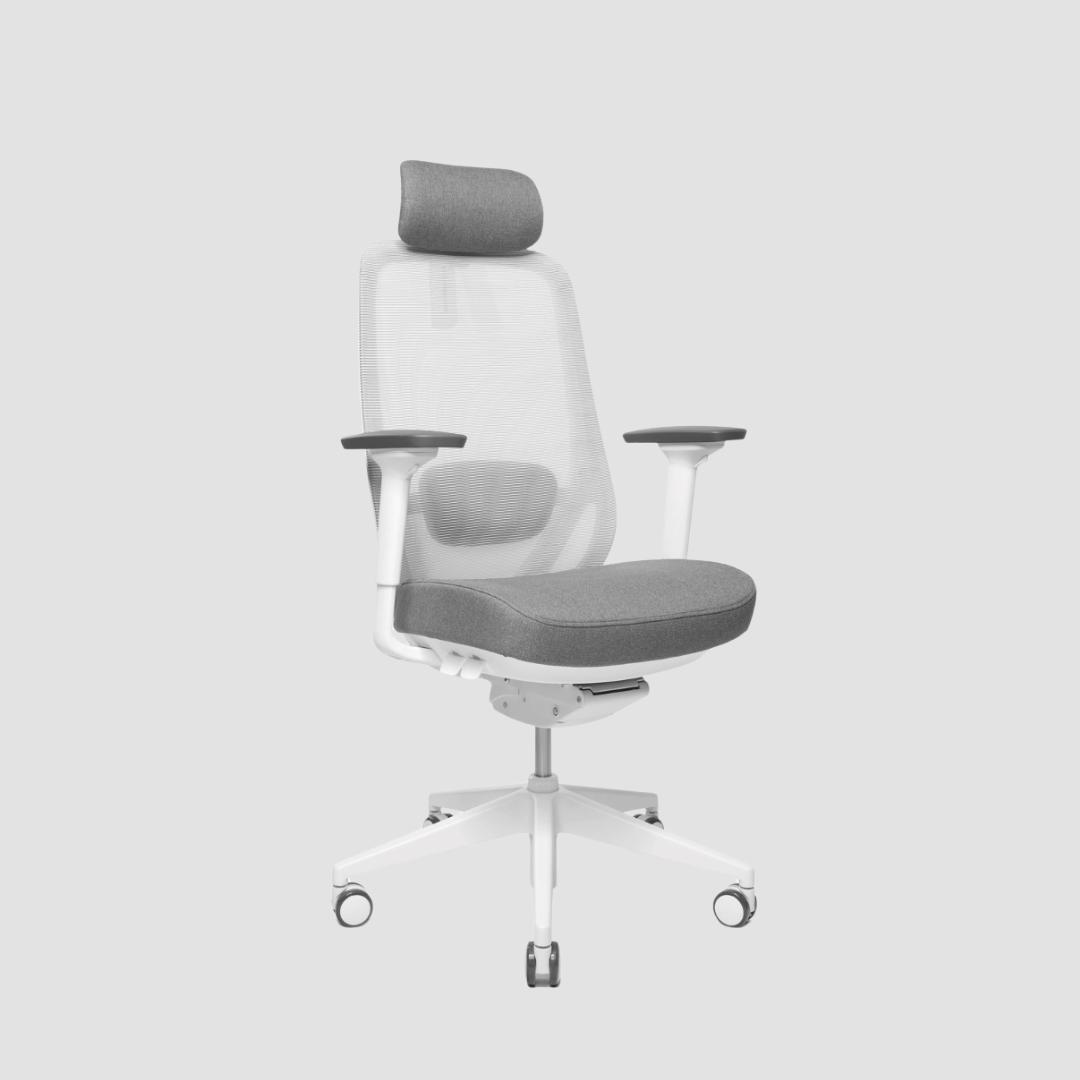
They are less ideal as the only seat for everyone. If your work involves long, uninterrupted sessions, you may appreciate the back support, armrests and deeper adjustment of a quality ergonomic chair. A stool gives your body more freedom, but it also asks more from it. There is a trade-off between movement and passive support.
Consider an active stool if you want to:
- vary your position regularly between standing and sitting
- keep your home office visually light without compromising on function
- encourage short, active seated sessions
- complement, rather than necessarily replace, an ergonomic chair
Set up the rest of the desk first
An active stool cannot compensate for a screen that is too low or a desk that is too high. Many apparent posture problems begin with the workstation pulling the body out of position. When the monitor sits low, the neck bends forward. When the keyboard is too far away, the shoulders reach. When cables, clutter and poor storage limit desk space, people perch at the edge of the seat and work in awkward angles.
Start with the screen. The top third should generally sit close to eye level, allowing you to look forward with a relaxed neck. Position it directly in front of you, at a comfortable viewing distance. Then set the desk so your forearms can rest naturally while typing and your shoulders remain down.
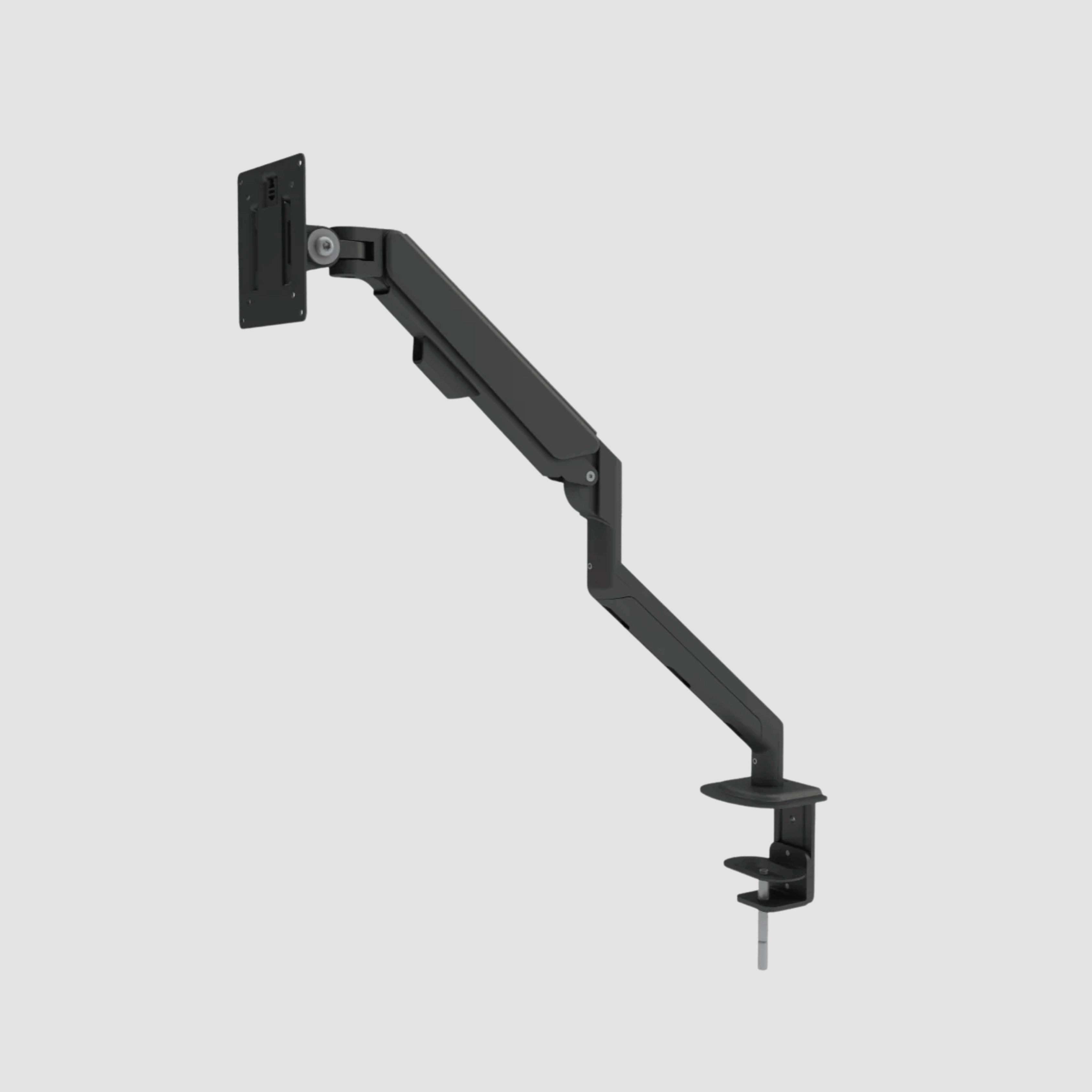
With a height-adjustable desk, save a sitting height and a standing height that feel natural. Your standing setup should not encourage locked knees or raised shoulders any more than your seated setup should. A monitor arm can make these changes easier, particularly when several people share the workspace or when laptop work needs to become more permanent.
Material and proportion also influence whether you use a workspace well. A generous solid oak surface gives you enough room to place the screen, keyboard and writing materials without creating the cramped, forward-reaching habits common on narrow desks. The warmth of real wood may not alter biomechanics, but a workspace you value is more likely to be kept clear, adjusted properly and used with intention.
Build a working rhythm that lasts
The most effective posture strategy is simple: change position before discomfort forces you to. Use the active stool for a focused block, stand for a call, take a few steps while reviewing notes, then return to the chair or stool that suits the next task. The exact timing will vary. Some people prefer twenty-minute changes; others settle into forty-five-minute blocks. Your body is a better guide than a rigid productivity rule.
Notice the early signals: a creeping forward head, pressure through one hip, shoulders rising towards the ears or a tendency to lean heavily on one arm. These are cues to reset the screen, adjust the seat, stand up or move - not cues to endure.
At OAKO, we see the best home offices as working environments rather than collections of products. A well-made desk, an active stool, proper screen placement and room to move all have distinct roles. Together, they make it easier to work with more ease and less compensation.
Choose an active stool for the movement it can invite, not for a promise of perfect posture. Pair it with a desk that fits your body, make small adjustments throughout the day, and let comfort be something you build into the way you work.

Hinterlasse einen Kommentar
Diese Website ist durch hCaptcha geschützt und es gelten die allgemeinen Geschäftsbedingungen und Datenschutzbestimmungen von hCaptcha.