




A height-adjustable desk changes how you work only when the rest of the workspace supports movement too. Learning how to choose an active stool means looking beyond a compact seat and considering how it will work with your body, your desk height and the character of your office.
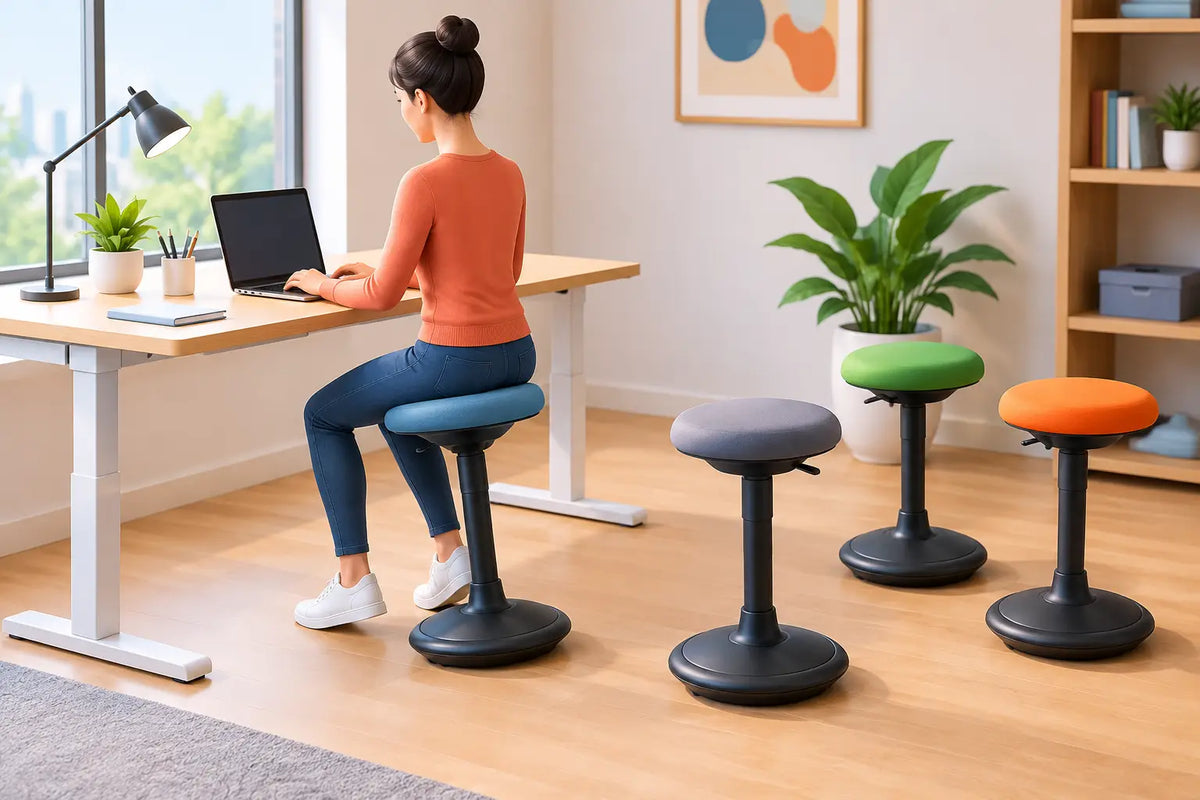
An active stool is designed for short, dynamic periods of sitting. It encourages subtle movement through the hips, core and lower back rather than holding you in one fixed position for hours. For professionals who alternate between sitting and standing, it can make the transition feel more natural - and make a considered workspace feel lighter, more flexible and more personal.
Start with the way you actually work
The best active stool is not necessarily the one with the most movement. It is the one that fits your working rhythm.
If you regularly stand for calls, answer emails at a raised desk and sit briefly between tasks, a taller perching stool can be an excellent companion. It gives you a place to rest without returning to the deep, static posture of a traditional office chair. This is particularly useful in focused home offices where space is limited and every piece needs a clear purpose.
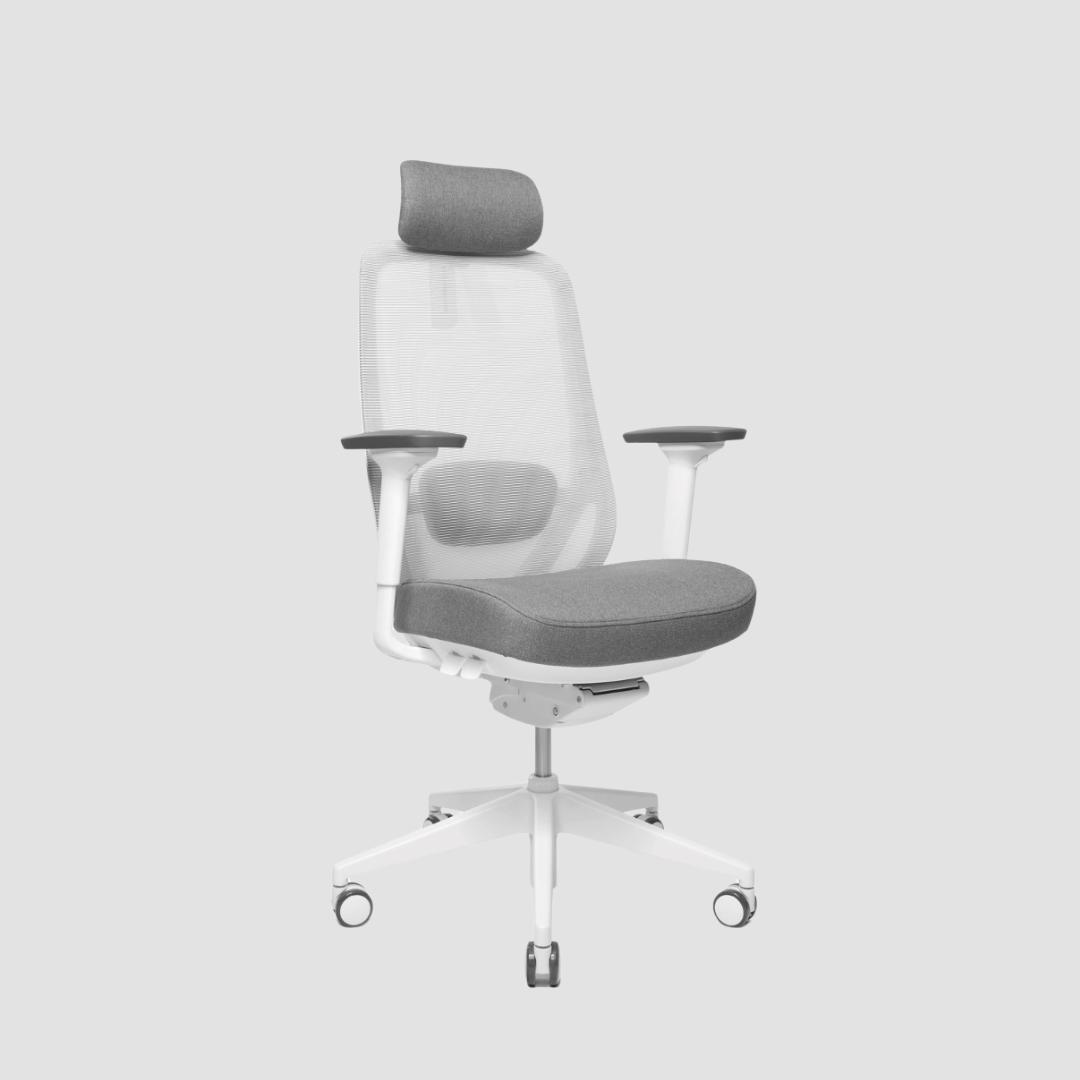
If your work involves long sessions of writing, design work, spreadsheets or detailed editing, an active stool should complement a proper ergonomic chair rather than replace it. A stool is ideal for variation. A supportive chair remains the better choice when you need back support, armrests and sustained comfort for several uninterrupted hours.
That distinction matters. Ergonomics is not about finding one perfect posture and holding it all day. It is about changing position often enough that no single posture carries the entire load.
How to choose an active stool for the right height
Height is the first non-negotiable. An active stool must let you work with relaxed shoulders, bent elbows and forearms that meet the desk comfortably. If the stool is too low, you will round forward or raise your shoulders. Too high, and your feet may lose secure contact with the floor or foot ring.
Begin with the height range of your desk. A standard seated desk usually needs a stool that adjusts roughly within conventional chair height. A standing desk, used in its raised position, calls for a taller model with a broader adjustment range. Many people use an active stool at a semi-standing height: hips slightly higher than knees, feet grounded and weight shared between the feet and seat.
Your proportions matter as much as the desk measurement. Taller users often need a generous maximum seat height, while shorter users should pay close attention to the minimum height. A stool that technically reaches the right level but leaves your feet dangling is not a good ergonomic fit.
If you share a workspace, easy adjustment becomes especially valuable. A smooth, intuitive mechanism makes it more likely that each person will set the stool correctly rather than settling for an almost-right position.
Pair the stool with your desk, not just the room
A beautifully made stool can still feel wrong beside an incompatible desk. Consider the full working arrangement: desktop height, monitor position, keyboard placement and where your feet naturally land.
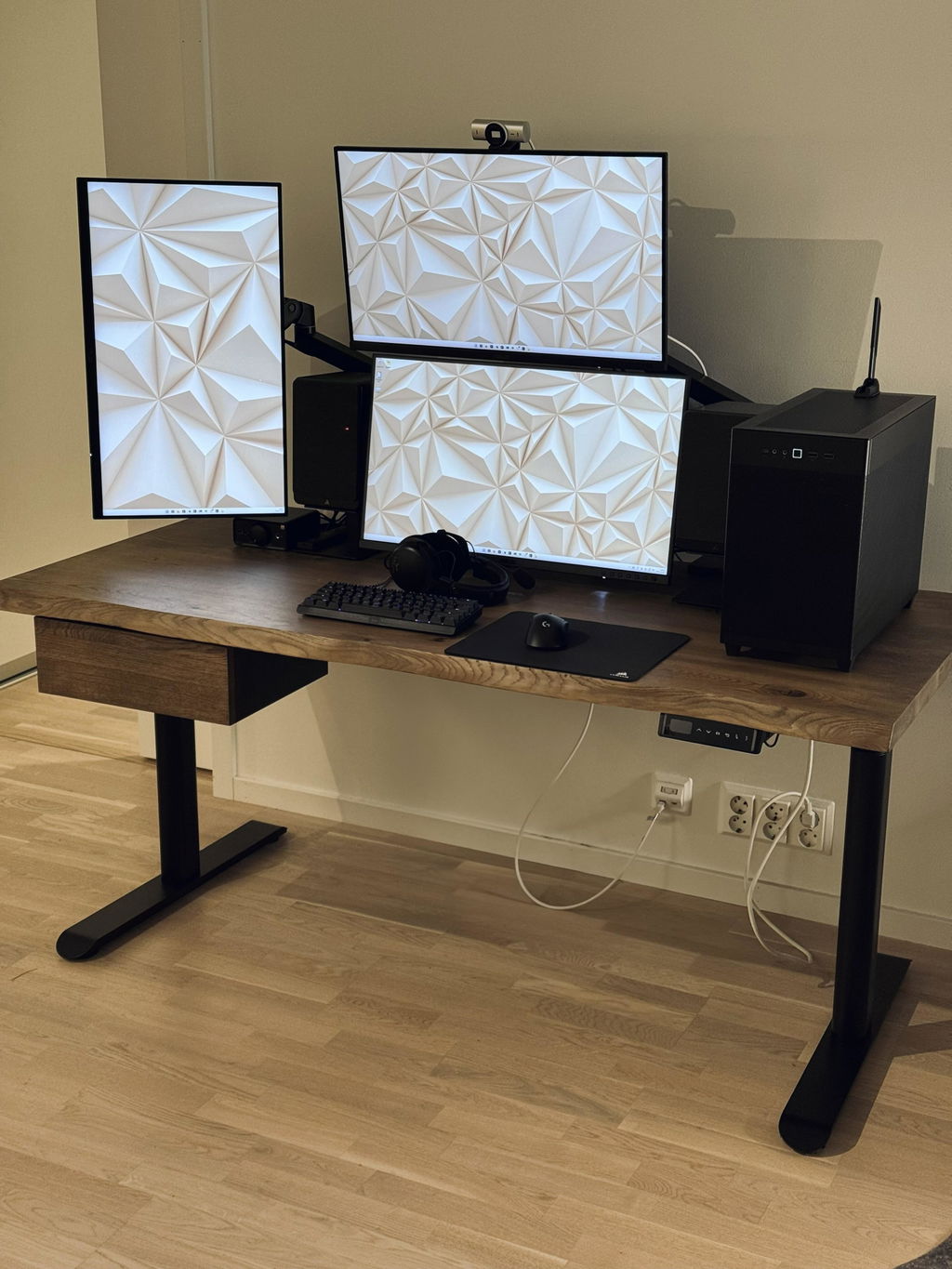
At a solid oak sit-stand desk, a height-adjustable active stool can create a useful middle setting between seated and standing work. The visual balance matters, too. A compact stool with a restrained silhouette preserves the clean lines of the desk rather than crowding the space beneath it.
Choose the type of movement with care
Active stools vary considerably. Some have a rounded base that permits a gentle tilt in every direction. Others use a flexible central column, a rocking mechanism or a slightly unstable seat. The goal is controlled movement, not a workout while you are trying to concentrate.
A gentle wobble base is usually a strong choice for desk work. It lets the pelvis make small adjustments and invites active sitting without demanding constant attention. This can feel natural for email, calls and short creative tasks.
More pronounced movement may appeal if you enjoy a lively, perch-like seat and use it for brief intervals. But it can become distracting during precise work, particularly if you are typing intensely or using detailed design tools. The right level is personal: movement should feel supportive, not like something you must manage.
Also look at the seat shape. A lightly contoured or saddle-style seat can encourage an open hip angle, which many users find comfortable at a raised desk. A flatter, wider seat may feel more familiar and offer greater freedom to shift position. Neither is universally better. Try to match the form to your preferred sitting posture rather than choosing solely on appearance.
Do not mistake instability for ergonomics
An active stool should move, but it should also feel dependable. This is where base design, load capacity and build quality deserve close attention.
A weighted base offers reassurance when leaning, turning or stepping onto the stool. A broad footprint can improve stability, especially on smooth floors or when the seat is adjusted high. If the model includes castors, check whether they are lockable and suitable for your floor surface. Mobility can be useful in a larger studio, but an unwanted roll is not a benefit during focused work.
For taller stools, a foot ring is often worth having. It provides a stable place for your feet when the seat is elevated and can reduce pressure through the legs. On lower models, firm contact with the floor is usually preferable.
Pay attention to the stated weight capacity, the quality of the gas lift and the solidity of the mechanism. These are practical details, but they shape the experience every day. A stool that creaks, sinks or feels uncertain will quickly undermine even the most considered office.
Consider seat comfort and material honestly
Because an active stool is made for movement and shorter sitting periods, it does not need the deep cushioning of a lounge chair. Still, a thin or overly firm seat can make you avoid using it altogether.
Look for supportive padding that holds its shape, with upholstery that suits how you work. Fabric can bring warmth and softness to a home office. Leather or high-quality faux leather is easier to wipe clean and can feel more formal. Wool-rich textiles offer texture and a calm, tactile finish, though they may need more care in homes with pets or children.
The material should belong in the room. A workspace built around natural oak, honest steel and restrained Scandinavian forms benefits from a stool with the same sense of substance. That does not mean everything must match exactly. Contrast can work beautifully, but it should look intentional: warm timber against a dark upholstered seat, or a muted textile balanced by a clean metal base.
At OAKO, that principle is familiar: the most enduring workspace choices tend to pair genuine materials with purposeful function, rather than treating either as decoration.
Think about footprint, storage and visual calm
Active stools are often chosen because they are compact, but dimensions still matter. Measure the space under and around your desk, especially if you use a drawer unit, cable tray or footrest. A large base may improve stability, yet it can interfere with your natural leg position in a tighter setup.
Consider what happens when the stool is not in use. Can it tuck neatly beneath the desk? Does its profile keep the room open? In a home office that also serves as a bedroom, living area or dining space, visual calm is part of comfort.
Avoid buying only for minimalism, however. An extremely small seat may look elegant but become impractical if it limits your ability to shift position. The best compact designs feel considered rather than compromised.
Test the return policy, not only the specifications
Measurements and product images can tell you a great deal, but sitting is personal. When buying online, review the practical terms before committing: return conditions, assembly requirements, warranty coverage and replacement-part availability.
A stool may look right beside your desk and still prove too firm, too tall or too lively after a week of use. A clear return process gives you room to assess it properly in your own workspace, with your own screen height and daily habits.
It is also worth considering longevity. Replaceable components, durable upholstery and a mechanism built for repeated adjustment are better signals of value than a low initial price. Workspace furniture is used more intensely than most people expect. Choosing well means buying something that continues to feel good after hundreds of transitions between sitting and standing.
The right active stool should make movement feel almost unnoticeable: a small shift during a call, a perch between tasks, a more open posture at a raised desk. Choose the one that invites those moments naturally, then let the rest of your workspace do what it should - support focused work without asking for attention.



Dejar un comentario
Este sitio está protegido por hCaptcha y se aplican la Política de privacidad de hCaptcha y los Términos del servicio.