

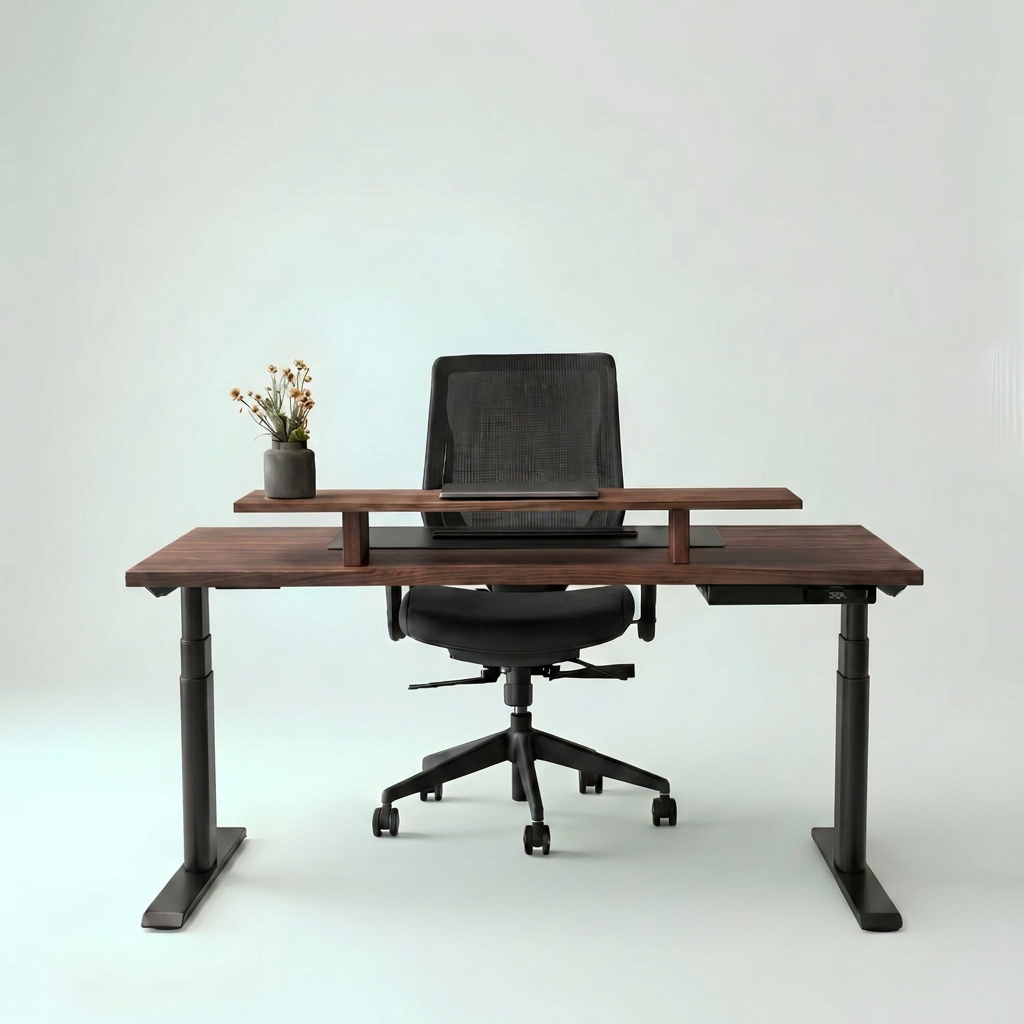
A beautiful solid oak desk can quickly lose its calm presence beneath loose cables, a poor chair, and objects that have no reason to be there. Premium office accessories are not decorative extras added at the end of a workspace project. Chosen well, they shape how the desk feels to use, how easily you can focus, and whether the room still looks considered after a demanding week.
For a home office to work over years rather than months, every supporting piece should earn its place. That means looking beyond matching colours and asking better questions: Does it improve posture? Does it protect the desk? Does it reduce visual noise? Is it made from materials that will age with integrity?
What Makes an Office Accessory Premium?
The word premium is often used too freely. A higher price, a glossy finish, or a logo on the packaging does not automatically create lasting value. In a workspace, premium means an accessory has a clear purpose, is made with care, and continues to perform after daily use.
Materials are central. Solid wood, powder-coated steel, wool, leather, and dense felt have a tactile honesty that plastic imitations cannot replicate. They also tend to wear more gracefully. Oak gains depth with time. Steel remains stable under load. Quality felt softens sound and protects surfaces without looking temporary.
Construction matters just as much. A monitor arm should move smoothly, hold its position, and support the weight it claims to support. A cable tray should remain rigid when filled with chargers and power strips. A desk mat should lie flat at the edges instead of curling after a season. These details may appear small, yet they are the difference between a workstation that feels resolved and one that requires constant correction.
Premium also means visual restraint. The best accessories support the architecture of the desk rather than competing with it. On a solid oak surface, that often means choosing quiet, purposeful forms in black steel, warm natural textiles, or similarly honest wood tones.
Start With the Problems You Feel Every Day
Buying accessories one at a time can lead to clutter in a more expensive form. Begin instead with the friction points in your working day. Perhaps your neck tightens after long hours at the screen. Perhaps the cable tangle under the desk distracts you every time you sit down. Perhaps your laptop occupies the best part of the desktop while a notebook, coffee and external keyboard fight for the remaining space.
The right order of investment usually follows the body first, then the technology, then the visual details. An ergonomic chair, monitor support, and correctly positioned keyboard can change the physical experience of work. Cable management and storage remove distractions. A desk mat, headphone holder, or carefully chosen organiser then gives the setup its final sense of order.
This does not mean every desk needs every accessory. A designer working with two large displays has different requirements from a consultant who moves between a laptop and handwritten notes. The aim is not to create a desk that looks equipped. It is to create one that supports the way you actually work.
Premium Office Accessories Worth Prioritising
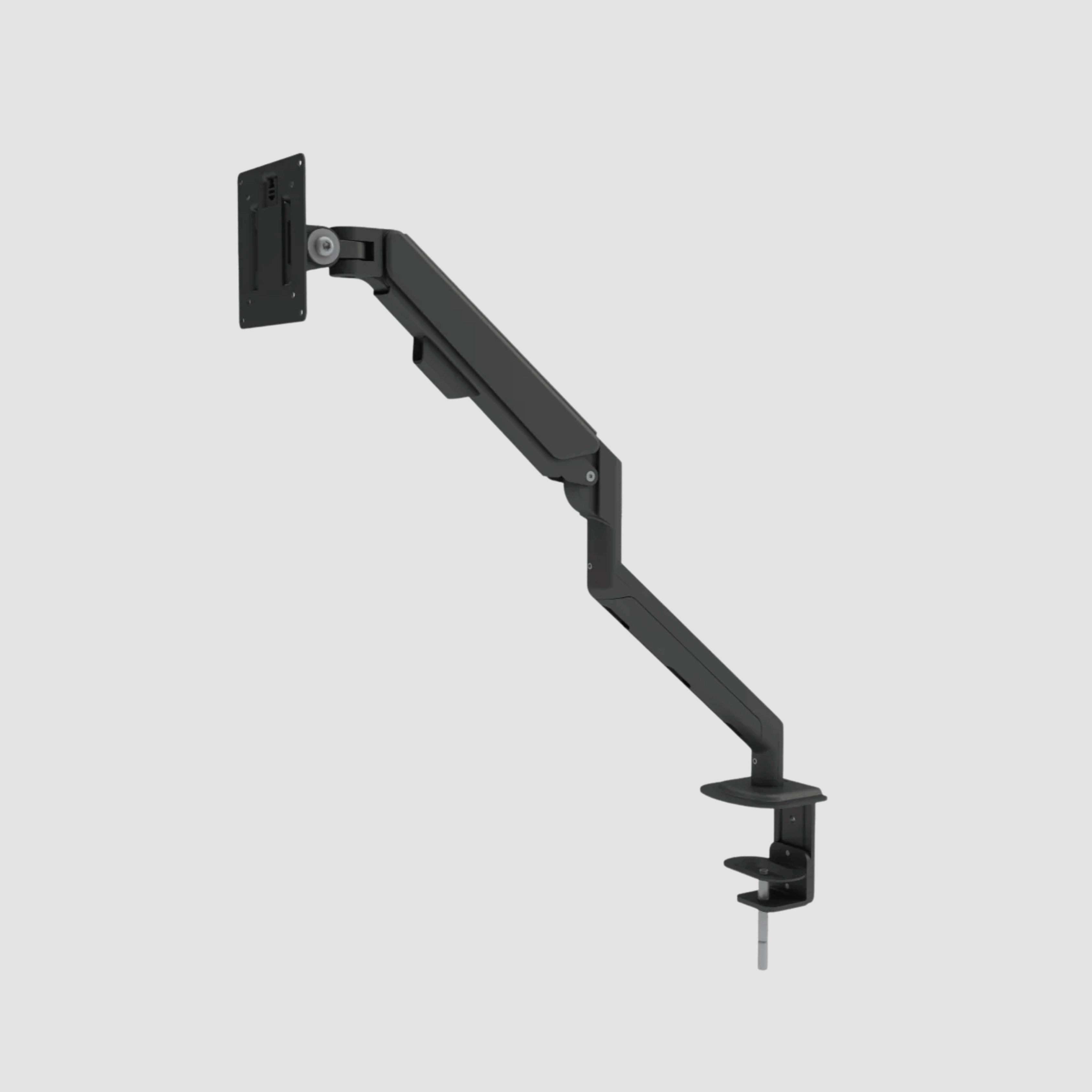
A monitor arm that gives your desk room to breathe
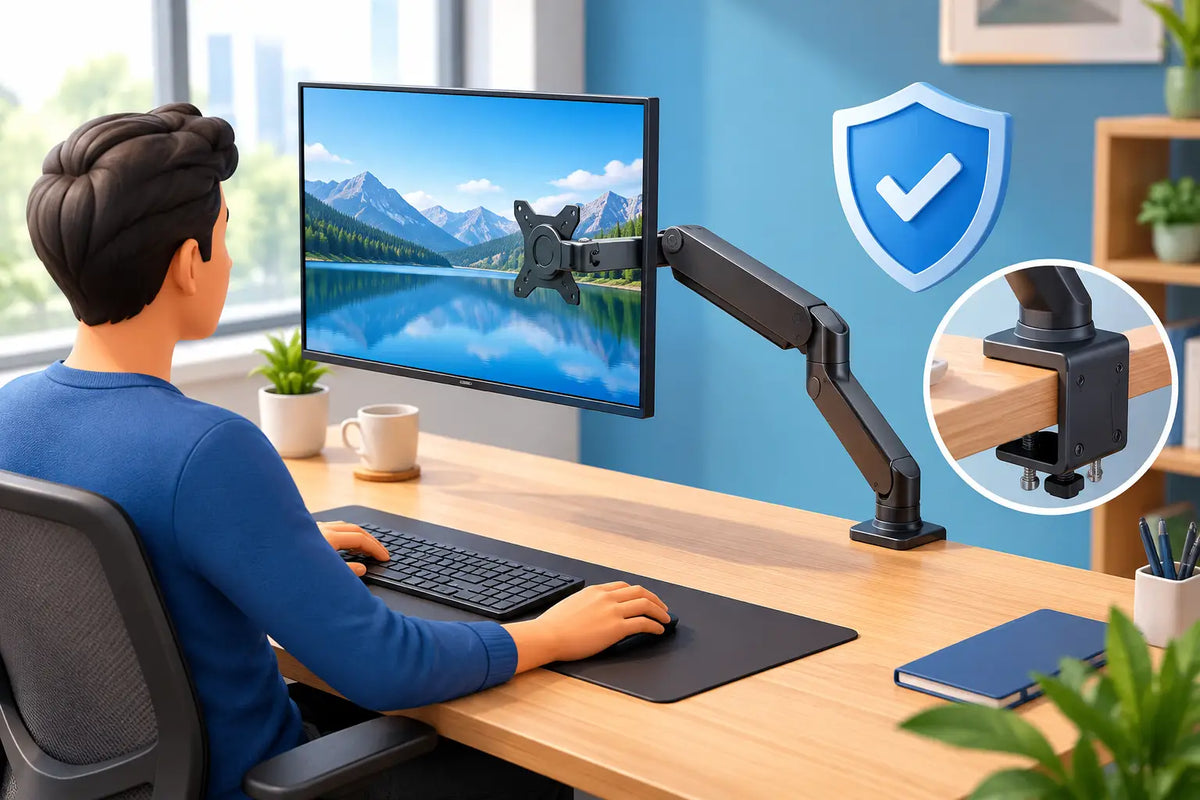
A monitor arm is one of the most effective upgrades for anyone using an external screen. Raising the display to a more natural eye level can reduce the tendency to lean forward, while freeing valuable space below the monitor. It also allows you to adjust your position when alternating between sitting and standing.
Look for a model with a stable clamp, clean cable routing, and a weight range that matches your screen. Oversized monitors need more than an attractive arm - they need a properly engineered one. For a single lightweight display, a simpler arm may be all that is necessary.
Cable management that respects the desk
Cables are a practical reality, but they do not need to define the room. A well-designed cable tray keeps power strips, adapters and excess wire off the floor and out of sight. Combined with cable clips or sleeves, it creates a clearer desk zone and makes cleaning easier.
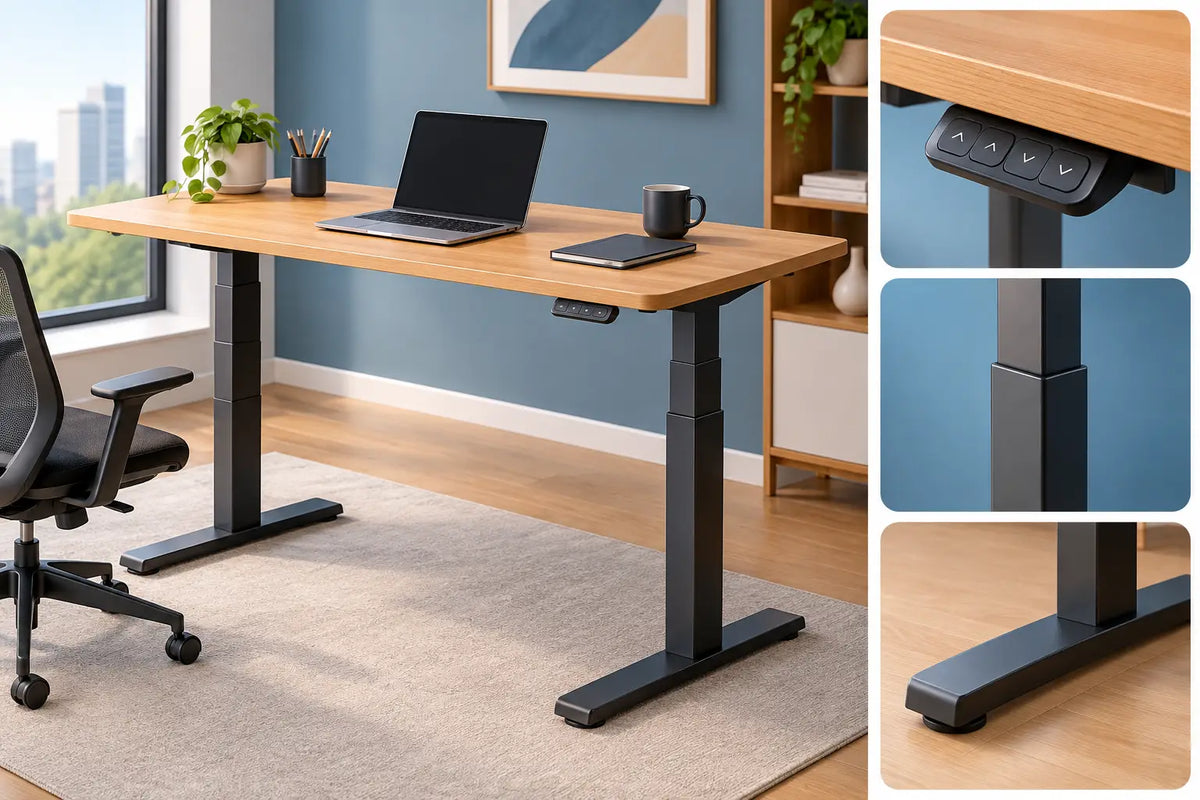
For standing desks, cable management needs to accommodate movement. Leave enough slack for the frame to travel from sitting height to standing height without pulling on power connections. It is a minor installation detail with major consequences. A neat setup that strains every time the desk rises is not truly functional.
Choose finishes that belong with the desk frame. Black powder-coated steel often gives a composed contrast beneath natural oak, while a poorly matched plastic tray can undermine an otherwise considered workspace.
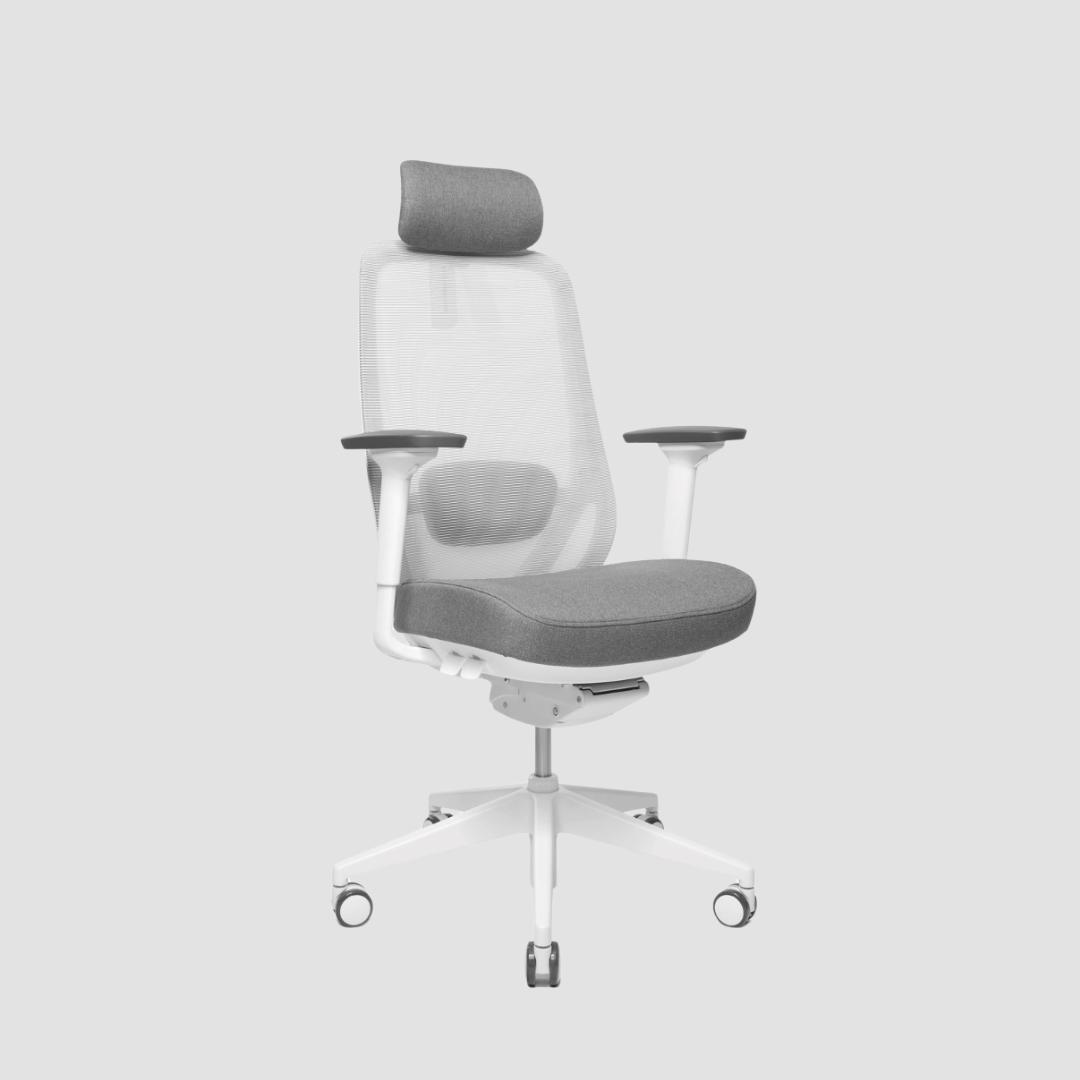
A chair built for the hours you actually work
No accessory has a greater effect on comfort than the chair, even if it is often treated as a separate furniture purchase. The best chair is not necessarily the softest or the most heavily padded. It should allow adjustment at the points that matter: seat height, back support, armrest position and, where possible, seat depth.
Aesthetic compatibility matters, particularly in an open living space, but it should not be the only criterion. A chair can look refined beside an oak desk and still fail to support a full day of concentrated work. Prioritise fit, then select a material and silhouette that complement the rest of the room.
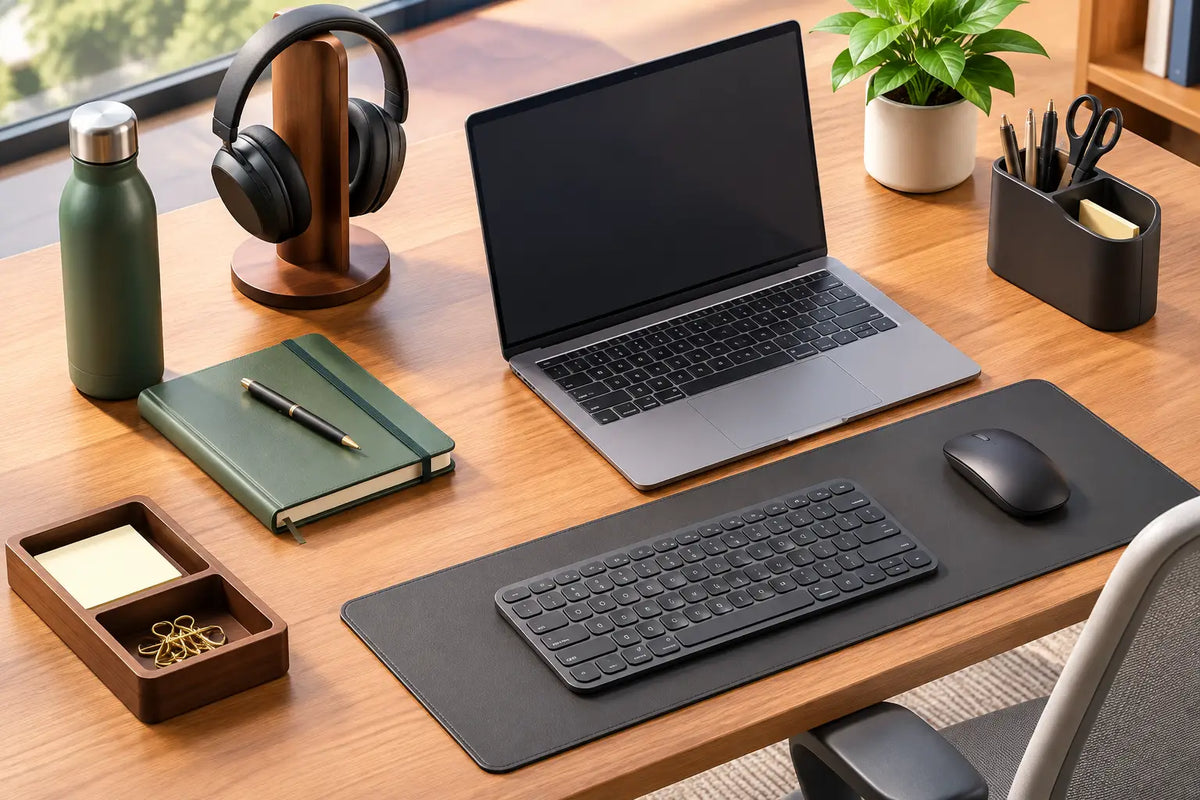
A desk mat with a real purpose
A quality desk mat protects the surface where hands, keyboards and writing tools meet the wood every day. It can also define a work zone on a larger desktop, making the setup feel intentional without hiding the material that made you choose the desk in the first place.
Leather develops a distinctive patina, while wool felt offers a softer, quieter expression and helps dampen small sounds. The trade-off is practical. Leather is easier to wipe clean but can mark or darken over time. Felt feels warm and understated, but may need more attentive care around drinks and spills.
Avoid oversized mats that cover most of a handcrafted oak top. Let the grain remain visible. The accessory should frame the work, not erase the desk.
Storage that removes decisions, not character
The most useful storage is often the least noticeable: a drawer unit for documents, a tray for daily tools, or a small organiser for chargers, pens and adapters. The purpose is not to hide everything. It is to keep essential items within reach without asking your eyes to process them all at once.
Open storage suits objects you use frequently and want to see. Closed storage is better for paperwork, spare cables and visual clutter. A balanced workspace often uses both. The key is consistency in materials and proportion, especially when the office shares space with the rest of the home.
Build a Coordinated Workspace, Not a Product Collection
A desk, chair, monitor arm and storage piece are experienced together. Their materials, heights and visual weight should feel related. This is where a coordinated system has a genuine advantage over a collection of individual purchases made years apart.
Start with the permanent elements. The desk and chair establish the room's scale. Then add structural accessories such as monitor arms, cable trays and drawers. Finally, introduce smaller objects that make the space personal: a lamp with warm light, a simple pen holder, a wool floor mat, or a stand for headphones.
Restraint is valuable here. A premium workspace does not need to announce itself through excess. A few well-built accessories, selected in relation to a solid oak desk, can create more impact than a desktop full of gadgets. At OAKO, that relationship between natural oak and considered ergonomic function is the point: technology should serve the workspace without making it feel cold.
Consider Longevity Before Convenience
There is always a cheaper option, and occasionally it is the sensible choice. A temporary workspace, a student rental, or a rarely used guest room may not warrant the same level of investment as a daily office. But for the desk where you work, create, plan and meet for hours each week, low-cost accessories can become false economy when they fail, look tired, or create more friction than they remove.
Choose pieces with replaceable parts where relevant, finishes that tolerate use, and dimensions suited to your actual desk. Measure the desktop edge before buying a clamp-mounted arm. Check drawer clearance beneath the worktop. Consider whether your cable tray will fit both your power strip and the desk frame. Premium buying is not only about selecting better objects. It is about selecting them correctly.
Let each addition make the workspace quieter, clearer and more comfortable to inhabit. When an accessory supports your body, protects the materials, or removes a small daily annoyance, it has earned a lasting place beside the desk.

Jätä kommentti
Tämä sivu on suojattu hCaptcha-tunnistuksella, ja hCaptchan tietosuojakäytäntöjä ja käyttöehtoja sovelletaan.