


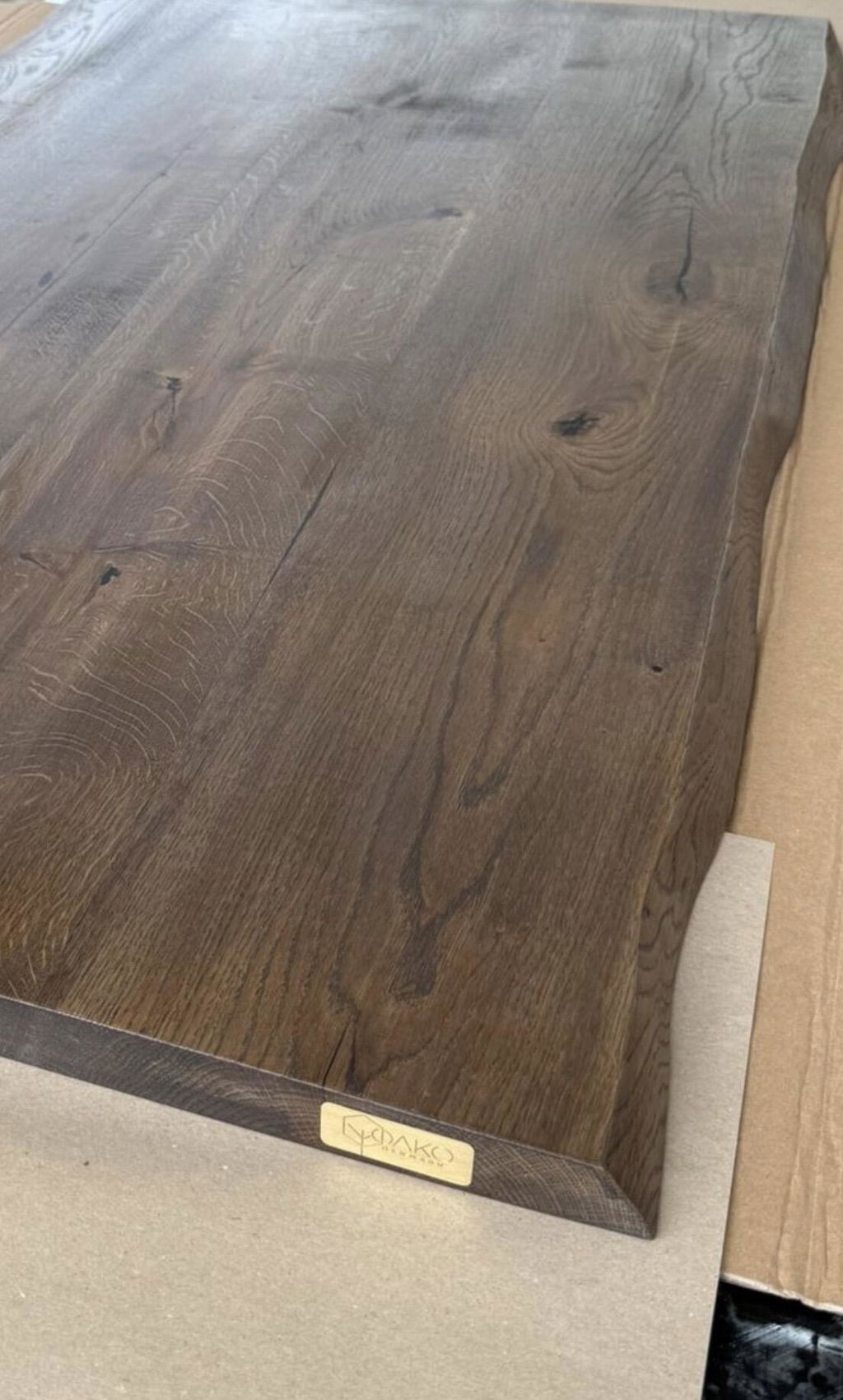
Un plateau en chêne massif acquiert son caractère au fil de son utilisation : les veines discrètes sous un ordinateur portable, la patine douce autour d’une tasse préférée, la chaleur qu’il apporte à une journée de travail. Savoir protéger les surfaces des plateaux en chêne ne signifie pas les garder intactes. Il s’agit plutôt de laisser le bois véritable vieillir avec élégance, tout en prévenant les dommages qui n’ont pas leur place dans son histoire.
Le chêne est un bois solide, mais il n'est pas insensible. Il réagit à l'humidité, à la chaleur, à la lumière du soleil et au rythme des activités quotidiennes. Quelques gestes bien pensés, associés à une finition adaptée et à un entretien occasionnel, permettront à un bureau ou à une table en chêne de conserver son aspect soigné pendant des décennies, plutôt que de se contenter de survivre pendant quelques années.
Commencez par la finition déjà appliquée sur le chêne
Le choix du traitement adapté dépend avant tout du type de finition du plateau. La plupart des meubles en chêne massif sont protégés soit par de l'huile-cire dure, soit par de l'huile naturelle pour meubles, soit par de la laque, soit par un revêtement imperméabilisant similaire. Ces finitions ont des fonctions différentes, et c'est en les traitant toutes de la même manière qu'un entretien pourtant bien intentionné peut devenir problématique.
Une surface huilée est conçue pour offrir un aspect et un toucher proches de ceux du bois brut. Elle préserve le grain du bois, lui conférant un toucher naturel, tout en renforçant la résistance du bois de l'intérieur. Elle peut généralement être rafraîchie localement si une petite zone s'assèche ou présente des traces. Cette facilité de réparation est l'un des principaux arguments en faveur du choix d'un plateau en chêne massif huilé pour un espace de travail professionnel.
Une surface laquée forme davantage une couche protectrice sur le bois. Elle nécessite généralement moins de huilage régulier, mais les rayures profondes ou les fissures dans le revêtement doivent faire l'objet d'une attention particulière. Avant d'appliquer tout traitement, consultez les conseils d'entretien fournis avec votre plateau de table ou demandez au fabricant quel type de finition a été utilisé. L'application d'huile sur de la laque n'améliorera pas la protection, et un produit nettoyant agressif peut ternir l'une ou l'autre de ces finitions.
Comment entretenir au quotidien les plans de table en chêne
La protection la plus efficace est rarement un produit spécialisé. Il s'agit plutôt d'un espace de travail aménagé avec soin. Un tapis de bureau placé sous le clavier, la souris et la zone d'écriture réduit l'abrasion due aux mouvements quotidiens, tout en donnant à votre bureau un aspect plus soigné. Choisissez un tapis doté d'un revêtement lisse qui ne retiendra pas les particules de poussière et ne déteindra pas sur le bois.
Utilisez un dessous-de-verre pour le café, l'eau et les boissons fraîches. Le chêne peut supporter quelques éclaboussures occasionnelles, mais un verre humide laissé au même endroit à plusieurs reprises peut laisser apparaître des auréoles claires, un grain en relief ou des traces d'humidité sombres, selon le type de finition. Essuyez immédiatement les éclaboussures à l'aide d'un chiffon doux, sec ou légèrement humide, afin d'éviter que l'eau ne s'infiltre dans le grain du bois.
La chaleur mérite le même respect. Une tasse de café tiède ne pose généralement pas de problème si vous utilisez un dessous-de-verre, mais une casserole brûlante, un récipient de plats à emporter ou une bougie posés directement sur une table nue peuvent laisser une trace terne ou endommager le revêtement. Gardez des dessous-de-plat résistants à la chaleur à portée de main, surtout si votre table à manger sert également de bureau à domicile.
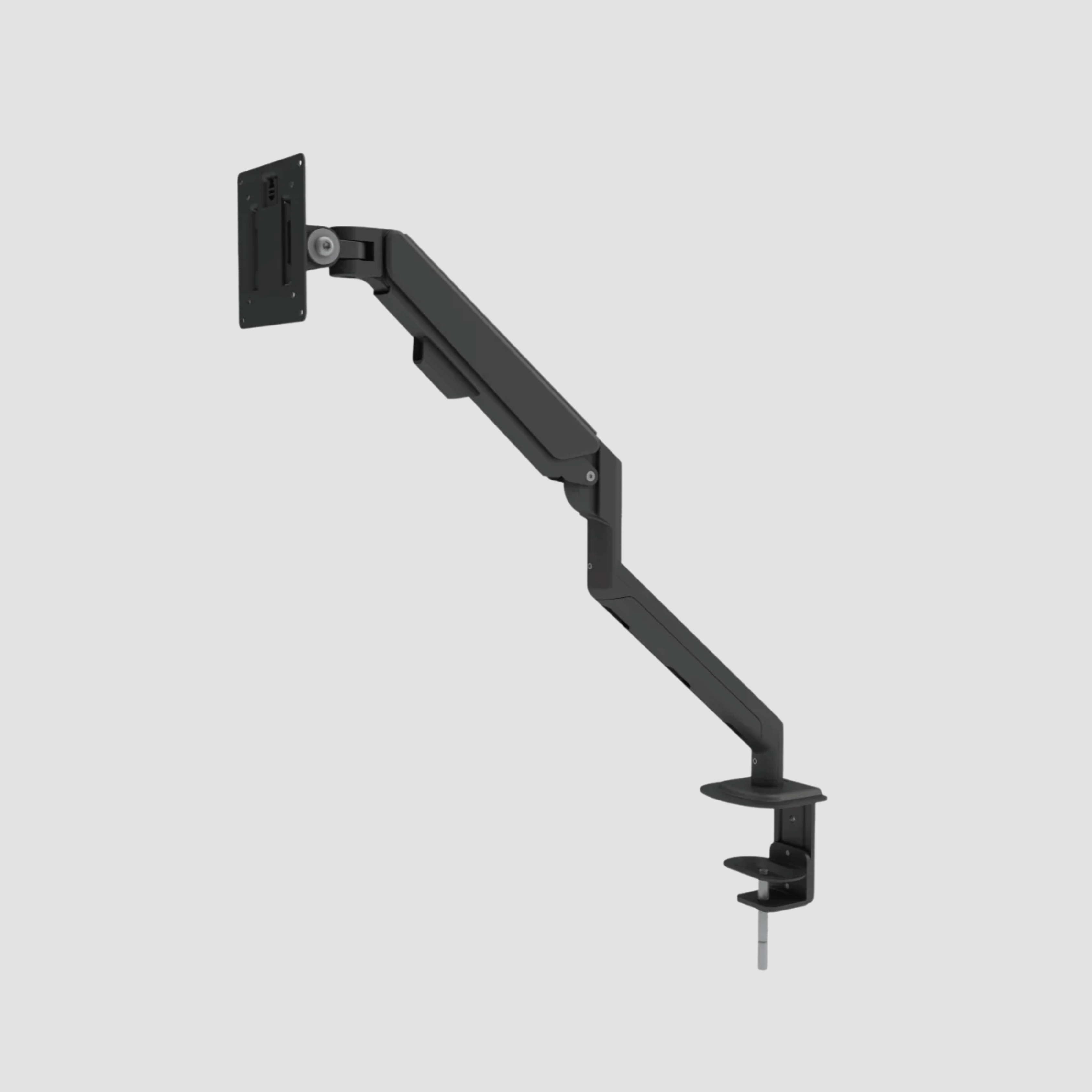
Pour un bureau debout, veillez à ce que les éléments se déplacent avec vous. Les supports d'écran, les supports pour ordinateur portable et les stations d'accueil doivent présenter des points de contact nets et stables. Des patins en feutre ou un tapis de protection placés sous les accessoires les plus lourds peuvent éviter les marques de pression et les rayures lors du réglage de l'installation. Une bonne gestion des câbles est également utile à cet égard : les câbles qui traînent peuvent frotter contre la surface ou accumuler de la poussière et des saletés autour du bord du bureau.
Nettoyez le chêne avec délicatesse, sans frotter trop fort.
Un plateau en chêne propre nécessite étonnamment peu d'entretien. Pour la poussière quotidienne, utilisez un chiffon en microfibre sec. Pour les traces de doigts ou les légères taches, essuyez avec un chiffon légèrement imbibé d'eau claire, puis séchez immédiatement la surface avec un autre chiffon doux.
Évitez de tremper le chiffon et ne laissez jamais d'eau stagner sur le bureau. Le bois massif se dilate et se contracte naturellement au gré des variations d'humidité. Un excès d'eau peut provoquer le soulèvement des fibres, l'apparition de taches et des déformations au niveau des joints ou des bords naturels. Cela est particulièrement important pendant les hivers danois, lorsque le chauffage intérieur fait baisser le taux d'humidité, ainsi que pendant les saisons intermédiaires humides, où l'air change rapidement.
Les sprays ménagers, l'eau de Javel, les produits désinfectants à forte teneur en alcool, les dégraissants et les crèmes abrasives ne font pas bon ménage avec le chêne. Ils risquent d'éliminer l'huile, de ternir une finition laquée ou de laisser des traces irrégulières difficiles à corriger. Si vous avez besoin de plus que de l'eau pour venir à bout d'une tache tenace, utilisez un nettoyant spécialement conçu pour la finition de vos meubles et testez-le d'abord sur une zone peu visible.
Il existe toutefois une exception pratique à signaler concernant les espaces de travail : le gel hydroalcoolique. Il est bien sûr utile, mais les gouttes qui tombent fréquemment autour d'un bureau peuvent, à la longue, endommager certaines finitions. Laissez-le sécher complètement sur vos mains avant de toucher le plateau de la table, et essuyez immédiatement tout déversement accidentel.
Redonnez un coup de neuf à un plateau de table huilé avant qu'il ne commence à paraître défraîchi
Un plateau en chêne huilé ne nécessite pas d'entretien constant, mais il est préférable de le rafraîchir avant qu'il ne devienne sec et ne soit plus protégé. La fréquence dépend de l'utilisation, de l'exposition à la lumière et des habitudes d'entretien. Un bureau utilisé quotidiennement près d'une fenêtre très lumineuse peut nécessiter une légère couche d'entretien tous les six à douze mois. Un plateau peu utilisé n'en aura besoin que beaucoup moins souvent.
Ne vous fiez pas à un calendrier rigide, mais observez plutôt la surface. Si celle-ci semble plus rugueuse que d’habitude, si elle paraît terne dans les zones très fréquentées, si elle absorbe rapidement une goutte d’eau ou si le grain perd un peu de sa profondeur, il est probablement temps de l’entretenir. Une surface en chêne correctement entretenue doit être lisse au toucher et conserver un éclat discret et uniforme, plutôt qu’un brillant trop vif.
Commencez par nettoyer le plateau de la table et laissez-le sécher complètement. Appliquez une très fine couche d'huile d'entretien adaptée à l'aide d'un chiffon ou d'un tampon non pelucheux, en suivant le sens du grain. L'objectif est de nourrir le bois de manière homogène, sans laisser d'excès d'huile à la surface. Une fois le temps d'absorption recommandé respecté, éliminez tout excès d'huile à l'aide d'un chiffon propre.
Une quantité excessive d'huile n'apporte pas une protection supplémentaire. Elle peut laisser un fini collant, attirer la poussière et créer un éclat irrégulier. Un bon travail du bois repose souvent sur la modération : des couches légères, un essuyage soigneux et un temps de séchage suffisant. Veillez à bien aérer la pièce et utilisez les chiffons imbibés d'huile de manière responsable, conformément aux instructions du produit.
Gérer l'ensoleillement et le climat intérieur
Le chêne prend naturellement une teinte plus foncée à mesure qu'il vieillit. Cela fait partie de son charme, et aucun traitement de finition ne peut empêcher complètement ce phénomène. Une exposition directe et intense au soleil peut toutefois entraîner des variations de couleur là où un écran, un tapis de bureau ou un objet décoratif reste au même endroit pendant des mois.
Si votre espace de travail est situé près d'une fenêtre exposée au sud ou à l'ouest, atténuez la lumière directe du soleil à l'aide de rideaux, de stores ou d'un dispositif filtrant les UV. Déplacez de temps en temps les accessoires de votre bureau, en particulier au cours de la première année, afin que le chêne se développe de manière plus homogène. Cela ne signifie pas pour autant que vous deviez réorganiser sans cesse votre espace. Un petit changement tous les quelques mois suffit pour éviter l'apparition de contours trop marqués.
Un climat intérieur stable est tout aussi important pour le plateau d’une table que sa finition. Privilégiez des conditions de vie normales plutôt qu’une sécheresse ou une humidité extrême. Ne placez pas de meubles en chêne directement à côté d’un radiateur, sous la bouche d’un climatiseur ou dans une véranda où la température oscille fortement entre le froid et la chaleur. Le bois massif est un matériau « vivant » : il réagit à son environnement, et cette réaction est optimale lorsque les conditions sont modérées.
Traitez les rayures, les taches et les bosses avec patience
Les petites marques ne sont pas toujours des défauts. Sur un véritable plateau de table en chêne, elles peuvent contribuer à donner à la surface un aspect « vécu » plutôt que « usé ». La décision de réparer doit dépendre du fait que la marque ait altéré la protection du bois, et non pas simplement de sa visibilité.
Pour une rayure superficielle sur un plan de travail huilé, un nettoyage en douceur et une retouche localisée avec l'huile appropriée peuvent suffire à atténuer son aspect. Les rayures plus profondes qui exposent le bois brut doivent être traitées rapidement, car les fibres exposées peuvent absorber l'humidité et la saleté. Procédez avec précaution et évitez de poncer une petite zone de manière trop agressive, car cela pourrait créer une zone plus claire ou altérer le brillant.
Les traces d'eau et les taches sombres nécessitent davantage de prudence. Elles peuvent être dues à de l'humidité emprisonnée, à une réaction avec le métal ou à une contamination sous la finition. Les remèdes « fait maison » partagés en ligne peuvent aggraver la tache, en particulier sur un plateau haut de gamme traité avec un système d'huilage spécifique. Si une tache persiste ou si la surface s'est décollée, consultez le fabricant ou un restaurateur de meubles qualifié avant de tenter un traitement plus agressif.
Les bosses peuvent parfois être atténuées, mais toutes ne doivent pas nécessairement disparaître. L'avantage du chêne massif réside dans le fait qu'il peut être réparé et remis à neuf au fil du temps, contrairement à une surface stratifiée fine qui, une fois endommagée, ne laisse souvent aucune matière sur laquelle travailler. Cette durabilité à long terme contribue à faire d'un bureau en chêne de bonne facture un investissement judicieux.
Protéger le bureau sans masquer le matériau
Il faut trouver le juste équilibre entre préserver le chêne et en recouvrir chaque centimètre. Un tapis de bureau couvrant toute la surface offre une excellente protection pratique pour un travail intensif sur ordinateur, mais il peut également masquer le grain du bois qui vous a poussé à choisir le bois massif au départ. Pour de nombreux bureaux à domicile, un petit tapis en cuir ou en feutre placé dans la zone de travail principale, associé à des dessous-de-verre et à des protections en feutre sous les accessoires, constitue la meilleure solution.
Chez OAKO, nous considérons que les meilleurs espaces de travail sont des espaces fonctionnels où les matériaux occupent une place importante. Le chêne doit mettre en valeur vos outils de travail, et non devenir une surface supplémentaire dont vous devez vous soucier. Protégez-le de manière judicieuse, entretenez sa finition avec soin et laissez le reste du plateau bien visible.
Un plateau en chêne magnifiquement entretenu n'est pas un plateau qui ne change jamais. C'est un plateau qui vieillit bien : protégé là où il le faut, entretenu avec soin, et dont l'authenticité reste indéniable chaque fois que vous y posez les mains.



Laisser un commentaire
Ce site est protégé par hCaptcha, et la Politique de confidentialité et les Conditions de service de hCaptcha s’appliquent.