


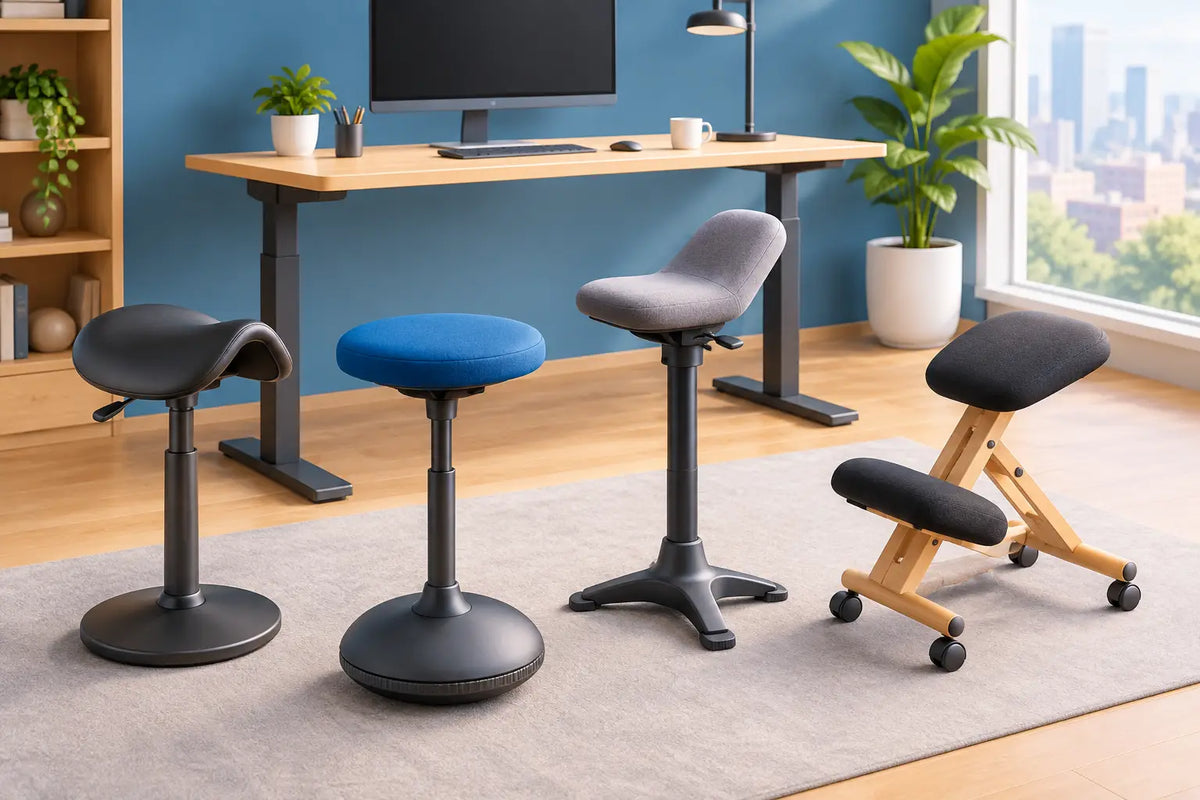
A height-adjustable desk is only as useful as the positions it invites you to use. The top ergonomic stools make the move between sitting and standing feel natural: a short reset between calls, a supported perch for focused work, or an active seat that keeps the body from settling into one rigid posture for hours.
For a design-conscious workspace, that flexibility should not come at the cost of comfort or visual calm. A stool needs to work with the height range of your desk, the way you move through your day, and the materials already present in the room. The right choice is less about finding the most complicated mechanism and more about choosing honest support that you will actually use.
What makes an ergonomic stool different?
A conventional office chair is designed for longer seated sessions. It usually offers a backrest, armrests, a broad seat and several adjustments. An ergonomic stool takes a different approach. It supports a more open hip angle, encourages small shifts in posture and usually sits higher, making it especially useful alongside a standing desk.
This does not mean a stool is automatically better for your back, nor does it mean it should replace a well-adjusted chair for every task. Ergonomics is about variation. Long writing sessions, detailed design work and meetings that run for hours often call for the fuller support of an ergonomic chair. A stool earns its place by making movement between seated and standing work easier, rather than asking your body to choose one position all day.
The strongest designs tend to share three qualities: a stable base, a seat that distributes pressure comfortably, and height adjustment that matches your desk. Beyond that, the best option depends on how you work.
Top ergonomic stools: choose by working style
The phrase “top ergonomic stools” can suggest there is one clear winner. In practice, the best stool for a developer who alternates between code and calls may be a poor fit for a photographer moving constantly around a studio. Start with the role the stool needs to play.
For frequent sit-stand transitions
If you change position several times a day, look for a stool with a generous height range and an uncomplicated adjustment lever. You should be able to move from a low perch to a higher position without breaking concentration or adjusting your entire workstation.
A slightly forward-tilted seat can be useful here. By opening the angle between torso and thighs, it can make rising to stand feel easier while supporting a more upright posture. The trade-off is that a pronounced tilt is not comfortable for everyone, particularly during a long stationary task. Try to think in terms of your real habits, not an idealised version of your workday.
For active sitting
Some stools use a rounded or articulated base that permits a controlled degree of movement. These can encourage subtle shifts through the hips and core while you work. For people who find themselves fidgeting, leaning or constantly changing position, that movement can feel more natural than being fixed in place.
The keyword is controlled. A base that feels unstable is distracting rather than ergonomic. It should return you to balance with ease and remain dependable when you reach for a keyboard, turn to a second screen or step away from the desk. Active seating is a useful prompt to move, not a fitness exercise disguised as furniture.
For focused, occasional perching
A simpler fixed-base or five-star-base stool may be the better answer if you want a compact, predictable seat for shorter work blocks. This type suits a calm home office where the stool is used for reviewing documents, answering email or pausing between standing tasks.
Prioritise a supportive seat over an ultra-thin profile. Minimal forms can look compelling in a product image, but a seat that is too hard or too narrow will quickly become unused furniture. A quality upholstered surface, shaped foam or a gently contoured saddle seat generally offers more practical comfort without adding visual weight.
For shared workspaces
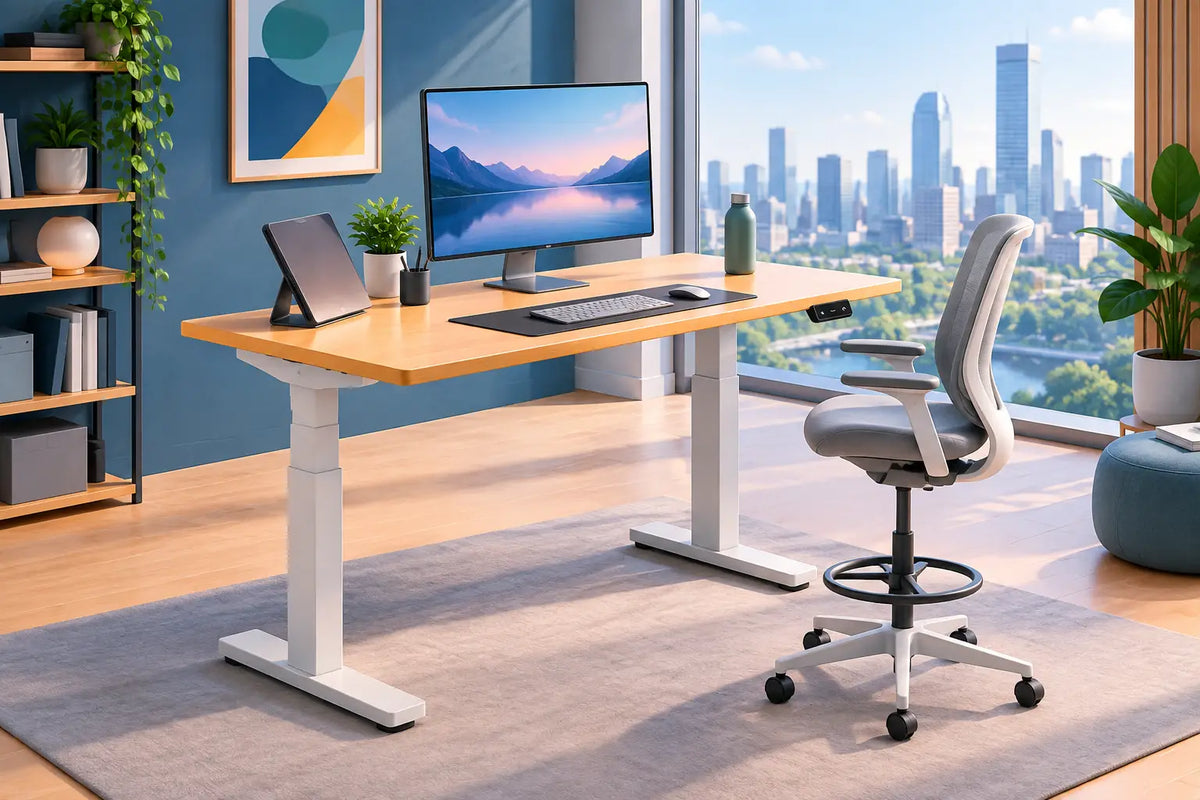
In a household office or professional studio, a stool will often be used by people of different heights. Broad adjustability becomes essential. Consider a model with intuitive controls, durable upholstery and a base that is easy to reposition without marking the floor.
If the workspace includes a solid wood floor, choose castors carefully. Soft, appropriate wheels help protect the surface, while a stable foot ring can make higher seating positions more comfortable. These small details matter because shared furniture receives more varied use than a personal setup.
Measure the desk before choosing the stool
Height is the most common reason a promising stool fails in a real workspace. Do not assume that a standard office stool will reach a standing desk comfortably. Measure the desktop at the height where you expect to perch, then compare this with the stool’s usable seat-height range.
When seated, your feet should have secure contact with the floor or a foot ring, and your knees should not be forced sharply upward. Your forearms should meet the desk at a relaxed height, with shoulders down rather than lifted. If the desk is set high enough for standing, a stool with an extended gas lift or a dedicated drafting height is often necessary.
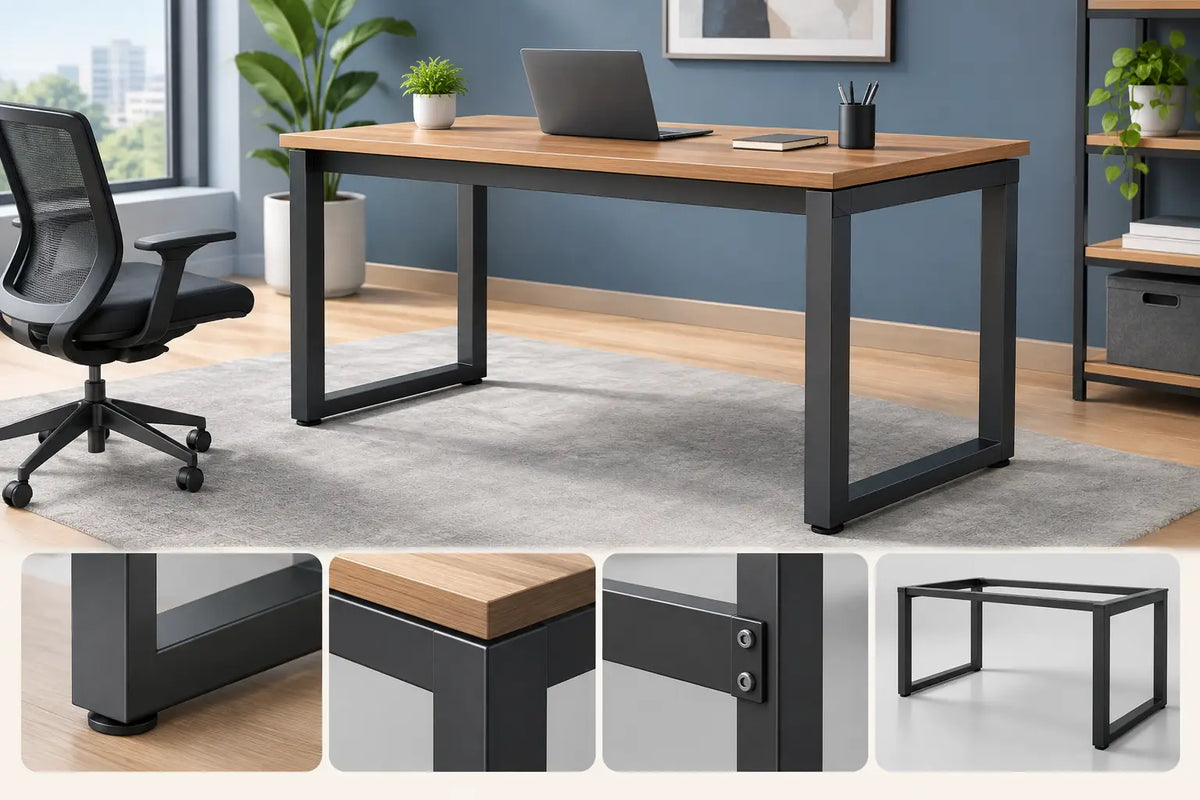
Also consider the thickness of the desktop. A substantial solid oak top has a different visual and physical presence than a thin laminate surface, and it affects the final working height. Measuring from the floor to the actual desk surface, rather than relying only on frame settings, leads to a more accurate choice.
Look beyond the seat
Ergonomic performance is not isolated to the stool. Screen height, keyboard position, lighting and floor surface all influence whether your posture feels effortless or strained. A stool cannot compensate for a monitor positioned too low, a desk cluttered with cables or a work surface set at the wrong height.
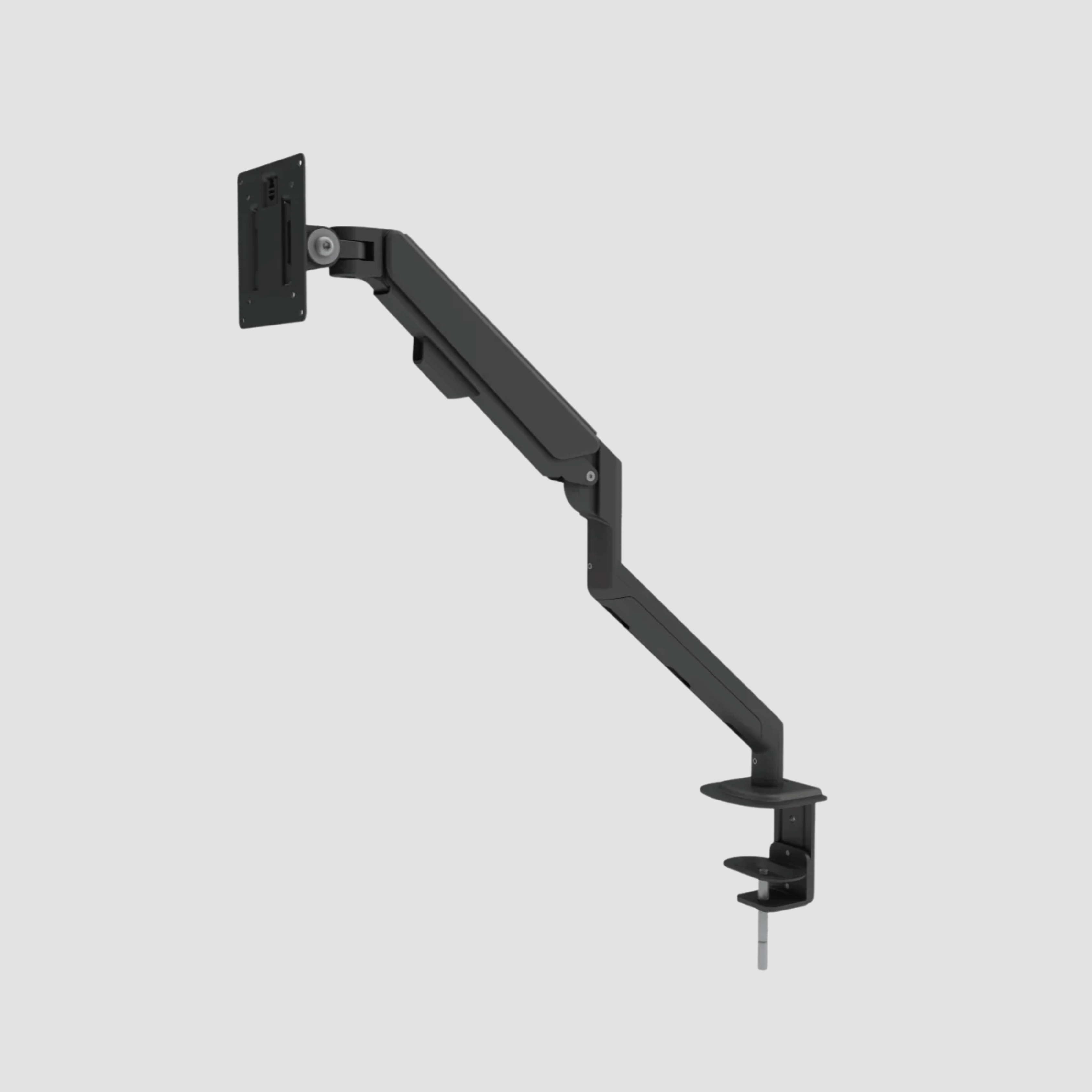
This is where a considered workspace system pays off. A monitor arm can bring the screen to eye level, while thoughtful cable management keeps the area beneath the desk clear for changing position. The stool then becomes part of a working rhythm rather than another object competing for space.
Material matters here, too. In a room built around natural oak, heavy black steel, wool or textured upholstery can give an ergonomic stool a purposeful presence. The goal is not for every piece to match exactly. It is for the materials to feel intentional: warm wood balanced by precise engineering, soft seating balanced by a stable frame. OAKO workspaces are designed around this same meeting point between natural material and daily function.
Comfort is personal, but quality is visible
A stool should feel reassuring from the first adjustment. Check that the lift operates smoothly, the base does not flex or rattle, and the upholstery feels substantial enough for regular use. If the seat has a saddle form, pay attention to its width and contour. A shape that supports one person’s hip structure may feel restrictive to another.
Weight capacity, warranty terms and replaceable parts are also worth examining. A premium workspace is an investment in years of use, not a short-lived response to discomfort. Components that can be serviced, surfaces that age well and mechanisms built for repeated adjustment are usually better indicators of value than a long list of novelty features.
There is also no prize for choosing the most active or most minimalist stool. If you regularly need lumbar support, choose a chair for those longer sessions and use the stool as a companion. If you naturally move often, an active stool may become the piece you reach for most. The right setup respects the body you have and the work you actually do.
Create a rhythm, not a rigid rule
A useful starting pattern is to stand for a task, perch for the next one, then return to a fully supported chair when concentration deepens. The exact intervals are less important than avoiding a position that lasts so long it becomes uncomfortable.
Place the stool where it is easy to use, rather than storing it under a pile of bags or behind a desk. A well-made object should invite good habits through its presence. When your workspace makes movement feel simple, the desk becomes more than a surface for work - it becomes a place built to support the pace of your day.

Commenta
Questo sito è protetto da hCaptcha e applica le Norme sulla privacy e i Termini di servizio di hCaptcha.