

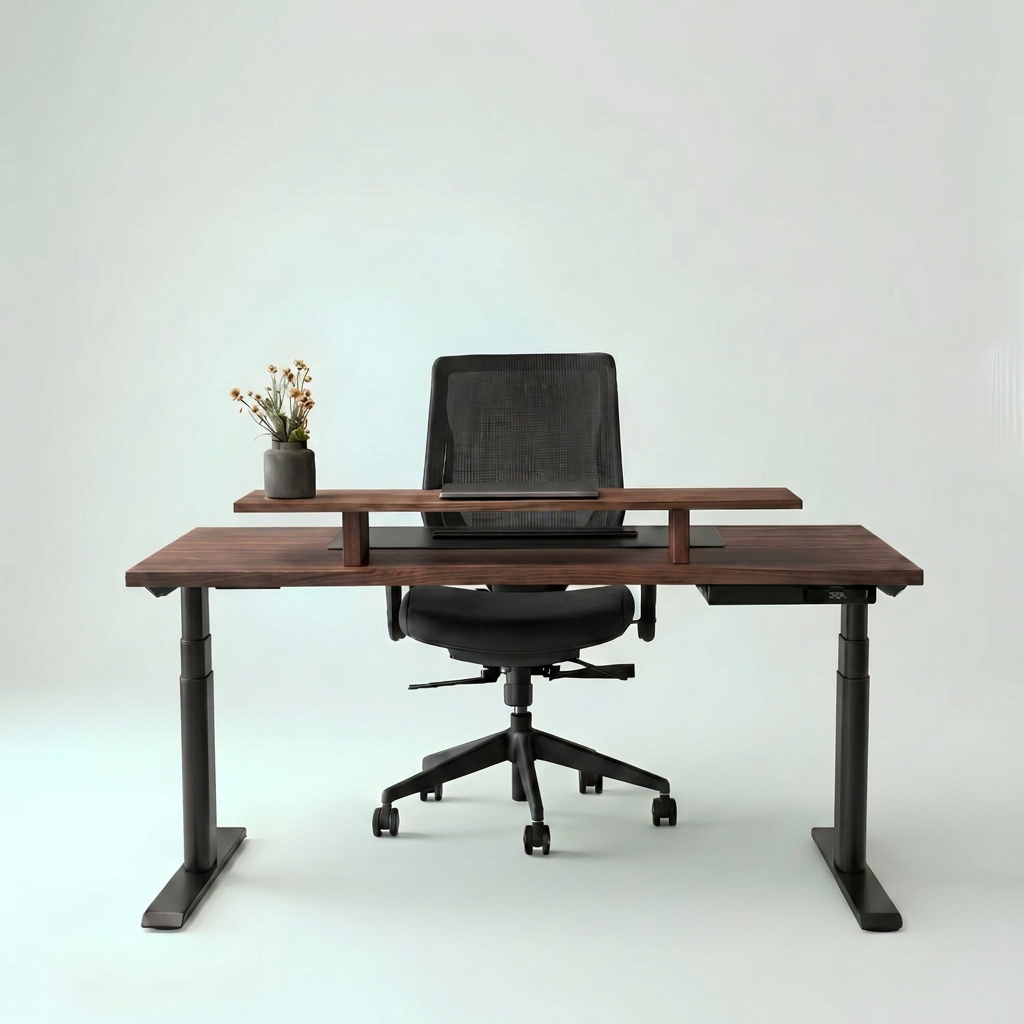
A desk can look considered in a product image and still disappoint the moment you rest your hands on it at standing height. That is where an honest electric desk frame review begins: not with a list of headline specifications, but with the feeling of movement, steadiness and control through an ordinary working day.
For a premium home office, the frame is not a hidden utility. It is the mechanical foundation beneath a surface you may use for years. It determines whether a solid oak top rises calmly, whether your monitor stays still while you type, and whether changing position feels natural enough to become a habit.
What an Electric Desk Frame Must Do Well
An electric frame has a straightforward job: raise and lower a worktop safely and consistently. Yet the difference between an adequate frame and a well-made one becomes clear in small, repeated moments. A quality frame starts smoothly, moves at an even pace and stops without an abrupt jolt. It should feel composed under a laptop, one or two monitors, a desk lamp and the practical weight of daily work.
Dual-motor frames are often the stronger choice for larger desks and substantial solid wood tops. Each leg has its own motor, helping the frame lift evenly and manage a higher load. This does not mean every single-motor desk is poor. For a compact workspace with a lighter top and minimal equipment, a good single-motor design can be entirely suitable. But when the desk is intended to carry a thick oak surface, monitor arms and a more permanent setup, dual motors provide useful headroom.
Load capacity matters, although it should not be read in isolation. A high stated capacity is reassuring, but the frame also needs to remain stable throughout its height range. The real question is not simply whether it can lift the desk. It is whether it can hold the desk at standing height without transmitting every keystroke into a moving screen.
Electric Desk Frame Review: Stability Before Features
Stability is the point where many buying decisions are won or lost. At seated height, most electric desks feel stable enough. Extend the legs and the frame has more leverage to manage, so lesser constructions often reveal a gentle front-to-back or side-to-side movement.
A little movement is normal, especially on softer floors or with a tall monitor mounted on an extended arm. What should concern you is noticeable wobble while typing, writing or using a mouse. A desk should support concentration, not make you conscious of its mechanics.
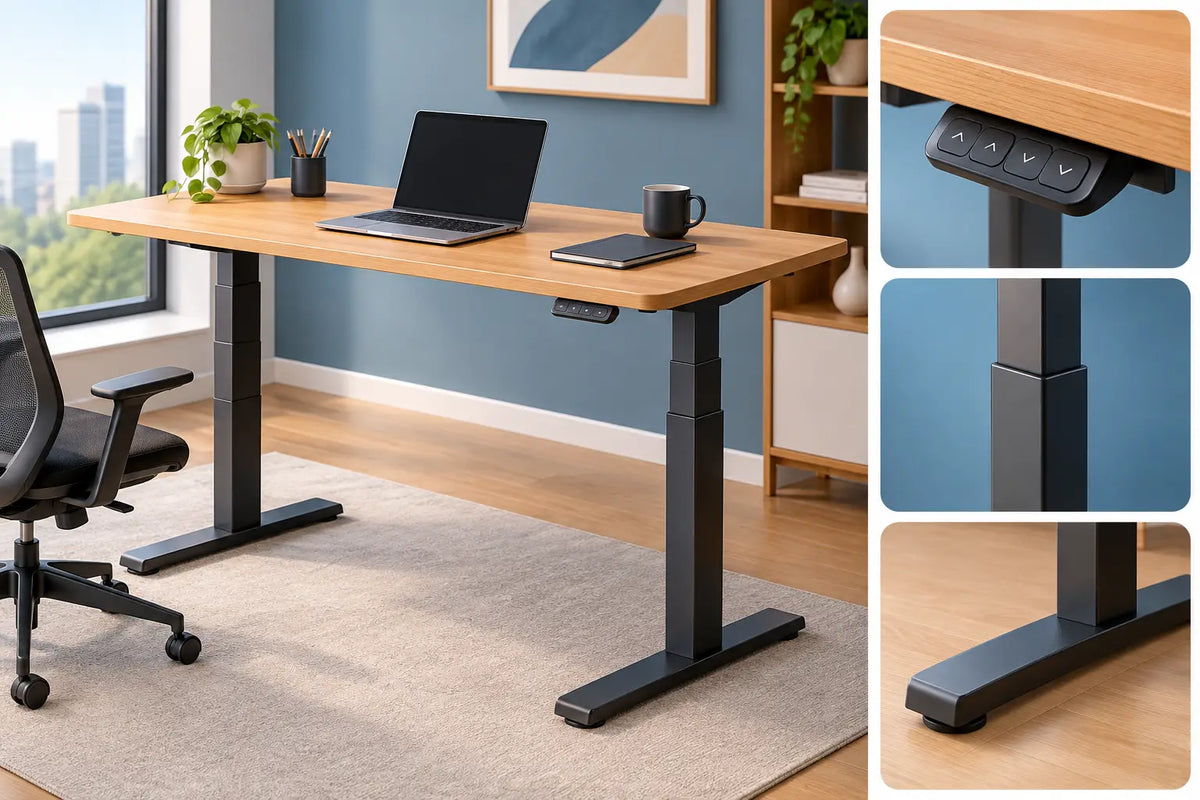
Several details influence this result. Wider feet generally create a steadier base. A well-designed crossbar or frame structure can add rigidity, while tightly engineered telescopic columns reduce play as the desk rises. The weight and dimensions of the tabletop matter too. A deep, solid oak top gives a desk visual substance and a generous working surface, but it also demands a frame designed to support it properly.
Flooring deserves attention before judging a frame harshly. Uneven wooden boards, deep-pile rugs and poorly adjusted feet can make a good desk appear unstable. Set the desk on a level surface, adjust the glides carefully and test it with your actual equipment in place. This is a more useful assessment than shaking an empty desk in a showroom.
Height Range Should Fit the Person, Not the Room
The best electric desk frame is not necessarily the one with the longest specification sheet. It is the one that reaches your comfortable seated and standing working heights. That sounds obvious, but desks are often bought around room dimensions or tabletop aesthetics before the user's proportions have been considered.
At seated height, your shoulders should remain relaxed, with forearms roughly level with the desk. At standing height, the same principle applies: the desk should meet you rather than ask you to lift your shoulders or bend your wrists. Taller users should check the maximum height with particular care, especially if they use a thick tabletop, which adds several centimetres above the frame's quoted height.
Lower minimum heights matter as well. They are valuable for shorter users, for shared households and for anyone who prefers an ergonomic chair with a lower seat position. If two people use the same desk, memory presets are more than a pleasant extra. They remove friction from the routine, making it easy to return to a correctly adjusted position.
Quiet Motion Is Part of a Calm Workspace
Motor noise is rarely the deciding factor on its own, but it shapes the quality of a desk in a shared home, studio or office. A quiet lifting motion feels more considered, especially when you change position during calls or early in the morning. More importantly, listen for consistency. A strained sound, uneven travel or a change in speed under normal load can suggest that the desk is working harder than it should.
Anti-collision technology is another worthwhile feature, particularly in compact rooms. When properly calibrated, it helps the desk stop if it meets an obstacle while travelling. It is not a substitute for keeping cables, drawers and chairs clear, but it adds a sensible layer of protection for the desk, its surroundings and anything stored below it.
Controls should be simple enough to use without thought. A clear handset with up and down buttons may be all some people need. For a desk used every day, programmable height settings make the experience better. The technology should remain discreet. The point is to support movement, not add another device demanding attention.
The Frame and Tabletop Must Be Chosen Together
A frame can be technically excellent and still be the wrong choice if it has been paired with an unsuitable top. This is especially true with real wood. Solid oak has character, density and natural variation that laminate cannot replicate, but it is also a material worth supporting properly.
Check the recommended tabletop width, depth and weight range before combining a frame with a top. A frame that is too narrow beneath a wide surface can compromise balance and visual proportion. Equally, a lightweight top on an oversized industrial frame may look heavy-handed in a refined home office.
A considered pairing creates a desk that feels whole. The warmth of oak softens the precision of steel, while the frame gives the timber a practical ergonomic purpose. At OAKO, this meeting of natural material and dependable technology is central to the desk rather than an afterthought. The result should feel substantial at rest and effortless in motion.
Look Beyond the First Week of Use
An electric frame is a long-term mechanism, so assess it with long-term questions. Is the steel finish likely to withstand occasional knocks from a chair? Are the cable routes tidy and protected? Can the control unit, handset or motors be serviced if needed? Does the construction use components that feel intended for years of adjustment rather than a short lease on daily use?
There is a trade-off here. The lowest-priced frame may offer the same broad feature list as a premium alternative: electric lift, memory settings and collision detection. What changes is often less visible - tolerances in the moving parts, steadiness at height, the quality of the electronics and the confidence that the desk will continue to behave well after thousands of cycles.
This is why it is worth avoiding the temptation to buy on lifting speed alone. A fast desk is convenient, but a measured, quiet and stable one is usually more satisfying to live with. Furniture earns its place over time.
A Better Way to Test an Electric Desk Frame
If you can test a desk in person, raise it to your intended standing height and place your hands where they would naturally sit while working. Type lightly, lean in as you would during a focused task and look at the monitor. Then run the desk through its full range, listening for smooth travel and watching whether both sides rise evenly.
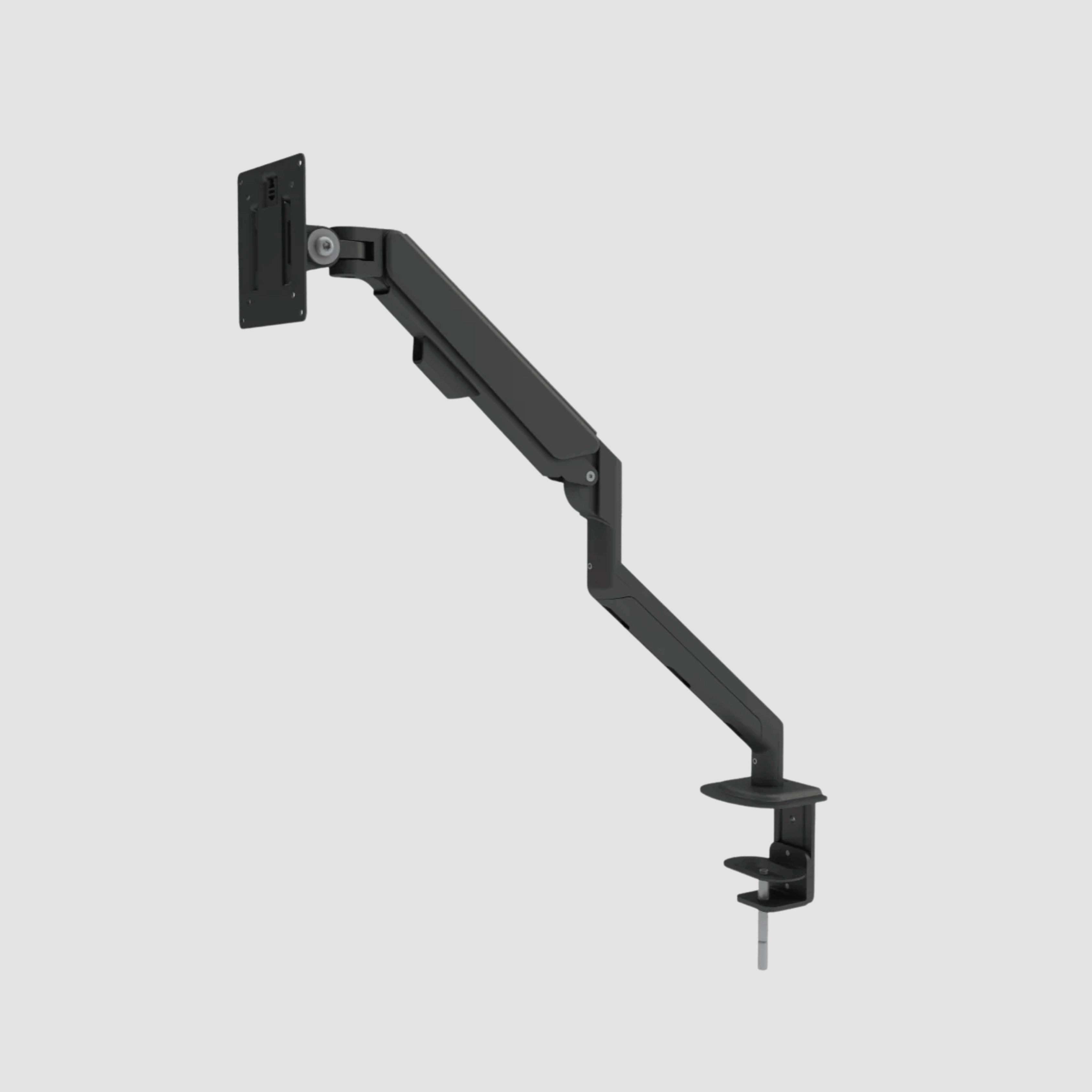
At home, give the setup a proper settling period. Arrange your screen, keyboard, dock and cable management before making a judgment. A thoughtfully placed monitor arm and a cable tray can improve both the visual calm and the practical performance of a desk. The goal is not a bare frame passing a showroom test. It is a workspace that works when deadlines, coffee cups and long video calls are part of the picture.
Choose an electric desk frame with enough strength for the desk you want to keep, not only the desk you need this month. When the mechanics are quiet, steady and properly matched to honest materials, changing position becomes a small, welcome rhythm in the day.



Zostaw komentarz
Ta strona jest chroniona przez hCaptcha i obowiązują na niej Polityka prywatności i Warunki korzystania z usługi serwisu hCaptcha.