



A tabletop is the surface you touch more than any other part of your workspace. It carries the weight of your screens, your hands, your coffee, and often the visual character of the entire room. This guide to choosing oak tabletops is designed to help you select a piece that feels right on day one and continues to earn its place through years of focused work.
Solid oak is not a neutral, anonymous material. Its grain, colour variation and tactile warmth make every top individual. The right choice is therefore not simply about finding a size that fits a frame. It is about balancing proportion, construction, finish and daily use - especially when the tabletop will sit on a height-adjustable desk.
Start With How Your Workspace Needs to Work
Before considering grain or edge profile, decide what must live on the desk. A laptop setup needs far less depth than a workstation with two monitors, a monitor arm, dock, keyboard, writing space and a notebook always open beside it.
For most home offices, a 120 cm wide tabletop offers a disciplined, compact setup. At 140 cm, you gain comfortable room for one or two screens without the desk dominating a smaller room. A 160 cm or wider oak tabletop gives a more generous, executive feel and suits creative work, multi-screen setups and shared workstations.
Depth matters just as much. A 70 cm depth can work well where floor space is limited, but 80 cm creates a noticeably calmer working distance from the screen. It also gives your forearms a proper resting area and leaves room for cable management behind the equipment. If you use large monitors or work with drawings, documents or a desktop computer, the additional depth is rarely wasted.
Measure the room as well as the desk position. In many Danish homes, a workspace shares space with a living room or bedroom. A substantial oak top can anchor the room beautifully, but a very deep or wide desk may interrupt circulation. Leave enough space to move around the chair freely and to access storage, windows and radiators.
Choose Solid Oak for Material Honesty
A solid oak tabletop is made from real timber throughout, rather than a thin wood veneer applied to chipboard or MDF. That difference is felt immediately in its weight, edge detail and ability to age well. More importantly, it changes how the desk performs over time.
Oak has a naturally dense structure that stands up well to daily use. Small marks may still happen - no real wood surface is immune to life - but solid oak can be maintained, refreshed and, if needed, sanded and refinished. A laminated board may look tidy at first, yet once its surface is damaged there is little material beneath it to repair.
Solid wood also brings natural movement. Oak responds gently to seasonal shifts in temperature and humidity, expanding and contracting across its width. This is normal, not a flaw. Quality construction accounts for it through carefully prepared timber, correct joining and a frame attachment method that allows the wood to behave as wood should.
For a desk intended to remain in use for many years, that honesty is part of the value. The surface develops a personal patina rather than simply wearing out.
Consider Timber Character and Colour Variation
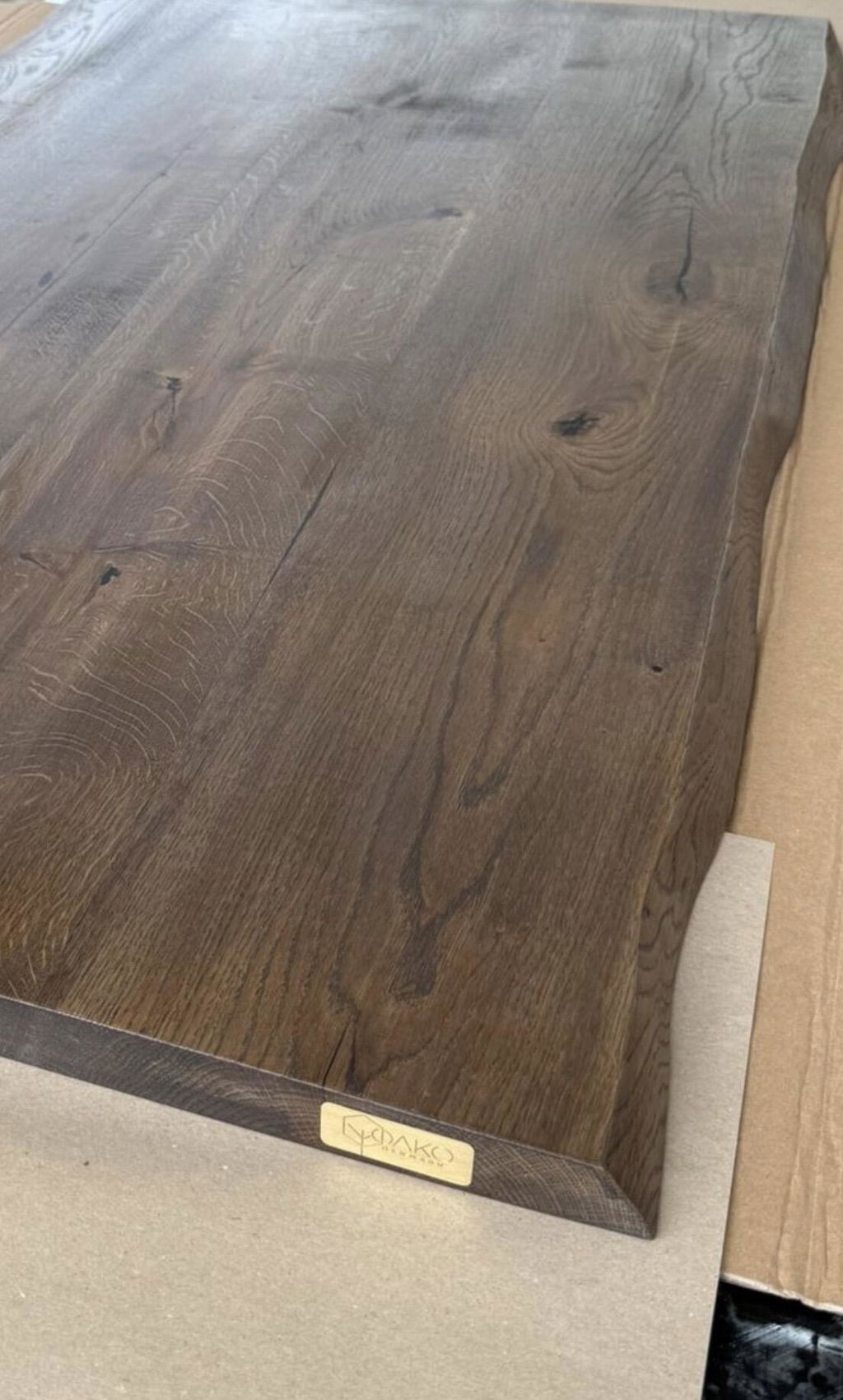
No two oak boards are identical. Some tabletops have an even, calm grain with few knots. Others show more pronounced figuring, darker mineral streaks, filled knots or colour shifts between staves. Neither is inherently better. The choice comes down to the atmosphere you want to create.
A cleaner selection with a more consistent tone suits a pared-back, architectural workspace. It lets monitor arms, lighting and steel desk frames sit quietly around the timber. More expressive oak brings depth and presence, particularly in rooms with neutral walls, wool textiles and simple storage.
Expect oak to mature. Fresh oak often has a lighter, honey-toned appearance, while exposure to daylight gradually deepens and warms the colour. This evolution is one of the reasons real timber feels alive in a workspace. If perfect uniformity is essential, wood may not be the right material. If you appreciate character, it is difficult to replace.
Thickness Changes Both the Look and Feel
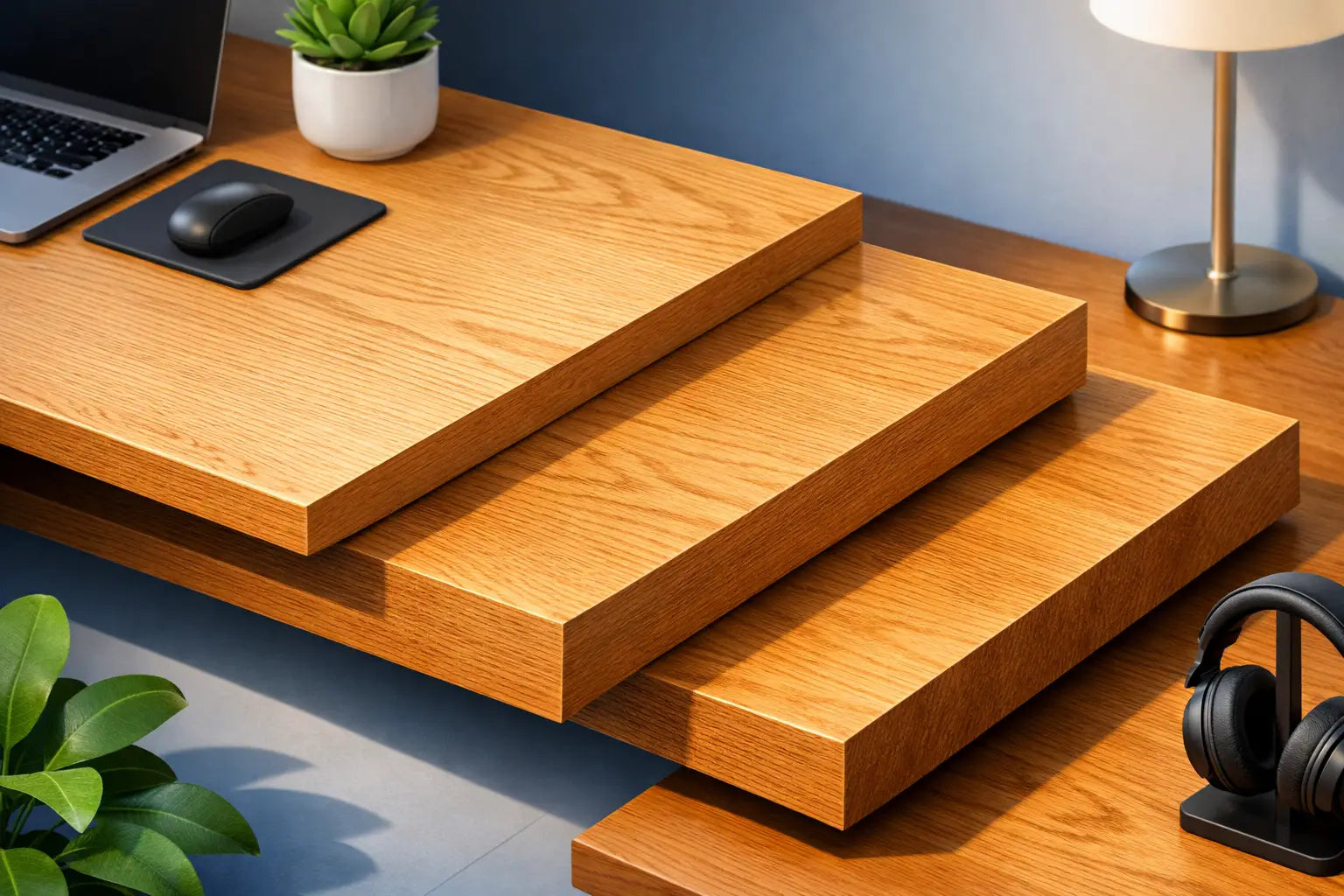
The thickness of an oak tabletop influences its visual weight, rigidity and relationship with the desk frame. A slimmer top can look elegant and light, especially in a compact apartment or minimal interior. A thicker top makes a stronger statement and gives the desk a more architectural, furniture-like presence.
For most standing desk applications, a substantial solid oak top creates the right balance. It feels stable under the hands, supports clamps for monitor arms when fitted correctly, and visually matches the strength of a dual-motor steel frame. A thicker top is also especially convincing on wider desks, where a thin surface can appear out of proportion.
There is a practical trade-off. More timber means more weight. This is rarely a problem for a quality standing desk frame, but it should always be checked against the frame's lifting capacity once monitors, arms and desktop equipment are included. The aim is not just a desk that can move, but one that moves smoothly and confidently every day.
Select an Edge That Suits the Room
The edge is a small detail with a large effect. A straight, clean edge gives oak a modern, confident profile. It suits contemporary home offices, particularly when combined with a black or white steel frame.
A softened edge feels more tactile and forgiving where your wrists rest against the desk during long work sessions. It maintains a precise Scandinavian expression while making the surface more comfortable to live with. For many people, this is the most versatile choice.
Live-edge oak tabletops offer something different: the natural contour of the tree remains visible along one or both long sides. They are striking, individual and full of material presence. A live edge works best when it is given room to be seen, rather than crowded with excessive accessories. It may not suit every setup, however. If you regularly clamp equipment along the full rear edge or prefer strict symmetry, a straight edge is usually the more practical option.
Match the Finish to Your Daily Habits
A finish protects the oak while shaping its colour and texture. It should enhance the material, not bury it beneath a plastic-looking layer.
Oil-finished oak has a natural, close-to-the-wood feel. It highlights the grain and makes local maintenance straightforward. Over time, an oiled surface benefits from occasional care, particularly around high-use areas. For people who value the ability to renew the tabletop themselves, this is a compelling choice.
A more protective lacquered finish generally requires less routine attention and offers strong resistance to everyday spills. It can be well suited to busy family homes or shared offices. The trade-off is that repairs are often less localised than with oil, and the tactile connection to raw timber can feel slightly reduced depending on the finish.
Whichever finish you choose, use a desk mat beneath equipment that moves often, such as a laptop stand or heavy monitor base. Wipe spills promptly with a soft, lightly damp cloth, then dry the surface. Avoid harsh cleaners, abrasive pads and prolonged standing water. Oak is durable, but it deserves considered care.
Plan for Technology Before You Mount the Top
An oak tabletop should make technology feel intentional rather than temporary. Plan cable routes before fitting the frame, especially if the desk will stand away from a wall or rise and lower throughout the day.
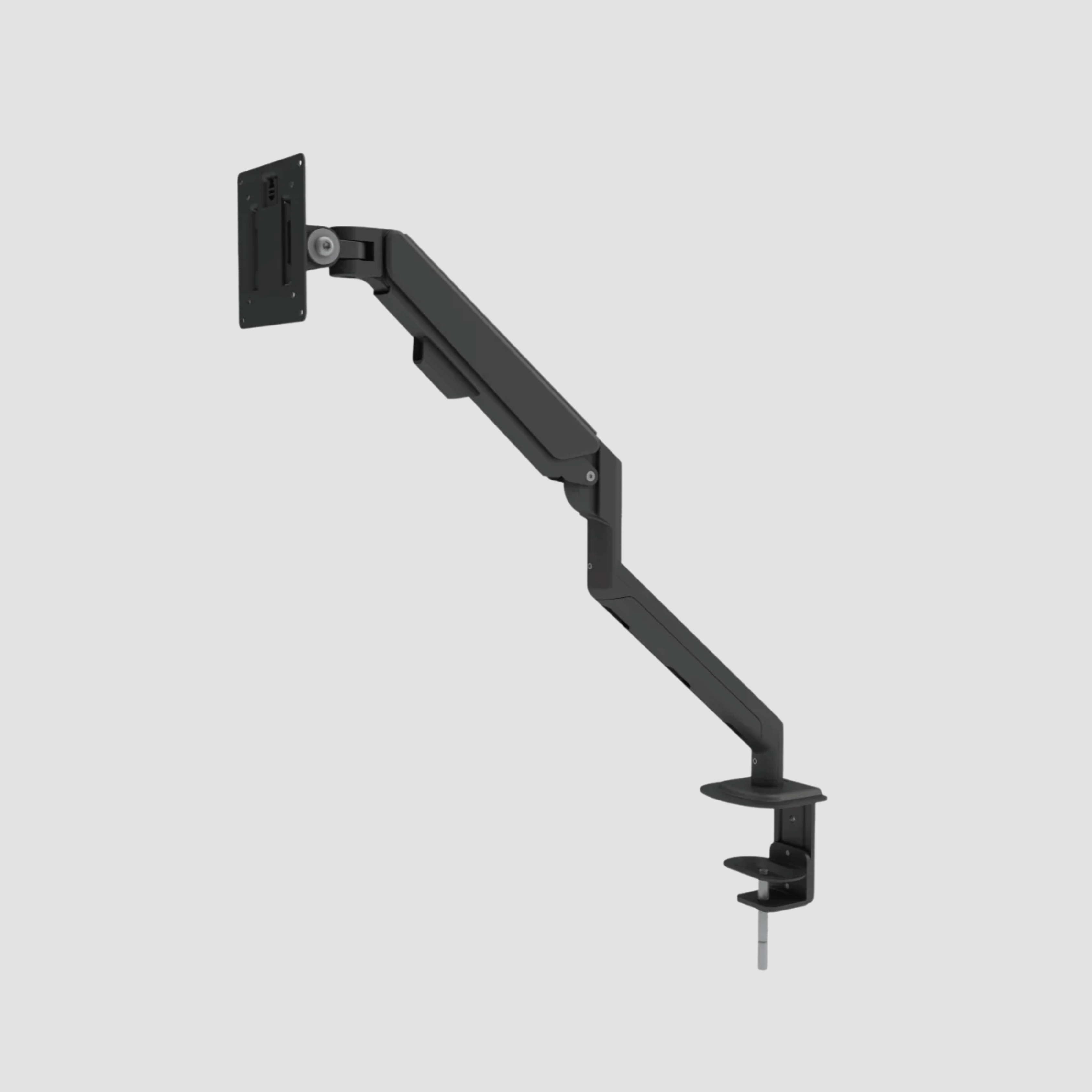
Think about where the monitor arm clamps, where power leads will travel, and whether a cable tray needs fixing beneath the surface. If you plan to drill holes for grommets or accessories, mark positions carefully and keep them clear of frame components. A well-planned underside preserves the calm, crafted appearance of the top from above.
For monitor arms, check the clamp's required thickness and use protective pads where supplied. Never overtighten a clamp. Solid oak is strong, but concentrated pressure at an edge should always be treated with care. The same principle applies to drilling: use the correct bit, measure twice, and allow enough space from the edge to protect the integrity of the timber.
Let the Tabletop Belong to the Whole Workspace
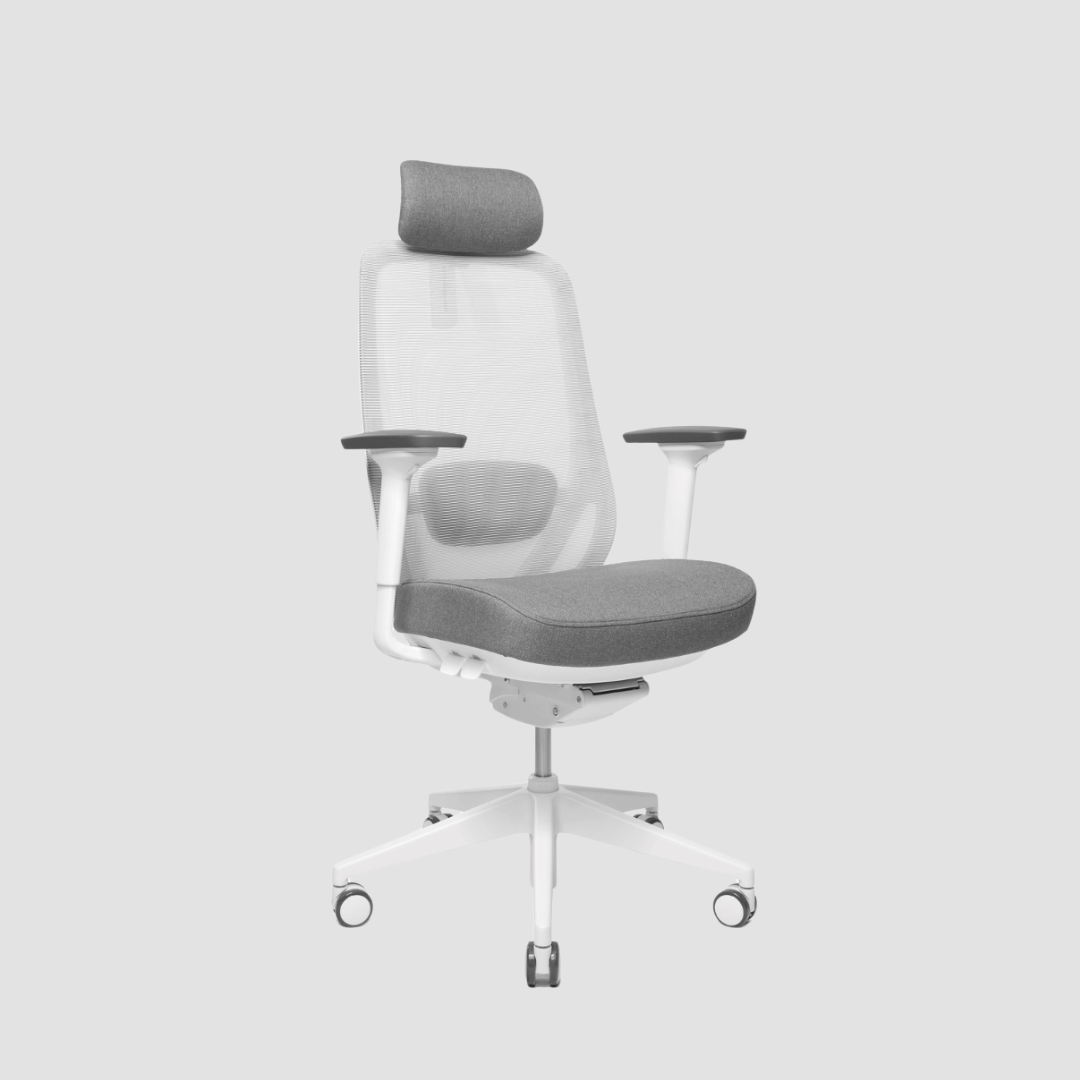
An oak desk becomes more convincing when the rest of the workspace supports it. A height-adjustable frame brings movement and ergonomic flexibility; an adjustable chair supports posture; monitor positioning protects the neck; and discreet cable management keeps the timber surface clear.
This does not mean every item must match exactly. Oak works particularly well with powder-coated steel, wool, leather, black details and soft, mineral-toned walls. The goal is visual harmony rather than a showroom set. At OAKO, the strongest workspaces are the ones where the oak remains the material focal point and technology is integrated with restraint.
Choose the oak tabletop you will still want to sit at after the novelty of a new desk has passed. The right one will fit your room, support your working posture, accept the marks of real use, and make the daily return to your workspace feel considered.


Leave a comment
This site is protected by hCaptcha and the hCaptcha Privacy Policy and Terms of Service apply.