


A desk can have the right dimensions, a capable standing frame and a beautiful finish, yet still feel slightly wrong if the top is too thin. When people ask what desk thickness is best, they are often really asking how to balance visual weight, daily comfort, material honesty and long-term strength.
For most premium home offices, a 30 mm solid oak desktop is the considered choice. It has enough substance to feel reassuringly solid, enough depth to show the character of real oak, and a proportion that works beautifully with modern height-adjustable frames. But the best thickness depends on the desk’s size, construction and the way you work.
Why desk thickness changes more than appearance
Thickness is one of the first things you notice without consciously measuring it. A slim desktop can make a room feel light and minimal. A thicker oak top adds presence - the quiet confidence of a piece made from a real piece of timber rather than a thin surface wrapped around a lightweight core.
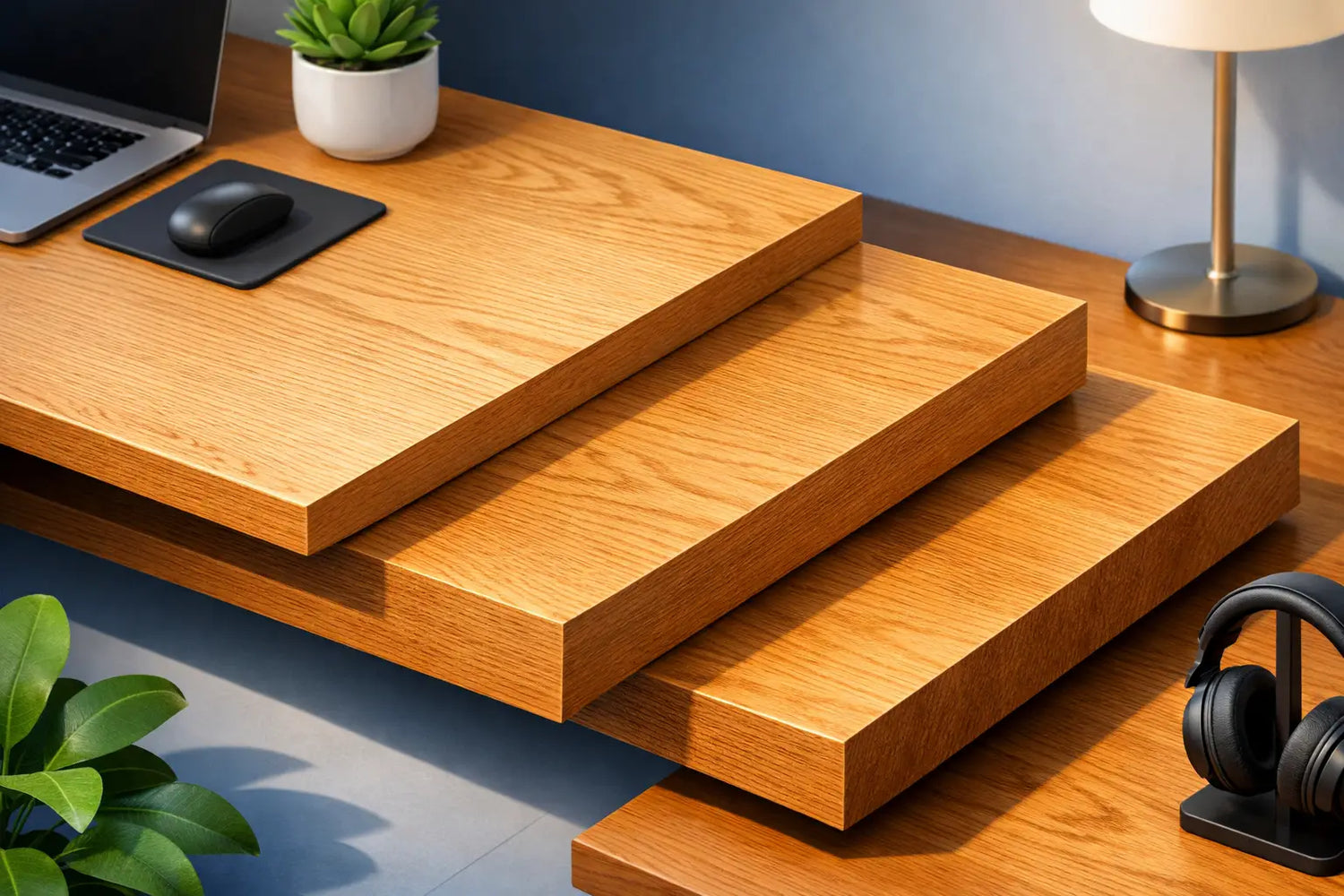
That visual difference also affects how a desk sits in the room. In a compact Copenhagen apartment or a carefully designed home office, a 40 mm top can become a strong architectural feature. On a smaller desk, the same thickness may feel heavier than necessary. A 20 mm top can look crisp and restrained, but it needs the right proportions and support to avoid looking insubstantial.
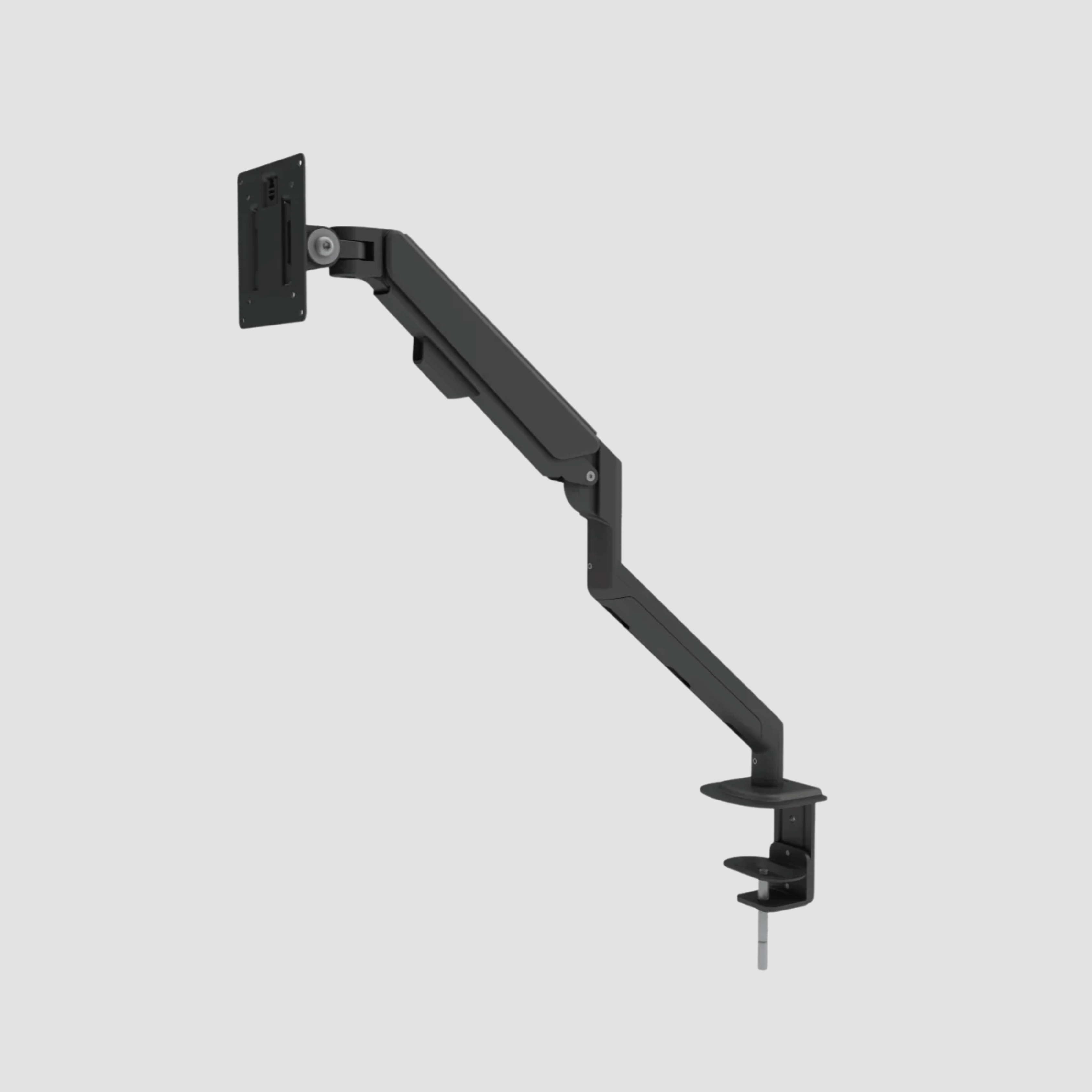
There is also a practical side. A desk top must carry monitors, monitor arms, laptops, speakers, task lighting and the occasional weight of someone leaning on the edge during a call. With solid wood, added thickness provides more material for mounting hardware and contributes to a stable, dependable feel.
What desk thickness is best for everyday work?
For a solid oak standing desk, 30 mm is the best all-round thickness for most people. It offers a strong balance between refinement and performance. The desktop feels substantial beneath your hands, remains manageable in weight, and pairs naturally with a dual-motor steel frame.
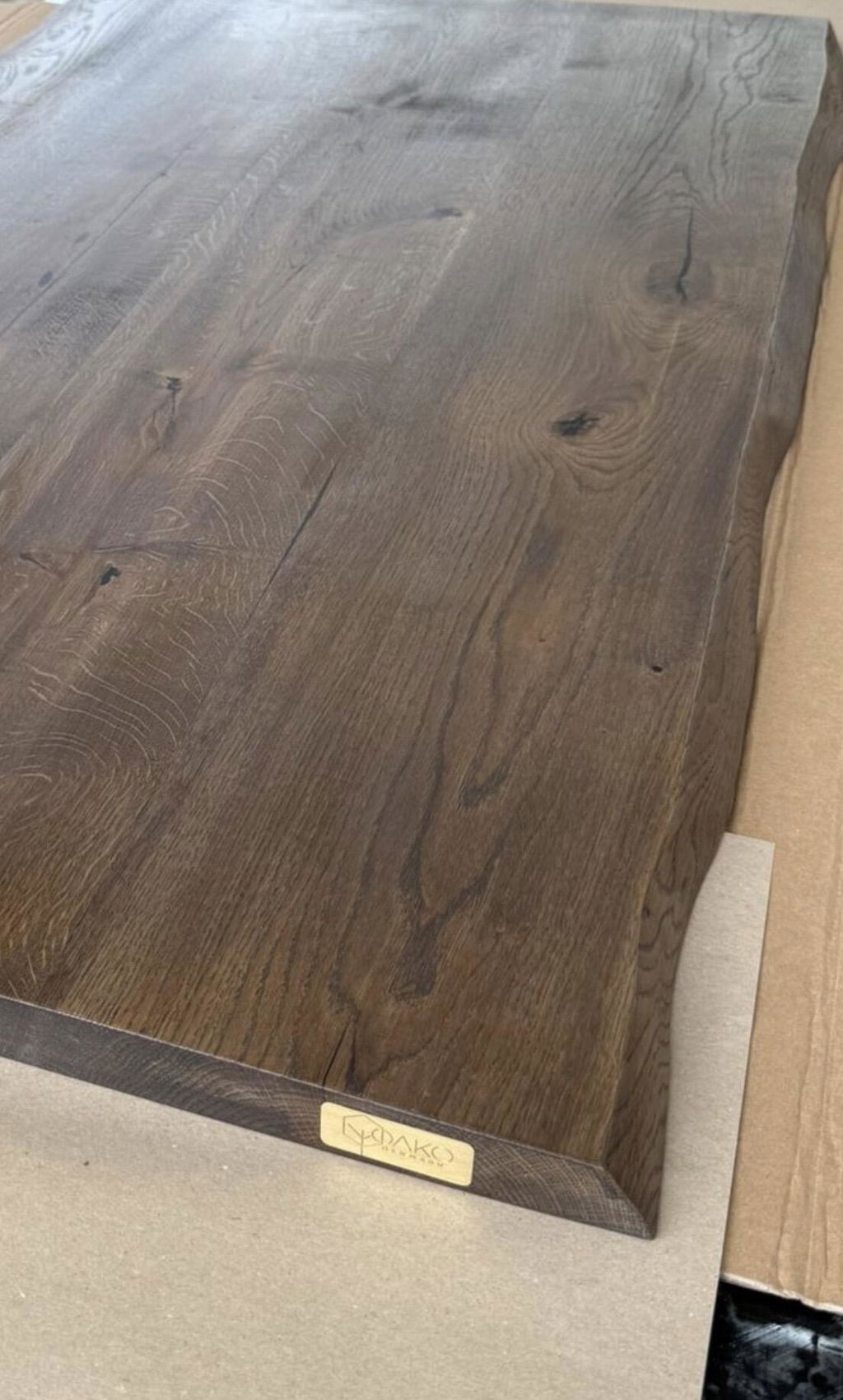
A 30 mm oak top also gives the wood room to speak. European oak has visible grain, tonal variation and natural movement that deserve more than a paper-thin profile. At this thickness, the edge reveals the material honestly. It looks crafted rather than manufactured to a cost target.
For desks around 120 to 160 cm wide, 30 mm is particularly well judged. It suits one or two monitors, a laptop setup and daily stationery without making the desk visually dominant. It also creates a balanced meeting point between warm timber and the clean engineering of a height-adjustable frame - where oak meets technology.
When 20 mm makes sense
A 20 mm solid oak desktop can be an elegant option where visual lightness is the priority. It works well for smaller desk sizes, occasional workspaces and interiors with a very pared-back aesthetic. The slimmer profile leaves more visual air around the frame and can make a compact room feel less crowded.
The trade-off is that a thinner top asks more of the design around it. The frame needs to provide reliable support, particularly on wider desks, and monitor-arm clamps must be chosen with care. Solid oak is far stronger and more durable than chipboard, but thickness still matters when concentrated loads are applied near an edge.
A 20 mm top is not a lesser material choice when it is made well. It is simply a different design decision. Choose it for restraint, not because it seems like the easiest way to save space.
When 40 mm is worth choosing
A 40 mm desktop is for those who want the desk to feel unmistakably permanent. It has greater visual depth, a more furniture-like presence and a generous edge that makes the grain and craftsmanship immediately apparent. This is especially effective on larger desks, executive workstations and live-edge tops.
The additional mass can bring a feeling of stability, though a quality standing desk is ultimately made stable by its frame, feet and engineering - not just the weight of the top. A thicker surface also weighs more, which matters during delivery, installation and any future move. It should be matched with a frame designed for that load.
A 40 mm oak desk is a strong choice when the workspace is part of the interior story rather than something to hide at the end of the day. It suits a studio, private office or open-plan home where the desk deserves to be treated as a lasting piece of furniture.
Thickness, strength and desk size belong together
It is tempting to choose thickness in isolation, but the right decision begins with the desk’s width and depth. A compact 120 x 60 cm desk has very different demands from a 200 cm-wide workstation with two large screens, monitor arms and audio equipment.
As a rule, the wider the unsupported span, the more valuable thickness becomes. A well-designed steel frame provides support beneath the desk, but a thicker solid oak top adds reassurance across larger surfaces. It is also less prone to feeling flexible when you press down near the front edge or adjust a heavy monitor arm.
Depth matters for comfort, too. If you use an external monitor, 70 or 80 cm of depth gives you more freedom to place the screen at a comfortable distance. With a deep desktop, a 30 mm or 40 mm profile often looks more proportionate than a very slim top. The larger the surface, the more a modest thickness can appear visually lost.
Do thicker desks improve ergonomics?
Desk thickness does affect ergonomics, but not in the way many people expect. It does not make a desk inherently more ergonomic. The decisive factor is whether the work surface can be adjusted to the correct height for your body, chair and posture.
Still, thickness must be considered when setting the height range. A 40 mm top sits 10 mm higher than a 30 mm top on the same frame. For most users this is a small difference, but it can matter for shorter users, particularly when sitting. A quality height-adjustable frame with a low starting position helps preserve the right elbow angle whatever top you choose.
The underside matters as much as the visible edge. You need enough knee clearance when seated and a clean arrangement for cable trays, power strips and mounting points. A thoughtfully built solid oak desk should support the tools of modern work without turning the underside into a compromise.
Solid oak versus veneer, laminate and chipboard
The same measurement does not mean the same experience across materials. A 25 mm laminated chipboard top may look thick from the side, but it often relies on a composite core and edge treatment to create that impression. It can be practical, but it does not carry the same tactile quality, repairability or longevity as solid oak.
A solid oak desktop is material all the way through. Minor marks can be sanded and refinished rather than accepted as permanent damage. The edge is oak, the surface is oak, and the grain will gain character with years of work, coffee and everyday life.
Natural timber does respond to its environment. Seasonal humidity can cause subtle movement, which is normal for real wood. This is why craftsmanship matters: correct drying, finishing and mounting methods allow the top to live naturally while remaining stable in use. Thickness supports that sense of permanence, but proper construction is what makes it last.
Choosing a thickness that suits your space
Start with the role your desk needs to play. If it is a focused workstation in a small room, 20 mm or 30 mm may keep the setting calm and light. If it is the centrepiece of a dedicated office, 30 mm provides a confident everyday standard, while 40 mm creates a more expressive, heirloom-quality statement.
Then consider your equipment. A laptop and one monitor place modest demands on the top. Dual monitor arms, studio speakers, desktop computers and larger displays call for a desk with convincing material strength and a frame that can carry the full setup without compromise.
Finally, trust proportion. A thick oak top should never feel like a styling trick, and a thin one should not feel as though it has been reduced past the point of usefulness. The best desks are resolved as a whole: timber, edge profile, frame, room and the person using them.
At OAKO Denmark, that balance is central to the way a desk is made. A solid oak surface should feel warm under the hand, stable through a full workday and beautiful enough to remain in your space long after the latest productivity trend has passed.
Choose the thickness that makes you want to sit down and begin. The right desk does not demand attention every day - it quietly supports your best work, then continues to look better for having been part of it.



Leave a comment
This site is protected by hCaptcha and the hCaptcha Privacy Policy and Terms of Service apply.