


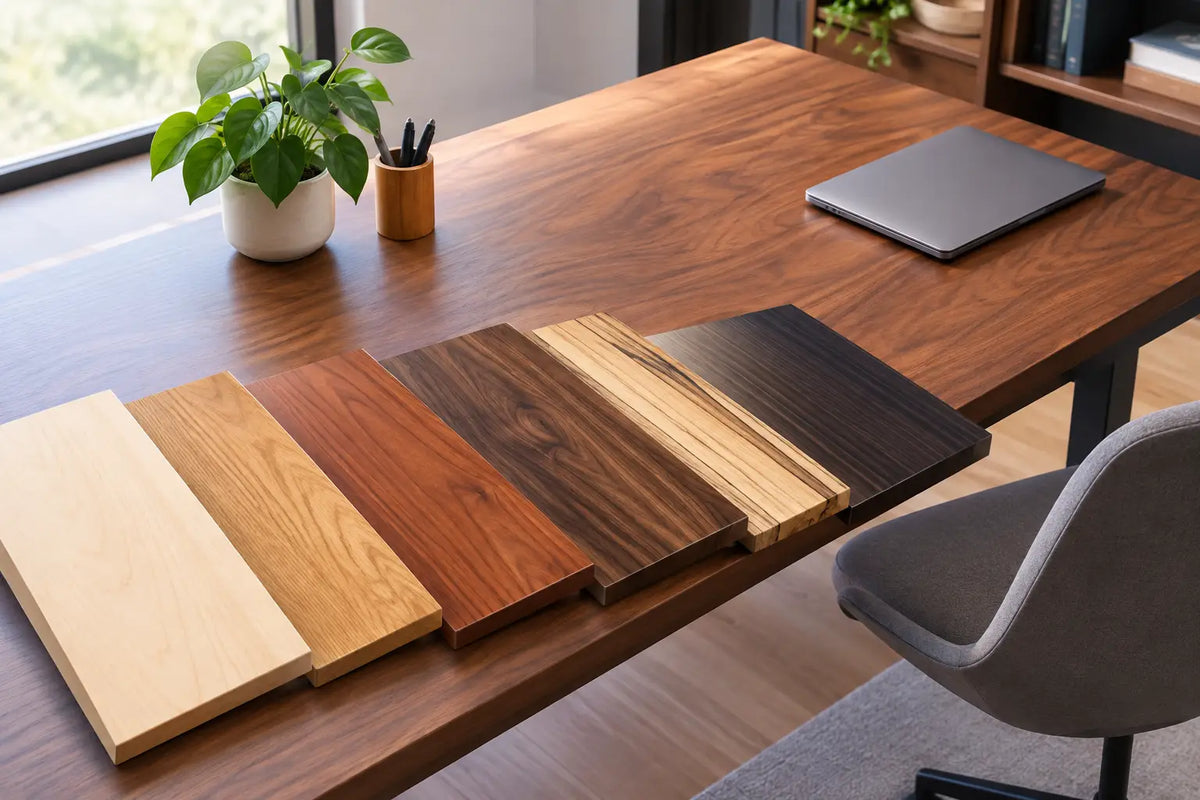
A desk top is where work leaves its mark. It carries the weight of screens and notebooks, absorbs the occasional coffee spill, and sits in your field of view for hours every day. That is why desktop wood selection deserves more attention than a quick choice between light or dark finishes. The material influences how your workspace feels, how it wears, and whether it still belongs in your home years from now.
For a considered home office, solid wood is more than a surface. It is the visual anchor between technology, movement and the quieter details that make focused work possible. Yet not every wood top is made in the same way, and the best choice depends on how you work, the look you want, and how much character you are happy to welcome over time.
Start with the material, not the colour
Colour matters, but construction matters first. Many desk tops that look like wood are built from chipboard or MDF with a printed laminate layer. They can be practical in short-term settings, but their appearance and lifespan are limited by that thin outer surface. Once edges chip, moisture enters, or the pattern begins to feel dated, there is little material to restore.
Wood veneer sits between laminate and solid timber. It uses a thin slice of real wood over a manufactured core, giving a more natural appearance than printed laminate. A well-made veneer top can be stable and visually attractive, especially where budget, low weight or a very large desktop are priorities. Its trade-off is simple: the visible wood layer is limited. Deep scratches, dents and repeated refinishing must be approached with care.
A solid wood desktop is made from real timber through its full thickness. Its grain is not a decorative layer but the material itself. This gives the desk a depth that manufactured surfaces struggle to replicate, from the gentle variation in tone to the way light catches open grain. It also gives the top a longer working life. Small marks can be repaired, refreshed or accepted as part of the desk’s story rather than treated as a reason to replace it.
For people furnishing a permanent workspace, that difference is substantial. A desk should not be designed around planned obsolescence. It should earn its place through daily use.
Why oak is a natural choice for a desktop
Oak has been trusted in furniture making for generations for good reason. It is hardwearing, structurally dependable and rich in character without becoming overly decorative. European oak, in particular, carries a calm, pale-to-honey tone that works naturally with black steel, soft textiles, neutral walls and the technology found in a modern workstation.
Its grain brings movement to a room without demanding attention. That makes it especially suited to a desk, where the surface should feel considered but not distracting. An oak top can support a minimal setup with a laptop and lamp just as convincingly as a more technical arrangement with monitor arms, speakers and cable management.
Durability is equally important. Oak handles the everyday pressures of office life well, although no natural material is indestructible. A heavy monitor stand dragged across the grain can scratch it. A wet glass left in one spot may leave a mark if the finish is not maintained. The advantage is that solid oak can be cared for rather than discarded. Light wear can often be reduced with gentle sanding and a suitable oil treatment, allowing the surface to mature instead of deteriorate.
At OAKO, this is the thinking behind pairing solid European oak with height-adjustable steel frames. The technology should help the body move through the day; the material should make the desk worth keeping for the long term.
Desktop wood selection for the way you work
The right top is not only an aesthetic decision. Consider what happens on your desk from Monday morning to Friday afternoon.
If your workstation holds dual monitors, a desktop PC, studio equipment or a substantial monitor arm, look for a solid, sufficiently thick top. Thickness adds visual presence, but it also contributes to a sense of stability and gives more confidence when mounting accessories. Always check the fixing requirements for monitor arms and cable trays, particularly if you are comparing solid timber with a hollow or engineered construction.
If you use the desk for writing, sketching or client calls, the tactile quality of wood becomes more relevant. Solid oak has a warmth that changes the experience of the workspace. It is not cold like glass, visually flat like laminate, or overly formal like a polished boardroom table. That may sound like a small detail, but the desk is one of the few pieces of furniture you interact with constantly.
For a compact home office, a lighter oak finish can help a room feel open while still giving it substance. In larger spaces, a deeper oil finish or a top with more pronounced grain can create a stronger focal point. Neither approach is automatically better. The most successful choice usually responds to the room’s light, floor tone and the furniture already around it.
Straight edge or live edge?
A straight-edge desktop offers clean geometry and a precise, architectural expression. It is the natural fit for interiors built around symmetry, minimalism and clean lines. It also makes placement against a wall straightforward.
A live-edge top follows the natural contour of the tree. It brings a more individual, organic profile to the workspace, making every desk feel less uniform. This is a choice for those who want the material itself to be visible in the design. The trade-off is practical as well as visual: a live edge may create a less regular front line for writing accessories or desk pads, and its stronger character needs room to breathe.
Understand movement in real wood
Solid wood responds to its environment. Changes in humidity can cause it to expand and contract slightly across the grain. This is normal, not a flaw. Responsible desk construction accounts for it through careful drying, considered joinery and mounting methods that allow the top to move naturally.
Your own care supports that work. Keep the desk away from persistent damp, avoid placing it directly against an active radiator, and clean spills promptly. A stable indoor climate is ideal, particularly during Danish winters when heated rooms can become very dry.
This is one of the honest trade-offs of choosing real timber. Laminate offers sameness. Oak offers life. It may develop a little more depth in colour over time, and it may show the evidence of the work done on it. For many owners, that is precisely the point.
Finish changes both look and maintenance
The finish protects the wood while shaping its final appearance. Oil finishes are popular for oak desktops because they preserve a natural, close-to-the-wood feel. They enhance grain, allow local repair and can be renewed as needed. They do ask for occasional care, especially on a heavily used surface.
A lacquered finish creates a more sealed protective layer and can reduce day-to-day maintenance. Depending on the formulation, it may also feel slightly less natural to the touch and make spot repairs more difficult. Neither finish is universally superior. An oiled top suits buyers who value a tactile surface and the ability to maintain it over a lifetime. A lacquered surface can suit those who prefer a more set-and-forget approach.
Whatever finish you choose, avoid harsh household chemicals. A soft cloth, mild cleaning and quick attention to spills are usually enough. Use felt pads under equipment that stays in one place, and lift accessories instead of pulling them across the surface. These are small habits, but they preserve the quiet confidence of a well-made desk.
Match the top to the complete workspace
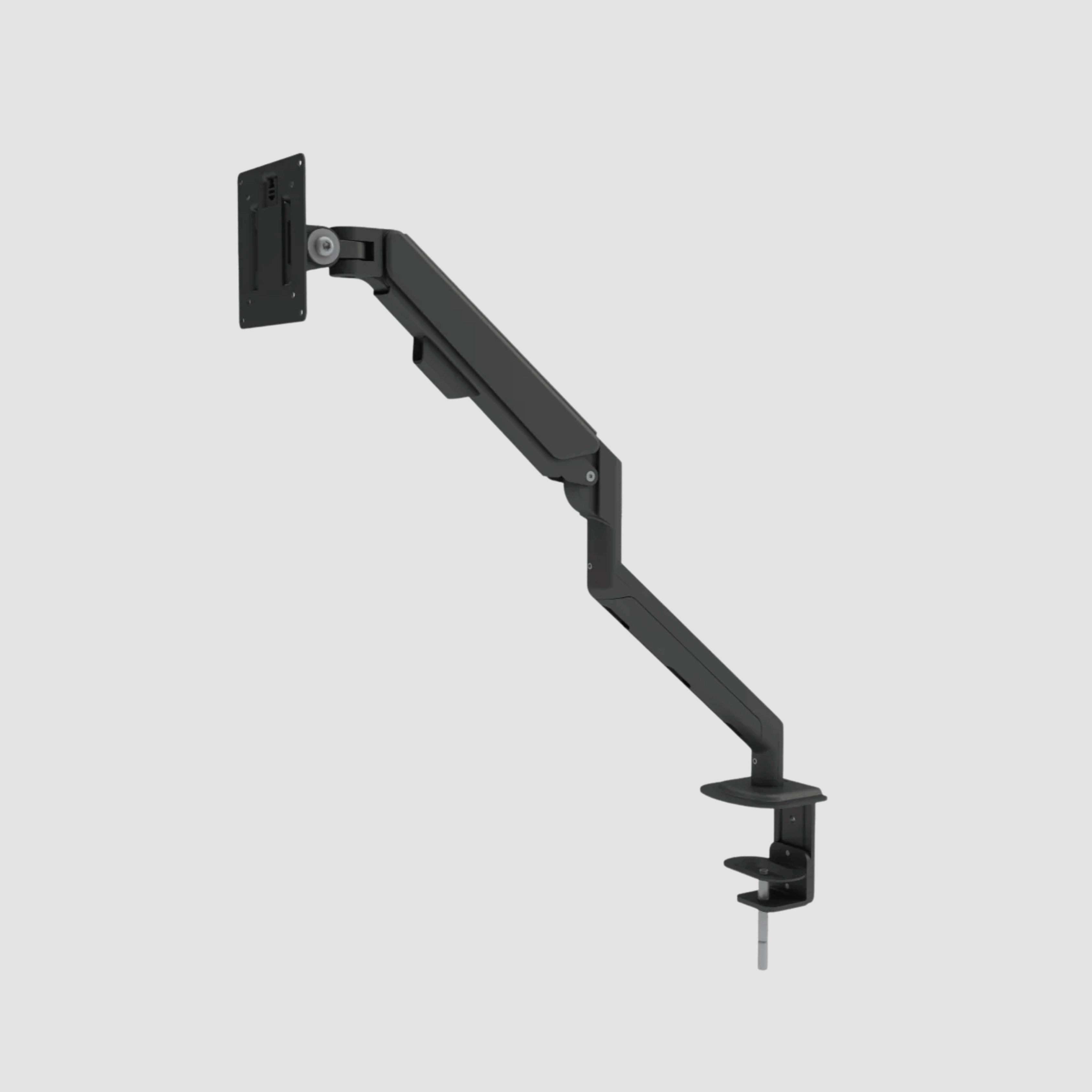
A desktop does not sit alone. A warm oak surface becomes more cohesive when the rest of the workspace is chosen with equal restraint. Black or dark grey frames create crisp contrast. Natural textiles, muted storage and considered cable management keep the desk from feeling crowded. A monitor arm can free up the surface, allowing the grain to remain visible rather than buried beneath equipment.
There is also an ergonomic consideration. A height-adjustable frame helps you alternate between sitting and standing, but the desktop must support that function without looking like an office utility. The strongest setups combine technical performance with materials that belong in a home. When oak meets steel, the result can feel both capable and composed.
Choose the desktop you want to see at the end of a demanding day, not simply the one that looks acceptable in a product image. A real oak top asks for a little respect, then rewards it with warmth, strength and a surface that becomes more personal with every year of meaningful work.


Zostaw komentarz
Ta strona jest chroniona przez hCaptcha i obowiązują na niej Polityka prywatności i Warunki korzystania z usługi serwisu hCaptcha.