


A standing desk is only as convincing as the structure beneath it. Steel desk frames do the unseen work: carrying the weight of a solid wood top, lifting your working day from seated to standing, and keeping the surface steady when you are deep in a call, a sketch, or a focused hour of work. The tabletop may set the visual tone, but the frame decides whether the desk feels composed for years or merely impressive on delivery day.
For a premium workspace, a frame should not be treated as a technical afterthought. It is the meeting point between natural material and modern movement - where oak meets technology. Choosing well means looking beyond a headline lifting capacity and considering stability, motors, adjustment range, finish, and how the frame supports the proportions of the tabletop above it.
Why steel is the right material for a desk frame
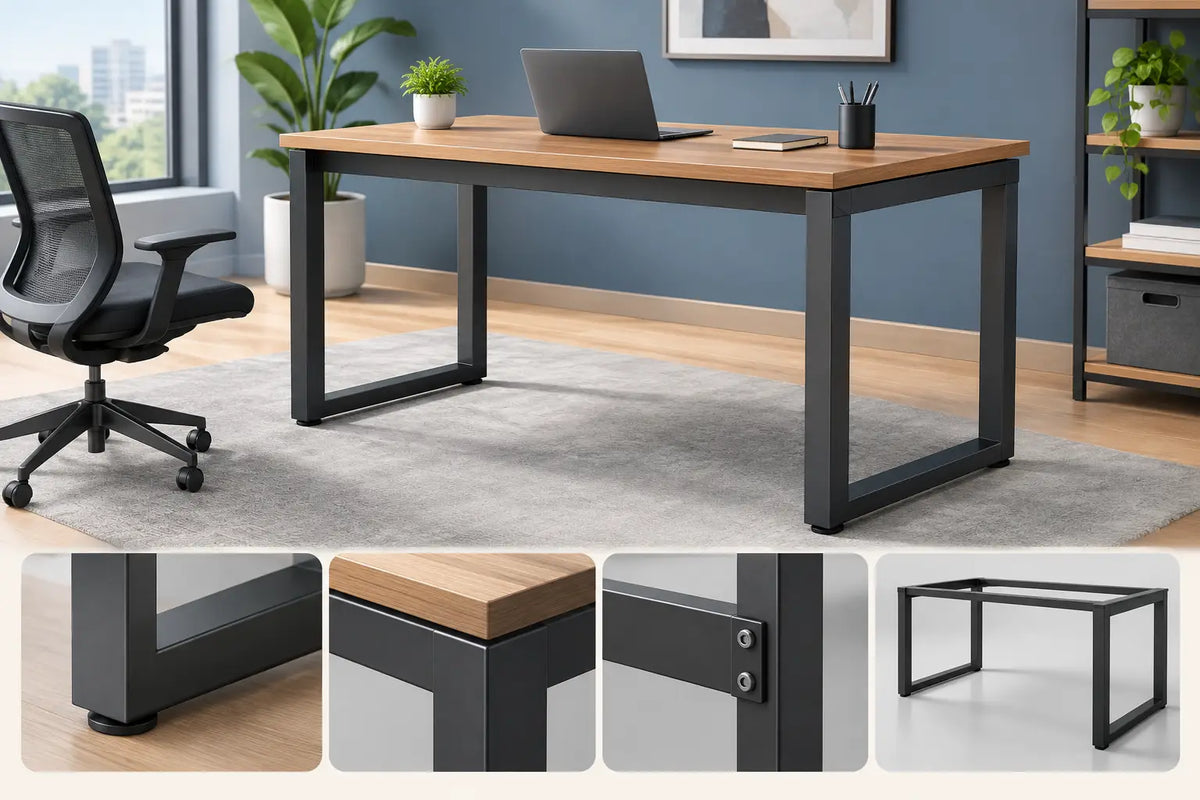
Steel has the stiffness and strength required for a height-adjustable desk. A well-made steel frame resists flex when the desktop is raised, distributes the load across its legs and feet, and gives a substantial oak top a secure foundation. This matters especially with solid oak. Unlike a thin laminate panel, real wood has weight, depth, and presence. It deserves a base engineered to match.
The material also lends itself to clean, restrained forms. Powder-coated steel can sit quietly beneath warm timber, letting the grain and edges of the oak remain the focal point. Black creates a sharper, architectural contrast, while lighter finishes can make the desk feel more airy. The right finish is not only about appearance, though. A durable coating protects the frame from everyday knocks, scuffs from chairs, and the small abrasions of a working life.
Steel is not automatically synonymous with quality. Thin components, loose tolerances, and weak joints can still create wobble. What matters is the complete construction: the gauge of the steel, the design of the crossbar and feet, the quality of the lifting columns, and the precision of assembly.
Stability is the real test of steel desk frames
Most desks feel stable at their lowest setting. The more revealing moment comes at standing height, where a poorly designed frame can sway as you type or adjust a monitor. Some movement is natural in any tall piece of furniture, particularly on uneven floors, but a quality frame should feel controlled rather than nervous.
Foot length and leg geometry have a direct influence here. Wider, well-proportioned feet give the desk a more planted stance, while a rigid central structure helps prevent side-to-side movement. The connection between frame and tabletop matters just as much. A thick solid oak desktop creates a firm, substantial surface, but it must be fixed carefully so that the frame can support it evenly without restricting the wood's natural seasonal movement.
Consider how you actually work. A laptop and notebook place very different demands on a desk than dual monitors, a monitor arm, speakers, and a desktop computer. If your setup is screen-heavy, stability at full height should be a priority rather than a nice extra. A frame with a generous load capacity is useful, but capacity alone does not tell you how composed it will feel while moving or when fully raised.
Dual motors make a difference in daily use
A single-motor desk can be suitable for a lighter, simpler setup. It is often less expensive and may be perfectly adequate for occasional use. For a desk that will carry a heavy solid oak top and become the centre of a serious workday, dual motors are the more considered choice.
With a motor in each lifting leg, the load is shared more evenly. Adjustment tends to feel smoother, and the system is better suited to the weight of accessories and a larger desktop. It also gives confidence that the desk is built for regular movement rather than a few novelty height changes each week.
Speed matters less than consistency. A frame should rise and lower in a controlled, quiet manner, without jolting the coffee beside your keyboard or interrupting a conversation in a shared home. Noise is particularly relevant in apartments and home offices, where the desk may be used early in the morning or late at night. The best mechanism fades into the background: press a button, change position, continue working.
Height range should fit the person, not the room
A height-adjustable desk earns its place by fitting your body well in both positions. When seated, your shoulders should remain relaxed and your forearms should meet the work surface comfortably. When standing, the same principle applies without forcing you to hunch or lift your elbows.
Check the full height range rather than assuming one standard frame suits everyone. Taller users often need meaningful extension at the upper end, while shorter users may need a lower minimum height to achieve an ergonomic seated position. A frame's published range is useful, but remember to account for the thickness of the tabletop. A substantial oak top adds height, and that is part of the final measurement.
Memory controls can make better habits easier to maintain. If changing position requires a series of button presses and guesswork, it is easy to stay seated longer than intended. Saved positions remove that small friction. They are not a substitute for moving regularly, but they make the desk more likely to be used as designed.
Match the frame to the oak top
A desk is a composition, not a collection of separate parts. The frame width should support the size of the desktop without looking undersized or visually crowded. A broad top benefits from a frame with enough adjustment width and a footprint that feels proportional. A compact desk, meanwhile, needs a base that delivers stability without consuming unnecessary floor space.
Solid oak brings a particular consideration: every board has its own character. Grain variation, knots, and tonal shifts are not defects to hide but marks of a living material. A calm, precisely made steel frame provides the counterpoint. It allows the timber to feel warm and tactile without making the workspace overly rustic.
This pairing is why OAKO combines handcrafted European oak with steel dual-motor frames. The aim is not technology for its own sake. It is to make a real wood desk work hard enough for modern life, while retaining the weight, texture, and permanence that make oak worth choosing.
Details that separate a considered frame from a basic one
The visible silhouette matters, but several less obvious details shape ownership over time. Look at cable routing first. A motorised desk has power cables, control cables, and often a laptop charger, monitor leads, and lighting to manage. A frame that accommodates tidy cable management helps the desk retain its calm appearance, especially when viewed from the side or across an open room.
Anti-collision protection is another worthwhile feature. It helps stop the desk if it meets an obstacle while moving, whether that is a chair arm, drawer unit, or something left beneath the desktop. It is a practical safeguard, not a reason to move the desk carelessly, but it is valuable in a busy home office.
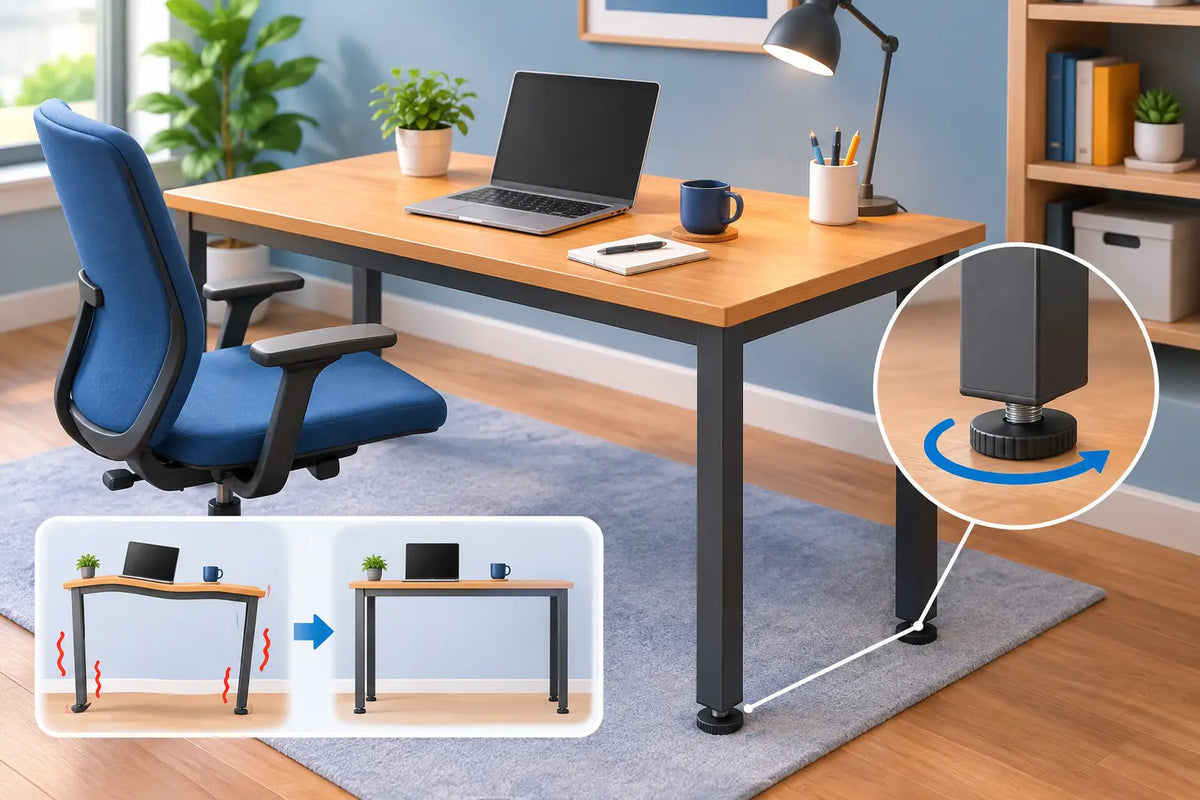
Pay attention to levelling feet as well. Many homes have floors that are not perfectly even, and a desk can only be as stable as the surface beneath it. Small adjustments at the feet can remove a frustrating rock before it becomes part of your daily routine.
Finally, choose a frame from a maker that sees longevity as part of the design brief. Electronics and moving parts should be supported by clear warranty terms and serviceable components. A solid oak top can remain beautiful for decades. The frame beneath it should be selected with the same long view.
A desk should feel settled, not temporary
There is a temptation to judge a height-adjustable desk by a specification sheet alone: kilograms lifted, millimetres travelled, buttons included. Those details matter, yet the better question is more human. Does the desk invite you to work well? Does it remain steady when your day becomes demanding? Does it look at home when the screens go dark?
Choose steel desk frames with the care you would give to the oak above them. When the base is quiet, stable, proportionate, and built for daily movement, the desk stops feeling like office equipment and becomes a lasting part of the room where your best work happens.

Leave a comment
This site is protected by hCaptcha and the hCaptcha Privacy Policy and Terms of Service apply.