


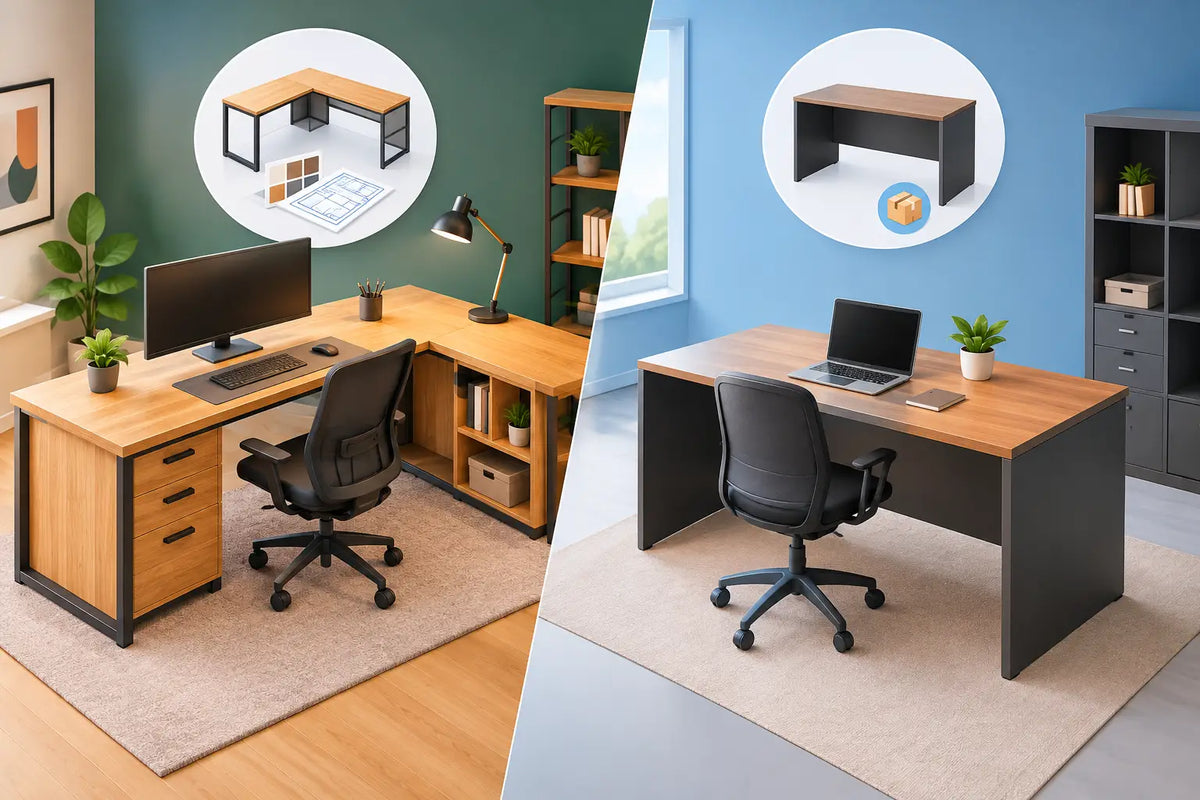
A desk is one of the few pieces of furniture that must work as hard as you do. It holds your technology, shapes your posture, sets the visual tone of a room, and often remains in view for eight hours a day. That is why the custom desk vs ready made decision is more than a question of measurements or delivery times. It is a decision about how you want your workspace to feel and perform for years ahead.
For some, a made-to-order desk is the only answer to an awkward alcove, a specific oak finish, or a carefully planned studio. For others, a thoughtfully designed ready-made desk offers the faster, more practical route without compromising on substance. The best choice depends on what genuinely needs to be unique.
Custom desk vs ready made: start with the room
A custom desk earns its place when the room dictates the design. Perhaps your home office sits beneath a sloped ceiling, between two walls with no spare millimetres, or inside a living space where every proportion matters. In these cases, a bespoke solution can make an inconvenient area feel intentional.
You control the dimensions, edge profile, timber selection, cable cut-outs, drawer placement, and sometimes even the shape of the desktop. This level of freedom is valuable when your work has specialist demands too. A music producer may need room for controllers and speakers; an architect may need a broad surface for drawings alongside multiple screens; a creative may need a desk that doubles as a presentation table.
But custom is not automatically better simply because it is personal. It requires more decisions, more lead time, and a clearer brief. A desk can be precisely made and still be poorly planned if monitor height, chair clearance, power access, and day-to-day movement have been overlooked.
Measure the working zone, not just the empty wall
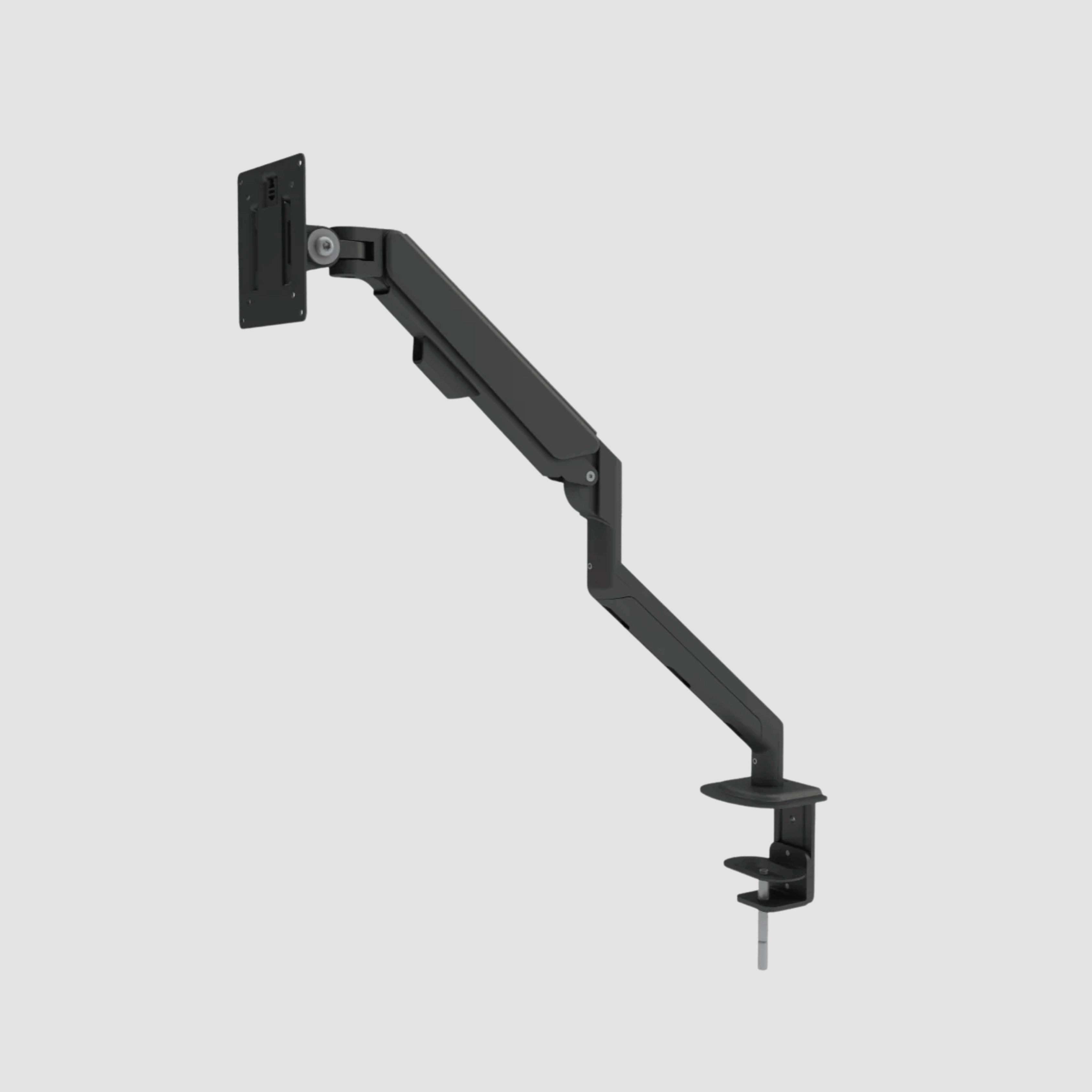
Before commissioning anything, measure how you work. Account for the space behind the chair, the reach of a desk drawer, the swing of a door, and the footprint of a sit-stand frame at its widest position. Consider where cables will run and whether the desk needs to accommodate a monitor arm, laptop stand, docking station, or under-desk storage.
A larger desktop is not always a more effective one. A surface that is too deep can push screens beyond a comfortable viewing distance. One that is too narrow can leave wrists crowded and cables exposed. The useful dimension is the one that supports your equipment and posture without overwhelming the room.
What a premium ready-made desk does well
Ready-made desks are often treated as a compromise. That is fair when the choice is between a generic flat-pack top and a purpose-built piece of furniture. It is less fair when the desk has been designed around the realities of modern work from the beginning.
A premium ready-made standing desk combines tested proportions with dependable engineering. The desktop depth is considered for screens and keyboard placement. The frame is matched to the weight and scale of the top. Height adjustment has been refined for daily use, rather than added as an afterthought. You know what the final piece will look like, how it will perform, and when it can arrive.
This is particularly compelling for professionals who want a workspace that feels considered but do not need an unusual footprint. A solid oak top in a well-resolved size can bring the character of natural timber into a room while keeping the ordering process clear and efficient.
With OAKO, the point is not to imitate bespoke furniture with endless options. It is to offer a disciplined workspace system where solid European oak, dual-motor technology, and matching accessories already belong together. That design coherence matters. A desk, monitor arm, cable solution, and chair should support the same calm, functional environment rather than compete for attention.
Standardised does not mean disposable
The difference lies in materials and construction. A low-cost ready-made desk often relies on chipboard, laminate, lightweight frames, and finishes that cannot be renewed once damaged. It may be convenient at first, but convenience becomes expensive when the desk flexes, chips, or no longer suits the way you work.
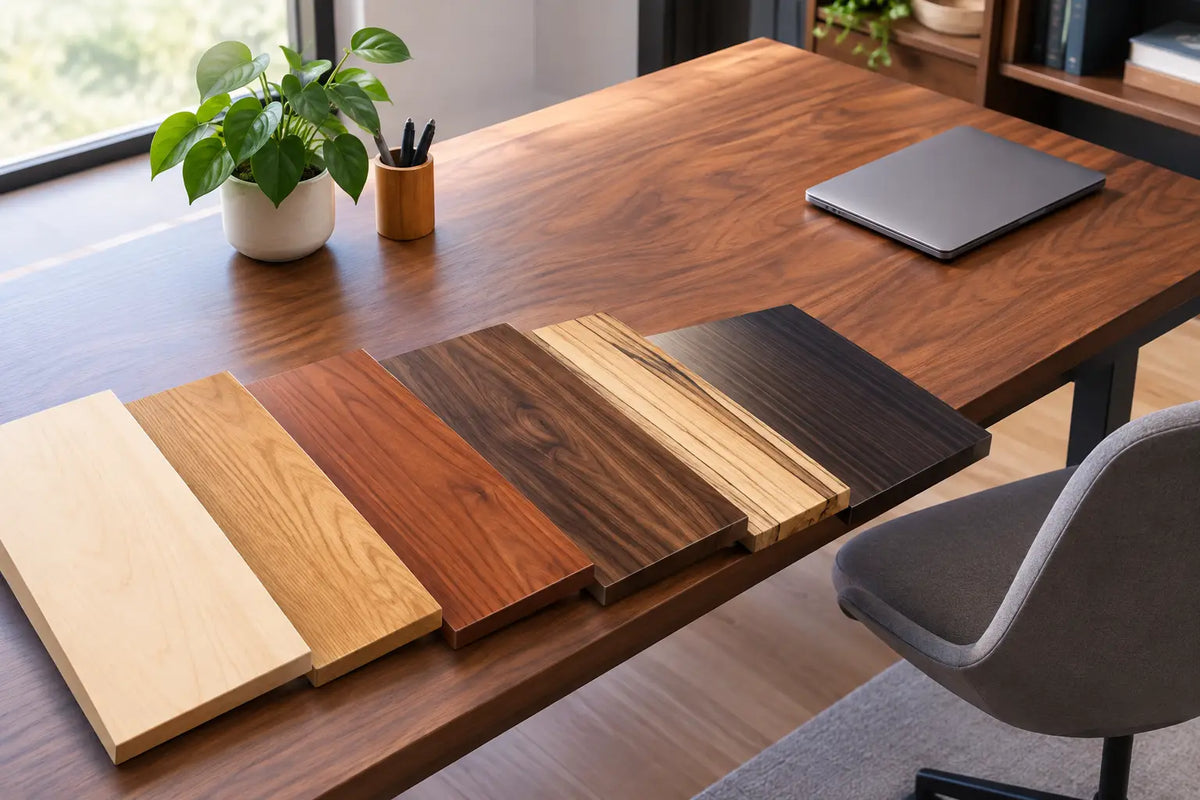
A solid oak desktop tells a different story. Oak has weight, grain, and variation that no printed surface can replicate. Small marks can become part of its character, and the timber can be cared for over time. Paired with a stable steel frame, it becomes a piece designed for thousands of workdays, not a temporary stop between moves.
Cost, lead time, and long-term value
The price gap between custom and ready-made furniture can be significant, although it is worth looking beyond the initial figure. Bespoke work includes design time, individual production planning, material sourcing, workshop labour, and often installation. If the desk solves a difficult spatial problem, that investment may be entirely justified.
Ready-made premium desks benefit from repeatable production without sacrificing quality. Because the materials, dimensions, and construction have already been resolved, more of the budget can go into what you touch and use every day: a thick oak top, a reliable frame, and components that hold up under real weight.
Lead time should be considered honestly as well. Custom furniture rewards patience, but that patience can be frustrating if you need a professional workstation now. A ready-made desk is usually the stronger choice when you are moving house, setting up a new business, returning to hybrid work, or replacing a desk that has already failed you.
The real calculation is cost per year of use. A desk that supports focused work, protects your body, and still looks better after five years has value beyond its invoice. Buy only as much customisation as your room and routine need, then insist on materials built to last.
Ergonomics are rarely a bespoke question
Whether a desk is custom or ready-made, ergonomic quality comes down to a few non-negotiables. The work surface should sit at a height that lets your shoulders relax. Your screen should be positioned to avoid a permanently bent neck. The frame should rise and lower smoothly enough that changing position becomes a habit, not a disruption.
For most people, the strongest setup is not an endlessly adjustable desk design. It is a stable sit-stand desk in the right dimensions, combined with a supportive chair, monitor arm, and thoughtful cable management. These elements create flexibility without cluttering the desktop or the mind.
A desk can be visually exceptional and still encourage poor posture if its accessories are ignored. Conversely, even the finest oak surface needs room to breathe. Keep the essential tools close, raise screens to a sensible height, and give cables a deliberate route. A calm workspace makes it easier to remain in the task.
Choose custom when the constraint is real
Custom is the right choice when your space has fixed limitations, your work requires specialist equipment, or you have a clear design vision that cannot be met by established sizes. It is also meaningful when you are furnishing a permanent home, a studio, or a client-facing office where the desk itself is part of the architecture.
Choose ready-made when the available dimensions already fit your room, you value proven ergonomics, and you would rather invest in quality materials than pay for unnecessary alteration. A refined oak standing desk is not less personal because it comes from a considered collection. The tools you place on it, the work you create there, and the way it settles into your home will make it your own.
The most satisfying desk is rarely the one with the longest specification sheet. It is the one you look forward to sitting at, can stand at comfortably, and trust to remain part of your working life long after the latest laptop has been replaced.


Laisser un commentaire
Ce site est protégé par hCaptcha, et la Politique de confidentialité et les Conditions de service de hCaptcha s’appliquent.