


A desk surface is where your working day happens: beneath your hands, around your equipment, and in your line of sight for hours at a time. This guide to wooden desktop options is designed for people who want more than a passable worktop. The right timber brings warmth and visual calm to a workspace, but it must also suit the way you work, the frame beneath it, and the level of care you are prepared to give it.
A wooden desktop should feel substantial rather than decorative. It needs to support monitors, notebooks, cable arms and the small rituals of focused work, while retaining its character over years of use. That is why the material beneath the finish matters just as much as the colour you see in a product photograph.
Guide to wooden desktop options: start with the construction
The term “wooden desktop” covers several very different products. Solid wood, veneer, plywood, finger-jointed panels and laminate-covered board can all look similar from a distance. Their performance, repairability and presence in a room are not similar at all.
For a premium home office, solid wood is usually the clearest choice. A solid oak desktop is made from real timber through its full thickness, not a thin decorative layer over a manufactured core. It has natural variation in grain, knots and tone. It can be refinished if a mark or scratch becomes part of the story rather than a reason to replace the desk.
That does not make every alternative wrong. A well-made veneer top can be visually refined and more dimensionally stable in challenging environments. Quality plywood has a distinctive layered edge and can suit a more architectural workspace. Engineered boards often offer a lower entry price and consistent appearance. The trade-off is simple: once a thin surface layer is damaged, repair options are limited, and the material does not develop the same depth with age.
Solid oak: the lasting choice for a working desk
Oak has earned its place in Scandinavian interiors for good reason. It is hardwearing, visually balanced and expressive without becoming demanding. Its grain can be quiet and linear or more animated depending on the cut of the board, so it works equally well in a restrained room and a more personal creative studio.
For desktops, oak offers a reassuring density. It feels grounded beneath a keyboard and stable under the weight of a monitor setup. A properly constructed solid oak top also has enough thickness to look proportionate on a height-adjustable steel frame. The contrast between warm timber and precise technology is one of the most convincing ways to make an ergonomic desk feel like real furniture.
Oak is not entirely maintenance-free. Like all solid timber, it responds to its surroundings. Seasonal changes in humidity can cause subtle movement, particularly across a wide desktop. This is natural behaviour, not a defect. Responsible construction allows the wood to move instead of forcing it rigidly into place.
The finish shapes both appearance and daily practicality. A light oil finish lets the grain remain tactile and makes local care more straightforward. Hardwax oil gives added protection while preserving a natural feel. Lacquer creates a more sealed surface and may better suit spaces where spills are frequent, although it can feel less like bare wood and is more difficult to repair invisibly. There is no universal winner. Choose the finish that matches your tolerance for patina and upkeep.
Other hardwoods and what they change
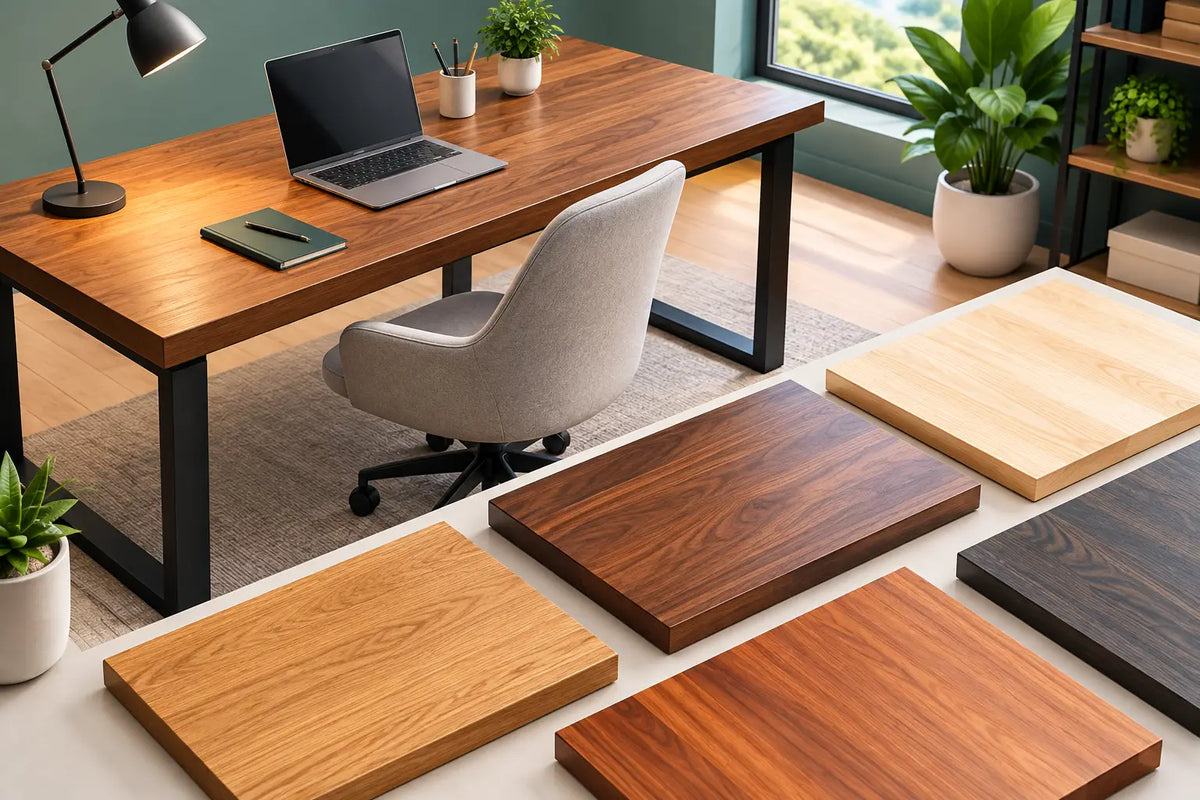
Walnut brings richer brown tones and a more formal, dramatic look. It is a strong choice when the desk is intended as a visual centrepiece, but its darker surface can make dust and light scratches more visible. Ash is paler and often more graphic in its grain, lending itself well to bright, contemporary interiors. Beech is clean, warm and traditionally practical, though it carries less of oak’s distinctive character.
The decision is often emotional as well as practical. A pale oak desktop can make a compact Danish apartment feel more open. Walnut can give a large studio a calmer, more tailored mood. If you expect to keep the desk for many years, choose the timber you will still be pleased to meet every morning, rather than the one that simply matches a current trend.
Veneer, plywood and engineered tops
Wood veneer consists of a thin layer of real wood applied to a core, commonly MDF, particleboard or plywood. On a well-crafted piece, veneer can look excellent and use less premium timber on the visible face. It is a considered option for cabinets, shelves and occasional furniture.
A desktop asks more of the material. Daily pressure from monitor stands, clamps and accessories can damage an edge or wear through a veneer layer over time. Deep scratches cannot usually be sanded away because there is very little material available. Check the edge treatment closely: a solid lipping is generally more durable than an exposed, taped edge.
Plywood has a different appeal. Its visible layers can look intentional and contemporary, and a high-quality birch plywood top can be strong for its weight. It is often lighter than solid oak, which may be useful if the desk must be moved frequently. Its character is more technical than tactile, however, and the surface still needs a durable finish to resist staining and moisture.
MDF and chipboard cores with a laminate or melamine surface are the most common mass-market desktop option. They are affordable, uniform and easy to clean, but they are not built for renewal. Once water enters an exposed joint or damaged edge, swelling can follow. For a temporary workstation, that may be an acceptable compromise. For a desk intended to stay through changing homes and careers, it is rarely the most satisfying investment.
Choose the thickness, size and edge with care
A desktop can be made from beautiful oak and still feel wrong if its proportions do not suit the room or frame. Thickness is not only visual. A thicker solid wood top offers a more substantial profile, supports the use of monitor arms more confidently and creates a clear sense of permanence. It also adds weight, so the frame must be rated for the complete setup, including screens, accessories and the desktop itself.
For depth, 70 to 80 cm gives most people comfortable space for a monitor, keyboard and writing area. A 60 cm desktop can work in a narrow room, but it asks more careful planning of monitor position and cable routing. Width depends on whether your desk supports one focused workstation or a wider creative setup. Do not buy extra length merely to fill a wall. Empty surface can be useful, but a desk should still support good reach and an orderly layout.
The edge profile changes the feeling at your wrists and in the room. A softly eased edge is comfortable and understated. A chamfer adds crispness without becoming sharp. A live edge preserves the natural outer contour of the tree and makes each top more individual. It is best suited to those who want the timber’s irregularity to be part of the design, rather than a perfectly formal line.
Match the desktop to a height-adjustable frame
A standing desk frame needs more than lifting power. It must distribute the desktop’s weight properly and remain steady at working height. Solid oak is heavier than a thin engineered board, particularly in larger dimensions, so confirm the frame capacity before combining components.
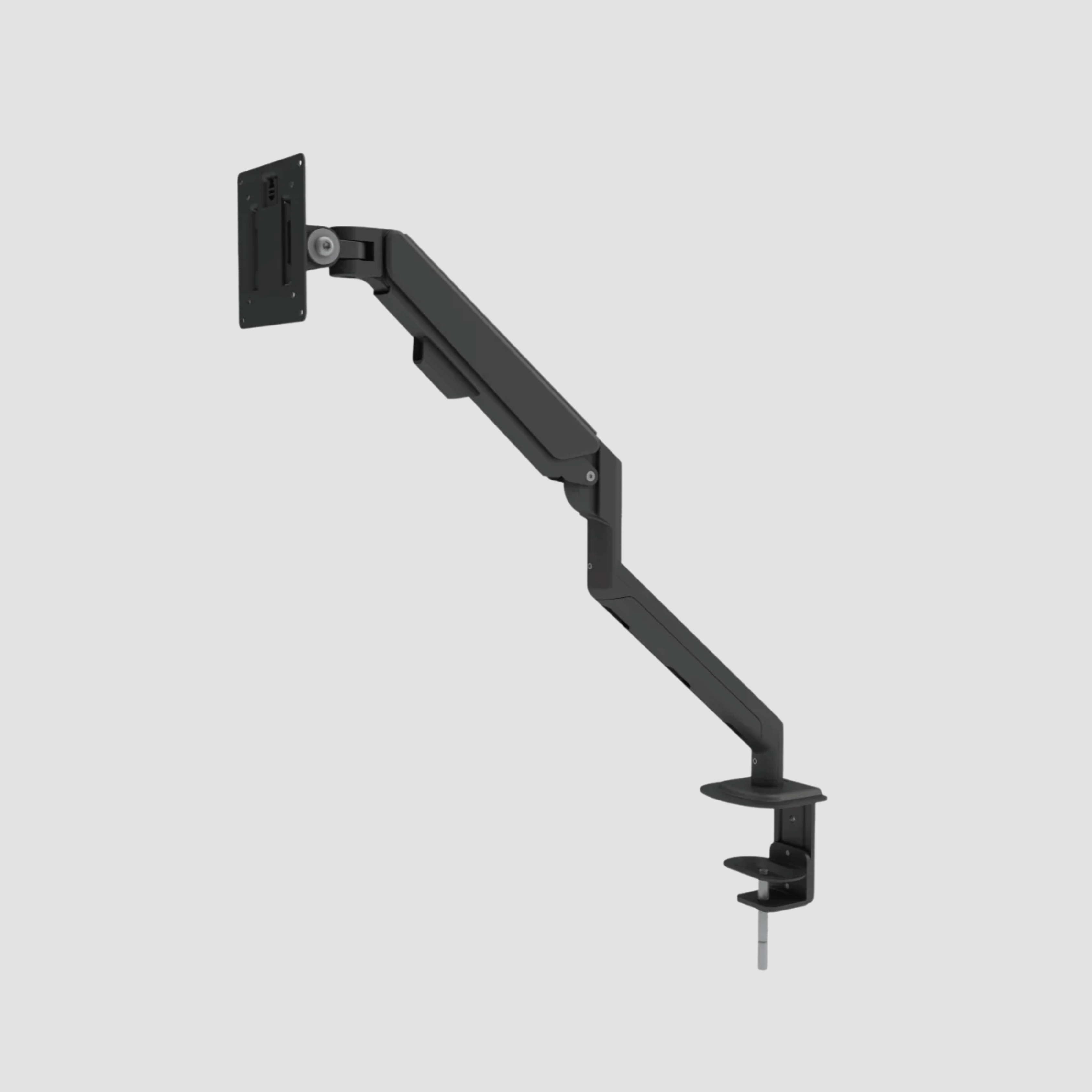
Also consider how accessories attach. Monitor arms and cable trays often use clamps or screws. Solid wood offers a reliable fixing area and can tolerate carefully placed fittings, while thinner veneer and hollow-core constructions need more caution. Thoughtful cable management protects the appearance of the desktop as much as it improves function. A clear surface lets the grain do its work.
Living with a wooden desktop
Real wood rewards ordinary care, not precious treatment. Use coasters for hot drinks, wipe spills promptly and avoid harsh cleaning sprays that strip oil or leave a cloudy residue. A soft damp cloth followed by a dry one is normally enough for daily cleaning. When an oiled surface begins to look dry or uneven, a maintenance coat can restore its depth.
Expect small signs of use. A solid oak desk may gain a faint mark from a favourite mug or a subtle change in tone where sunlight reaches it. These are not always flaws. They are evidence that the material is real and in use. The goal is not to keep oak frozen at the day it arrived, but to care for it so it becomes richer rather than tired.
If a more serious scratch occurs, solid timber gives you options. Light marks can often be reduced with careful sanding and re-oiling, always working with the grain and testing first in an inconspicuous area. Deep damage deserves a measured approach, especially on a finished desktop. One of the quiet advantages of choosing honest material is that repair remains possible.
For OAKO, the appeal of solid oak lies in this balance: a desk can support modern ergonomic work while remaining connected to the enduring logic of good furniture. Choose a surface that fits your space, respects the demands of your equipment and feels worth caring for. The best desktop is not the one that looks perfect for a week, but the one you will be glad to work from for years.



Laat een reactie achter
Deze site wordt beschermd door hCaptcha en het privacybeleid en de servicevoorwaarden van hCaptcha zijn van toepassing.