



The problem with most before-and-after inspiration is simple: it looks good in a photo, then fails in daily use. A real home office makeover example has to do more than feel styled for a moment. It has to support long work sessions, reduce visual noise, and make the room feel worth stepping into every morning.
For design-conscious professionals, that usually starts with one honest question: what is actually making the current workspace feel wrong? In many homes, it is not a lack of square metres. It is a poor mix of materials, weak ergonomics, exposed cables, and furniture that was never chosen as part of one coherent setting. When the room is corrected at that level, the change feels substantial, not cosmetic.
A home office makeover example with lasting value
Imagine a spare room in a Copenhagen apartment or a quiet corner of a villa outside Aarhus. The original setup is familiar: a small white laminate desk, a dining chair pressed into office duty, one overhead light, and a laptop sitting too low for proper posture. Papers drift across the surface, chargers are always visible, and the room feels temporary.
The makeover begins by treating the office as a place of daily work rather than occasional admin. That shift changes every decision. Instead of asking what fits cheapest, you ask what supports focus, movement, and longevity. The result is a workspace that feels calmer, looks more resolved, and performs better over time.
Step one: anchor the room with the right desk
In this example, the desk is the foundation. Not only because it is the largest object in the room, but because it controls how the user sits, stands, stores equipment, and visually experiences the space.
A height-adjustable desk with a solid oak top immediately changes the character of the room. Oak has weight, grain, and warmth that laminate cannot imitate. It softens the technical side of a setup filled with screens and devices, while still feeling clean and architectural. A steel frame underneath keeps the expression modern and grounded.
There is also a practical advantage here. A proper sit-stand desk supports variation during the day. That matters if you are spending six, eight, or ten hours at the workstation. For some people, standing intervals become a daily habit quickly. For others, the benefit is more subtle - less stiffness, better posture changes, and a stronger sense that the desk is working with the body rather than against it.
Size depends on the room. In a compact apartment, a more restrained top keeps the space open. In a dedicated office, a wider desk gives room for a monitor, notebook, task lamp, and still leaves enough free surface to think clearly. Bigger is not always better. The right proportion is the one that allows the room to breathe.
Step two: replace the chair people tolerate
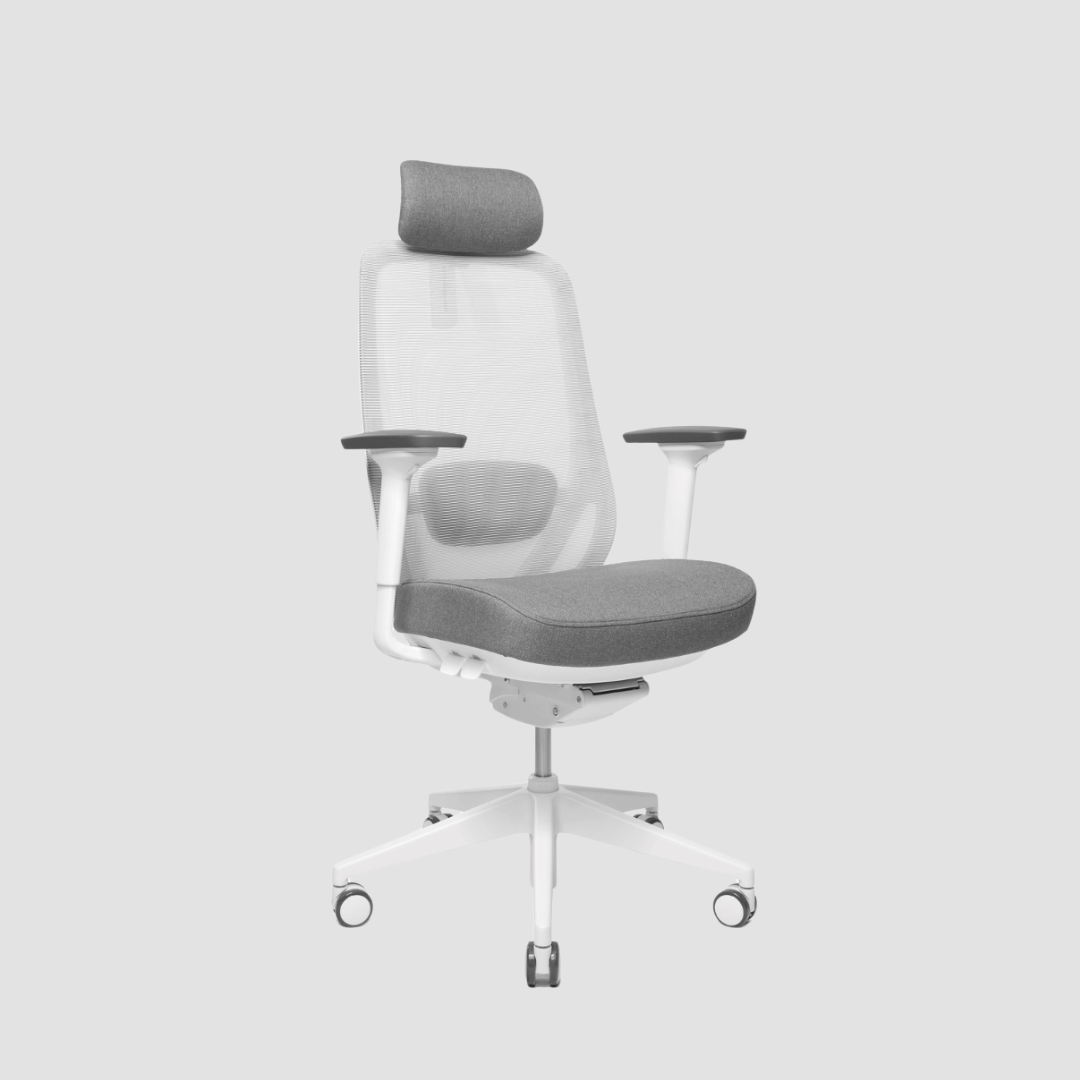
Many home office problems come from seating that was never intended for work. In this makeover example, the old chair is replaced with an ergonomic office chair designed for long sessions, upright support, and subtle movement.
This is where some buyers hesitate. They want a cleaner aesthetic and worry that ergonomic seating will feel too corporate. That concern is fair. Some task chairs do dominate a room. But the better solution is not to avoid ergonomics. It is to choose a chair with a refined profile, quality materials, and adjustability that disappears into daily use.
When the desk and chair are balanced properly, the whole room starts to feel more intentional. The user no longer leans forward by default. Shoulders drop. The screen line improves. Even visually, the room appears more expensive because it now reflects function with confidence.
The difference is often in the details
A strong desk and chair do most of the heavy lifting, but the room will still feel unfinished if the smaller elements are neglected. The best home office makeover example is usually won through details that remove friction.
Lighting should support focus, not flatten the room
One ceiling light rarely does enough. In this example, the workspace is placed near natural light without putting the screen directly in glare. Then a task lamp is added to create a more controlled pool of light in darker hours.
This makes a visible difference in Danish winters, when daylight can be limited and cold. Good lighting helps concentration, but it also changes the mood of the room. The office feels less improvised and more like a considered part of the home.
Warmth matters here. If the desk surface is oak, a harsh blue-white bulb can work against the material. A softer, cleaner light usually flatters wood grain better and makes the full setup feel calmer.
Cable management is not a small issue
Few things cheapen a workspace faster than visible cables. They collect dust, pull the eye downward, and create the sense that the room is never truly finished.
In this makeover, cables are routed under the desk with trays, clips, and a defined charging point. The laptop cable, monitor cable, and power leads no longer fall in loose lines toward the floor. The desk appears lighter, and cleaning becomes easier.
This is one of those upgrades that sounds minor until it is done. Then it becomes difficult to imagine returning to a desk with wires in full view.
Monitor placement changes posture more than people expect
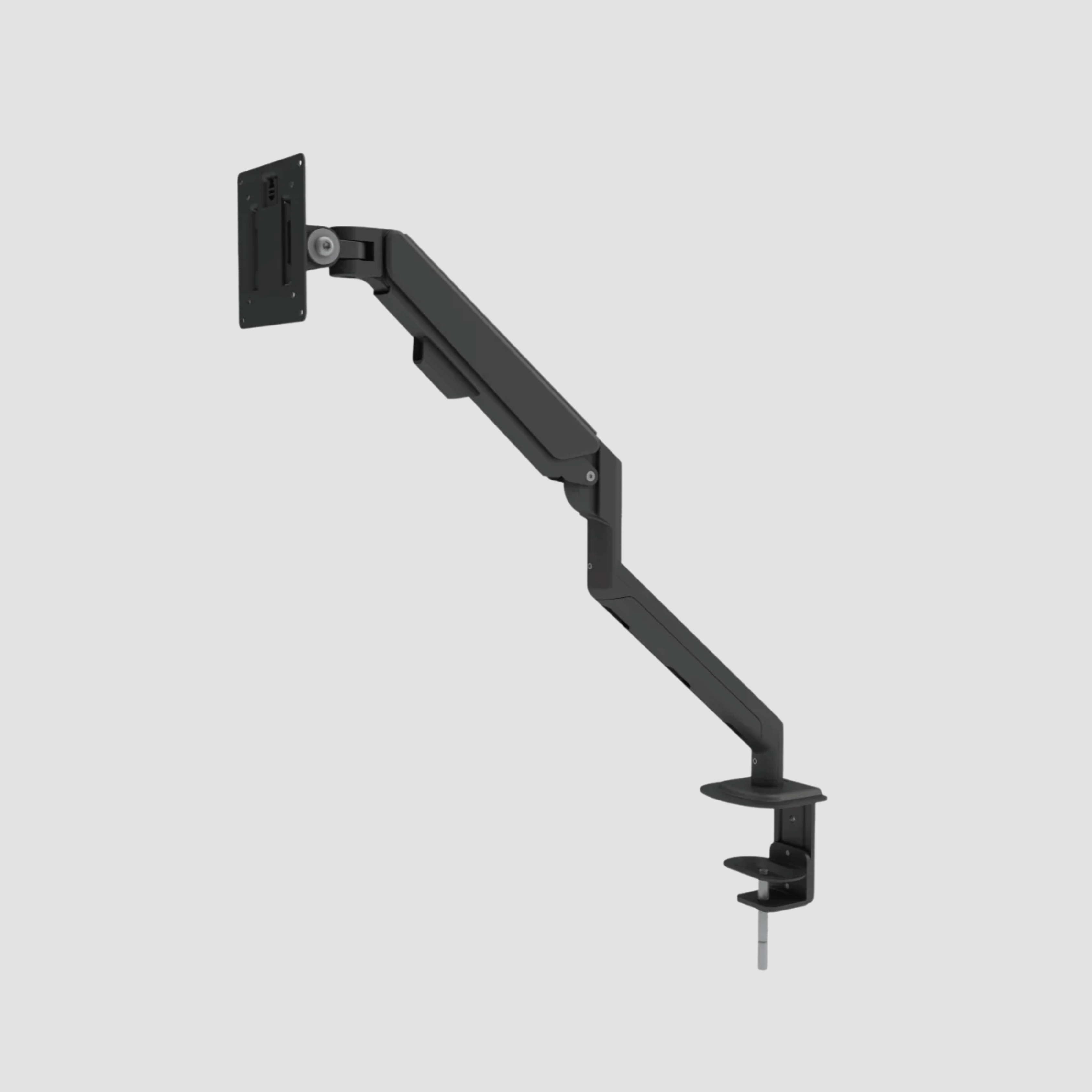
A laptop on its own is convenient, but often too low for long-term comfort. In this example, a monitor arm lifts the screen to a more natural height and frees up desk space at the same time.
That does two things at once. First, it improves ergonomics by reducing the forward head position many remote workers slip into. Second, it gives the desktop a cleaner line because the screen is no longer sitting heavily on its own stand. The room feels sharper without feeling over-equipped.
Materials decide whether the room feels temporary or built to last
A lot of home office makeovers fail because they chase trends instead of substance. The room may look current for a season, but it ages quickly because the materials were never convincing.
Solid wood solves much of that. It develops character, carries depth, and holds its place in a home over years rather than months. Oak in particular works well in Scandinavian and modern European interiors because it feels natural without becoming rustic. It sits comfortably with black steel, muted textiles, soft grey walls, and restrained storage.
That does not mean everything in the room should be wood. Too much oak can make a space feel heavy. Balance is what gives the office clarity. A solid oak desk paired with a darker chair base, discreet metal details, and one or two soft elements - such as a rug or curtain - often lands better than trying to match every piece exactly.
Storage should reduce noise, not add furniture for its own sake
In our makeover example, storage is kept disciplined. One slim drawer unit or cabinet is enough for documents, chargers, and tools that do not need to stay on display. The goal is not to fill the room. It is to protect the working surface from clutter.
Open shelving can look appealing, but it depends on the person using the office. For some, shelves become visual inspiration. For others, they become another place where unfinished tasks accumulate. Closed storage is less dramatic, but often more useful if the aim is a calmer visual field.
This is where a coordinated system helps. When the desk, storage, and accessories feel related in tone and material, the room stops looking assembled from leftovers. It begins to feel designed.
What this makeover gets right
The strongest part of this home office makeover example is not one hero product. It is the way each element supports the next. The oak desk brings warmth and authority. The ergonomic chair supports long working hours. Lighting sharpens focus. Cable management removes distraction. Monitor positioning improves posture. Storage protects the room from drift.
That is how a premium workspace should work. Not as a collection of upgrades, but as one environment with a clear logic behind it.
For buyers in Denmark and across Europe, that often means choosing fewer pieces, but choosing them better. A handcrafted oak desk from a brand like OAKO Denmark will always ask more of the budget than flat-pack alternatives. But the return is not only visual. It is in daily comfort, material honesty, and the quiet confidence of using furniture that was made with care.
If you are planning your own office update, start with the things you touch and see every day. The desk surface. The chair support. The light at eye level. Get those right, and the rest of the room usually follows with much less effort. A good workspace should not ask for constant correction. It should feel settled from the moment you sit down.



Lämna en kommentar
Denna webbplats är skyddad av hCaptcha och hCaptchas integritetspolicy . Användarvillkor gäller.