


 Every ergonomic chair brand makes the same promises: lumbar support, adjustable armrests, breathable mesh, built to last. Most of them are lying — or at least stretching the truth far enough that it no longer applies to your back after six months of daily use.
This guide is for people who don't want to buy a chair twice. It covers what actually separates an ergonomic chair worth keeping from one you'll be replacing — and why, in 2026, the OAKO Flexa Chair has become the clearest answer for serious home office workers across Europe.
What actually defines the best ergonomic office chair in 2026
The market is saturated. Herman Miller, Secretlab, Flexispot, IKEA, dozens of Alibaba-sourced brands with made-up names — every company has an ergonomic chair. Most share the same problems: fixed lumbar pads that miss your spine, armrests that don't adjust to your desk height, mechanisms that feel stiff at first and loose within a year.
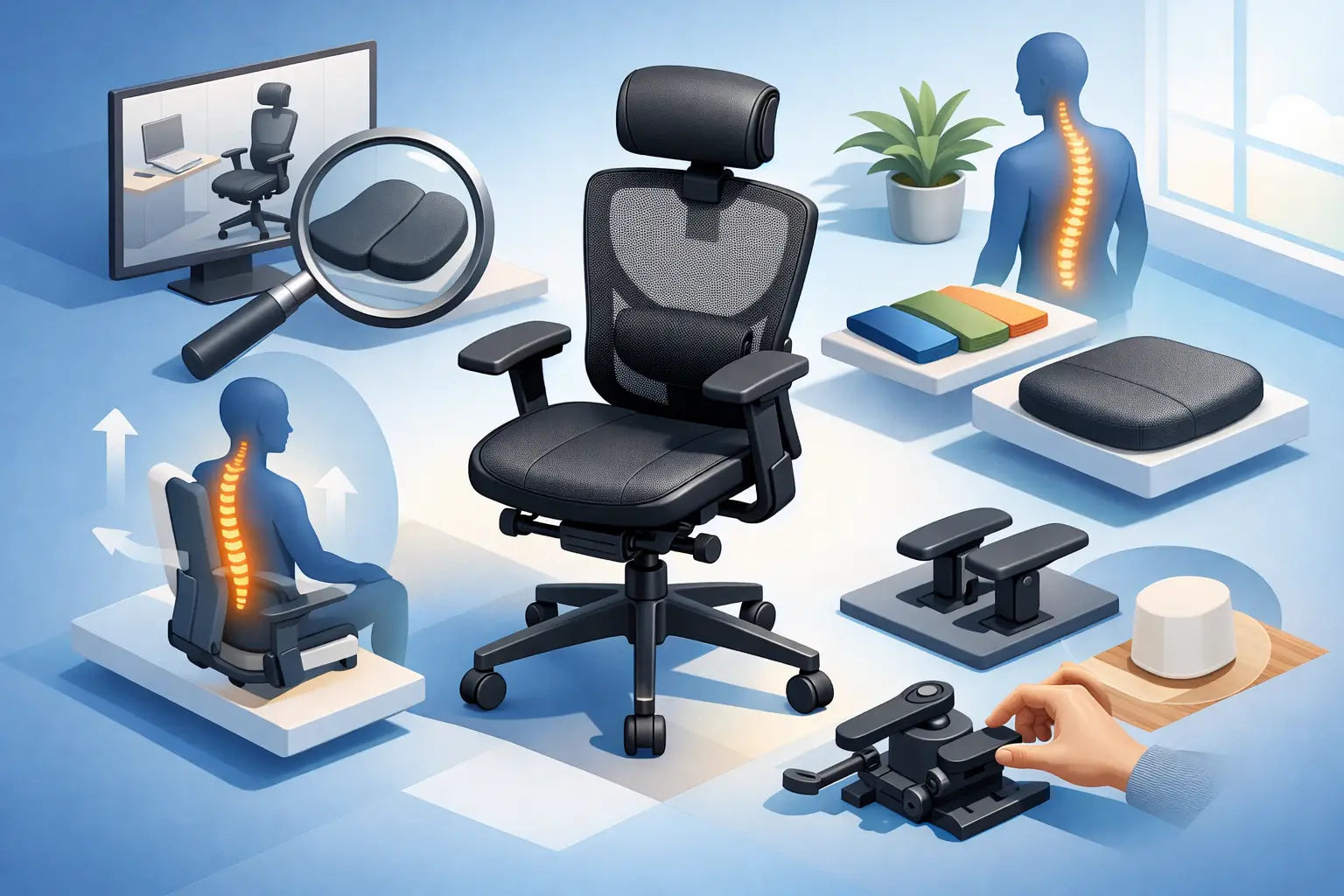
To find the best ergonomic chair, ignore the marketing and focus on five things:
- Lumbar support quality — adjustable in height and depth, or a fixed foam bump that might not align with your spine at all
- Seat mechanism — does it adapt to your body weight, or does it recline the same way for everyone?
- Armrest adjustability — 4D or fixed, and whether they actually reach your desk height
- Seat depth adjustment — often ignored, almost always important
- Build quality and warranty — mechanism longevity, weight capacity, what happens when something fails
Most chairs that rank well in 2026 buying guides fail on at least two of these. Here's why each one matters.
Lumbar support: the feature most chairs get wrong
The lumbar region — the lower curve of your spine — naturally bows inward. When you sit without support, it rounds outward instead, compressing the discs and straining the muscles around them. Good lumbar support holds that natural curve in place.
The problem: most chairs include a fixed foam or plastic pad positioned at a height that works for an average spine. Your spine is not average. It's yours. If the lumbar pad sits an inch too high or too low, it pushes your back into the wrong shape rather than supporting the right one.
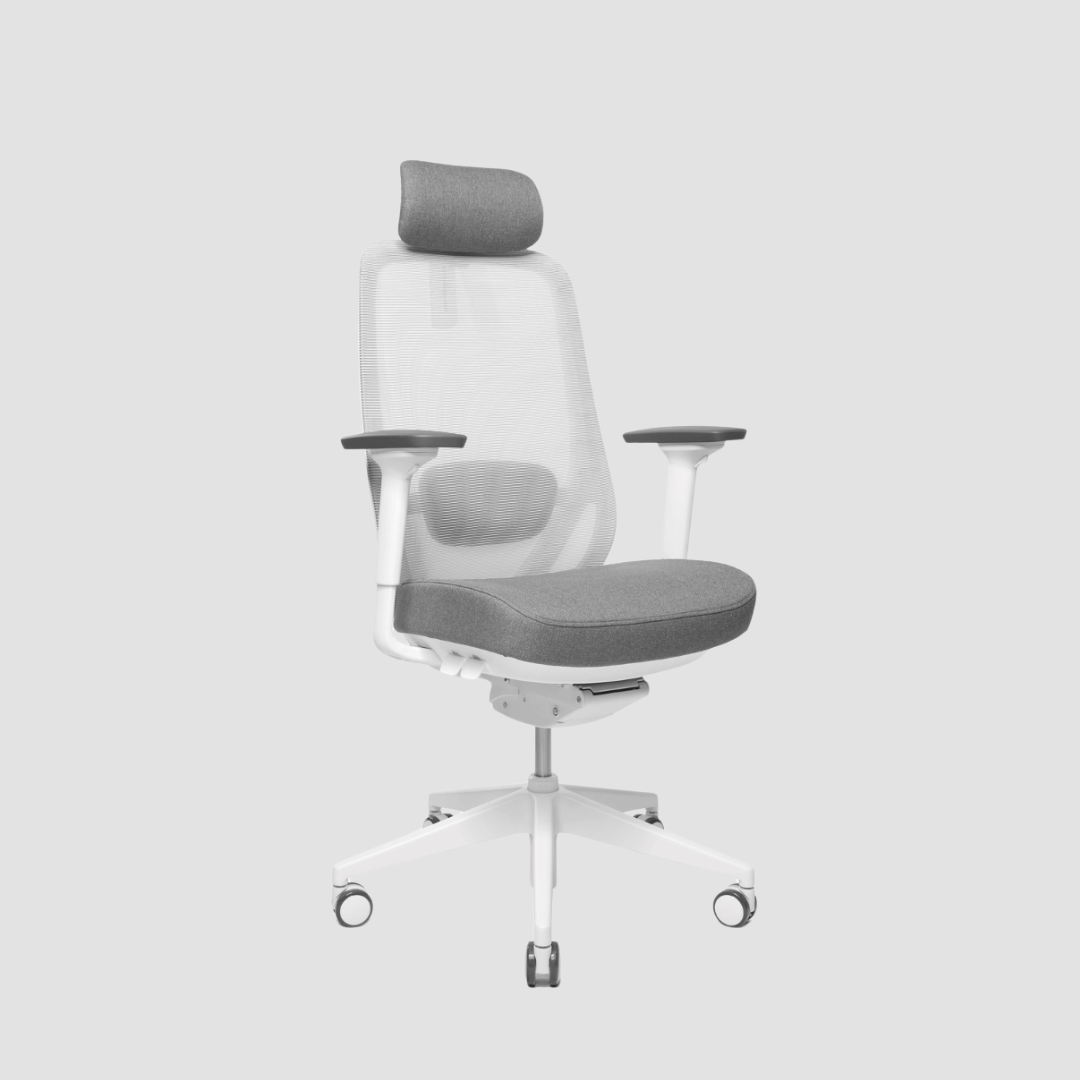
Adjustable lumbar support — moveable in both height and depth — is the only version that reliably works. The OAKO Flexa includes adjustable lumbar support as an option, alongside an adjustable headrest that repositions rather than locks your neck into a fixed angle.
The seat mechanism — the engineering most buyers never think about
This is the most important and most overlooked feature in any office chair. The mechanism controls how the chair moves when you recline.
Basic tilt mechanisms tip the seat and back together as a single unit. This sounds fine until you realise it means your thighs angle upward when you recline, restricting blood flow and making long recline sessions uncomfortable.
Synchro mechanisms move the backrest and seat at different rates — typically 2:1 — so your thighs stay roughly horizontal as you recline. This is the standard in serious ergonomic chairs.
But there's another layer: resistance. A synchro mechanism set for an 80 kg person will feel like a brick wall to someone who weighs 60 kg, and like no resistance at all to someone who weighs 110 kg. Body-weight-adjustable mechanisms — where you dial in resistance to match your weight — are what separate professional ergonomic chairs from everything else.
The OAKO Flexa uses a DONATI synchro mechanism with body-weight adjustment. DONATI is an Italian manufacturer used by the world's leading ergonomic chair brands. It's the mechanism in chairs that cost three times as much as the Flexa — now available at a price that makes sense for a home office.
Armrests: 4D or don't bother
Fixed armrests are close to useless. Your arms are not a standard width. Your desk is not a standard height. Your posture changes throughout the day.
2D armrests adjust height only — better than nothing, but still leaves width and angle wrong for most people. 4D armrests adjust in height, depth, width, and angle. This lets you position your arms so your shoulders drop naturally, rather than hiking up to reach armrests that are too high or hanging at your sides because they're too low.
Shoulder tension built up over hours of slightly-wrong arm positioning is one of the most common complaints from people who think they have a good ergonomic chair but don't. The OAKO Flexa's 4D armrests adjust from 177–258mm in height and 435–525mm between arms — covering the full range of European desk workers.
Seat depth: the adjustment nobody talks about
Most people don't know seat depth adjustment exists. It's the ability to slide the seat pan forward or backward relative to the backrest.
Why it matters: if your seat is too deep, you can't reach the backrest without sliding forward and losing lumbar support. If it's too shallow, your thighs aren't supported and circulation is restricted. Seat depth varies significantly between body types — a feature that lets tall and short people both sit correctly in the same chair.
The correct position: two to three finger-widths of space between the front edge of the seat and the back of your knees. The OAKO Flexa offers ±5cm of seat depth adjustment, which covers the full range without any tools.
OAKO Flexa vs. the alternatives: an honest comparison
OAKO Flexa vs. Herman Miller Aeron
The Aeron is the benchmark ergonomic chair. It's also €1,500+. The Flexa offers DONATI mechanism engineering, 4D armrests, adjustable lumbar, and comparable adjustability at €529. For a home office that doesn't have a corporate expense account, this is the realistic comparison — and the Flexa wins it.
OAKO Flexa vs. Secretlab Titan
The Titan is a gaming chair marketed as ergonomic. It's well-built and looks good, but it's designed for a reclined gaming posture, not an upright working posture. The lumbar support is a pillow. The mechanism doesn't adapt to body weight. Fine for gaming. Not designed for eight hours of focused desk work.
OAKO Flexa vs. IKEA Markus/Järvfjället
IKEA wins on price. The Markus at €229 is a reasonable chair for occasional use. For full-time home office work, the fixed lumbar, limited adjustability, and basic mechanism will start to show their limits within months. The Järvfjället is better but still lacks 4D armrests and body-weight mechanism adjustment. The Flexa is a different category of chair.
OAKO Flexa vs. Flexispot BS14
Flexispot makes competent chairs at competitive prices. The BS14 is a solid option with mesh back and adjustable features. The Flexa's advantage is the DONATI mechanism quality — Italian engineering versus a standard tilt mechanism — and the 150kg weight capacity with EN-1335 certification providing independent verification of build quality.
The full OAKO Flexa specification
For buyers who want the complete picture before deciding:
- Mechanism: DONATI synchro with body-weight adjustment dial
- Armrests: 4D — height 177–258mm, width between arms 435–525mm, depth and angle adjustable
- Seat depth adjustment: ±5cm sliding
- Backrest recline: up to 126°
- Seat height range: 45.5–54.7cm from floor
- Weight capacity: 150kg
- Upholstery: durable fabric seat, 100,000 Martindale rating
- Backrest: breathable mesh with optional lumbar support
- Headrest: adjustable, optional
- Base: nylon, available in white or black
- Casters: 60mm floor-safe rolling wheels
- Certification: EN-1335 European office seating standard
- Warranty: 5 years on mechanism and structural components
- Price: from €529, free shipping across Europe
Who should buy an ergonomic chair in 2026
A serious ergonomic chair is the right investment if:
- You work from home and spend 5+ hours a day seated
- You experience lower back, neck, or shoulder discomfort after long sessions
- You've already bought a cheaper chair and found it lacking within a year
- You're setting up a permanent home office and want to buy once
- You're pairing it with a standing desk and want the sitting hours to be as supported as the standing ones
It's not the right investment if you need a chair tomorrow, have a budget under €200, or are equipping a temporary workspace.
How to set up your ergonomic chair correctly
Even the best chair works poorly if it isn't set up for your body. When your Flexa arrives:
- Sit all the way back so your back touches the backrest. Feet flat on the floor, knees at roughly 90°.
- Adjust seat depth until there are two to three finger-widths between the seat edge and the back of your knees.
- Set lumbar height so the support sits at the natural inward curve of your lower back — roughly belt-height for most people.
- Set mechanism resistance using the body-weight dial. Leaning back should feel supported, not like fighting the chair.
- Adjust armrests to desk height — elbows at roughly 90°, shoulders relaxed, not raised.
- Give it a week. If you've been sitting badly for years, your posture needs time to adjust to correct support. Don't judge the chair in the first hour.
The verdict
The best ergonomic office chair in 2026 is the one with a mechanism that adapts to your body, armrests that reach your desk, lumbar support that aligns with your spine, and build quality that holds up over years — not months.
The OAKO Flexa Chair meets every one of those criteria. At €529 with free European shipping, a 5-year warranty, and Italian mechanism engineering, it's the clearest answer for home office workers who are done compromising on where they spend most of their working day.

Lämna en kommentar
Denna webbplats är skyddad av hCaptcha och hCaptchas integritetspolicy . Användarvillkor gäller.