



A desk top changes the feeling of a room long before you sit down to work. In the live edge vs straight edge desk decision, the question is not simply rustic versus modern. It is about how you want solid oak to behave in your workspace: as a bold, individual centrepiece or as a calm architectural surface that brings order to the room.
Both choices can offer the warmth, strength and longevity of real European oak. Both can sit beautifully on a height-adjustable frame. The right one depends on the space around it, the way you work and how much visual character you want your desk to carry.
Live Edge vs Straight Edge Desk: The Essential Difference
A live-edge desk retains the natural contour of the tree along one or both long sides. Rather than machining every line into perfect uniformity, the maker follows the oak’s original growth. Curves, gentle variations and the occasional knot become part of the finished piece. No two tops are identical.
A straight-edge desk is precisely cut and finished with clean, linear sides. The grain remains entirely real and expressive, but the overall shape is disciplined. It is a considered choice for interiors where symmetry, alignment and visual calm matter most.
Neither approach is more authentic than the other. The difference lies in design language. Live edge places the material’s origin in plain view. Straight edge lets the oak’s grain speak within a more structured silhouette.
Choose Live Edge When the Desk Should Be a Feature
A live-edge oak desk has presence. It works especially well in a home office where the desk is visible from the living area, in a creative studio, or in a room with otherwise restrained furnishings. The organic line prevents the space from feeling too polished or overly corporate.
For many people, that slight irregularity is also grounding. Hours spent between screens can make a workspace feel technical and impersonal. A tactile oak surface with a natural edge introduces a reminder that the material was once a living tree, shaped over decades rather than produced to a standard mould.
Live edge suits interiors with natural textures: wool, linen, leather, brushed metal and stone. It can also create a striking contrast in a minimal Scandinavian setting with pale walls and simple storage. Pair it with a refined black or white steel standing-desk frame and the result feels intentional rather than rustic.
There are practical considerations. Because the front edge follows the tree rather than a ruler, the depth can vary slightly across the desk. This rarely affects daily work, but it is worth considering if you prefer every object - monitor, desk mat, keyboard and monitor arm - to align in a precise grid. Measure your space carefully too. The desk’s widest point is what matters when planning clearance near a wall, drawer unit or radiator.
Choose Straight Edge for Clarity and Flexibility
A straight-edge desk offers a more composed visual rhythm. Its clean lines make it easy to position against a wall, between shelving or alongside matching storage. In compact Copenhagen flats, shared workspaces and rooms where the desk must work hard without dominating, that clarity can be a real advantage.
The regular outline also gives you predictable usable depth from end to end. If you use dual monitors, a large desk mat, drawing tablet or a carefully planned cable-management setup, the straight front edge makes arrangement feel straightforward. It is particularly suited to people who enjoy a focused, ordered workstation.
Straight edge should not be mistaken for plain. A thick solid-oak top still carries grain movement, tonal variation and the depth that laminate cannot imitate. The simplicity of the cut often makes the timber look even more refined, allowing the surface, joinery and finish to do the work.
This is usually the safest choice if your interior may evolve. A straight-edge oak desk can move from a first home office to a larger study or professional workspace without becoming too tied to one particular style. It is quiet enough to support a changing room, yet substantial enough to remain a focal point.
Ergonomics Do Not Depend on the Edge
The shape of the edge should never distract from the desk’s primary task: supporting comfortable, healthy work. Whether you choose live edge or straight edge, the key ergonomic decisions are the tabletop height range, frame stability, monitor position and room for your preferred working posture.
A quality dual-motor height-adjustable frame allows the solid oak top to support both seated and standing work throughout the day. At seated height, your shoulders should remain relaxed and your elbows should sit close to a right angle while typing. When standing, the same principle applies: the desk should meet you, rather than asking you to hunch toward it.
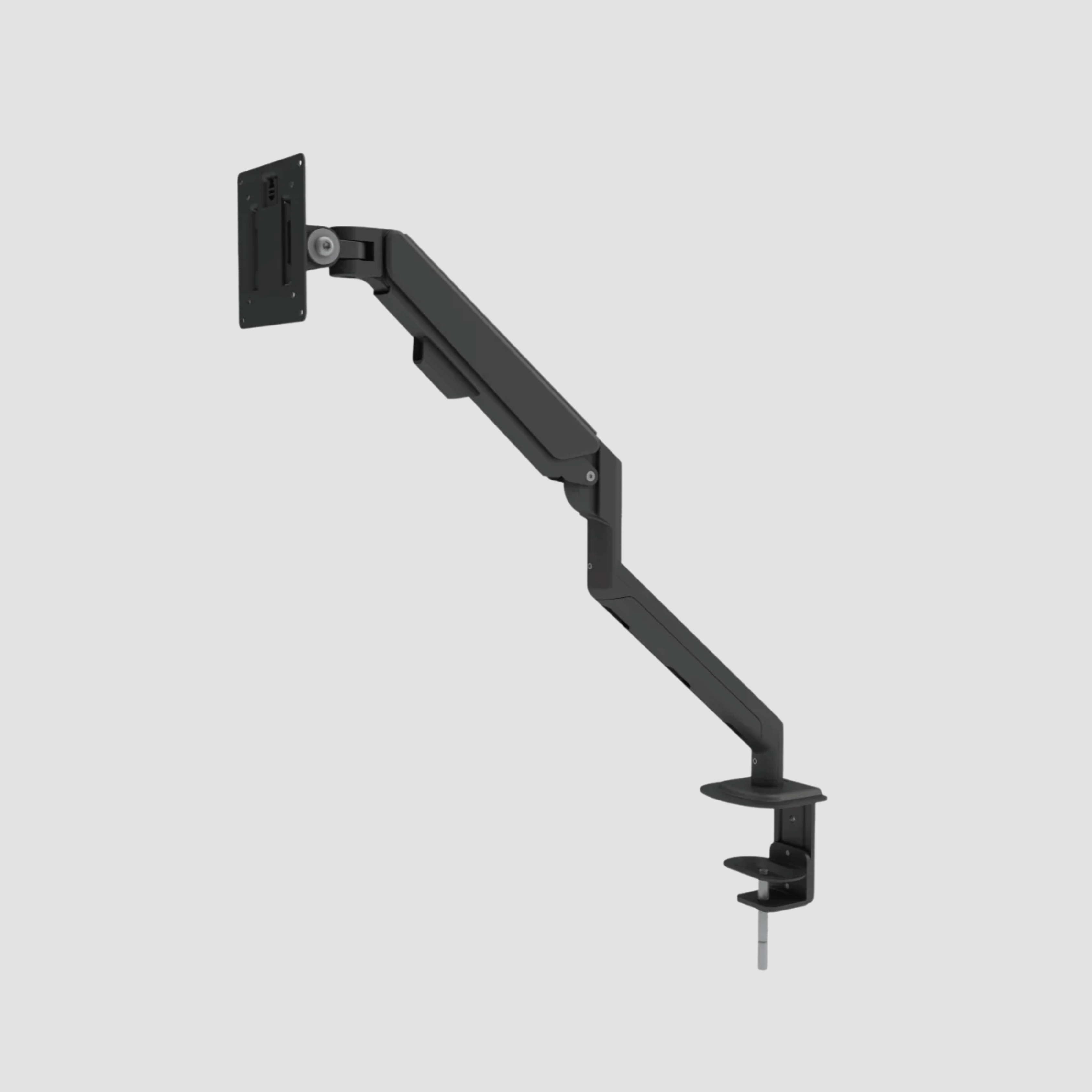
For either edge style, choose enough depth to place the monitor at a comfortable viewing distance. A monitor arm can free valuable surface space and make fine adjustments easier. Cable management also matters more with a solid-wood desk than many buyers expect. Keeping chargers, power strips and leads controlled lets the oak remain visible, which is part of the reason you chose it.
A live edge may feel especially pleasant beneath the forearms because of its softer visual line, but it should still be properly sanded and finished. A well-made edge is smooth to touch, comfortable in daily use and strong enough for decades of work.
Consider Your Room Before Your Preference
The best desk often comes down to proportion. In a narrow room, a straight edge can reinforce clean sightlines and avoid visual crowding. In a generous room with natural light, a live edge can anchor the space and make the office feel less like an afterthought.
Look at what already has strong lines. If you have wall-mounted shelves, built-in cupboards, wide window frames and rectangular rugs, a live edge can soften the composition. If the room already contains curved chairs, textured artwork and expressive materials, a straight edge may provide the restraint that keeps it balanced.
Lighting changes the choice as well. Daylight reveals the depth of oak grain beautifully in both styles, but a live edge tends to cast a more sculptural shadow along the front of the desk. Under warmer evening lighting, it can feel particularly rich. A straight-edge top reflects light more evenly and gives a workstation a crisp, composed appearance.
What Durability and Care Look Like in Real Oak
A solid oak desk is built for use, not for being kept behind glass. Both live-edge and straight-edge tops benefit from the same sensible care: wipe spills promptly, use coasters for hot drinks, avoid harsh cleaning products and do not leave standing water on the surface. Oak is durable, but it is also honest. It will respond to its environment.
Seasonal movement is natural in solid wood, particularly in homes where indoor humidity shifts between a dry heated winter and a more humid summer. This is not a flaw. It is one of the characteristics that separates real timber from chipboard covered in imitation wood.
The edge style does not determine longevity. Construction, finish quality and the care given to the desk matter far more. A properly handcrafted solid-oak top, paired with a stable steel frame, is designed to become more familiar over time rather than disposable after a few years.
The Decision Is About the Feeling You Want to Work In
Choose live edge if you want the desk to feel singular, warm and visibly connected to the material it came from. It is the more expressive option, made for a workspace with character and room to let the oak be seen.
Choose straight edge if you value precision, versatile styling and a quietly confident workspace. It gives the same material integrity in a format that works effortlessly with monitors, storage and clean-lined interiors.
At OAKO Denmark, the point is never to make oak look like something it is not. A good desk should support better posture and deeper focus, but it should also make you want to enter the room each morning. Let the shape you choose reflect the way you want that daily ritual to feel.


Leave a comment
This site is protected by hCaptcha and the hCaptcha Privacy Policy and Terms of Service apply.