

A beautifully made desk can still feel unsettled when cables gather at its feet, notebooks drift across the surface, and the items you need every day have nowhere considered to live. The best underdesk storage solutions restore order without covering the material that makes a workspace worth investing in. For a solid oak standing desk, that means choosing storage that respects the warmth of the wood, protects movement and keeps the room visually calm.
The goal is not to add more furniture beneath the desk. It is to give each necessary object a deliberate place, while preserving the clear legroom and clean silhouette that make an adjustable workspace feel generous.
Start with what belongs below the desk
Underdesk storage works best when it is selected by use, not by capacity alone. The space below a height-adjustable desk is active space: the frame moves, your chair rolls, and your body needs room to change position throughout the day. A large fixed pedestal may hold plenty, but it can interfere with all three.
First, separate what must remain within reach from what simply needs a home. Charging bricks, cables and a power strip are functional infrastructure. Pens, documents and headphones are daily tools. Archive papers, spare equipment and rarely used stationery are better placed elsewhere, rather than turning the desk into a storage unit.
This distinction matters particularly with an oak desk. A solid wood top brings presence to the room. Overloading the area underneath with plastic boxes, mismatched drawers and visible wires can make even exceptional materials feel like an afterthought.
Cable trays are the foundation of a clear workspace
For most desks, cable management is the first and most valuable underdesk addition. A properly fitted cable tray holds the power strip, chargers and excess cable length in one concealed, accessible place. It removes the visual noise below the desk and, just as importantly, prevents cables from pulling tight when the desk rises.
Choose a tray with enough depth for power adapters, not just a slim channel intended for a few loose leads. Open steel designs are often a strong choice because they release heat, make maintenance simple and suit the honest combination of oak and metal found in a well-made standing desk.
Placement deserves more thought than it usually receives. Mount the tray toward the rear of the desk, where it is hidden from normal seating positions but still easy to access. Keep enough clearance from crossbars and moving components. Before fixing anything in place, raise the desk to its full height and check that cables can travel freely from the tray to the wall outlet, monitor and computer.
A cable tray does not need to be filled to capacity. Leave room for change. A workspace that allows for a new monitor, a laptop charger or a desk lamp without becoming tangled is a workspace designed to last.
Best underdesk storage solutions for daily tools
Once cables are controlled, consider the objects you reach for during a working day. The right answer depends on how you work and how much visual restraint you want from the desk.
A slim underdesk drawer for small essentials
A shallow drawer mounted beneath the front edge is one of the most discreet options available. It is ideal for pens, sticky notes, charging leads, an external drive, glasses or a notebook that otherwise lives on the desktop. Because it uses the underside rather than the floor, it keeps the desk area open and makes cleaning easier.
The trade-off is capacity. A slim drawer will not replace a filing cabinet, nor should it. Its value is in keeping small, frequently used items close without asking the desktop to carry them all day. Select a drawer with a restrained profile and a finish that sits naturally alongside the desk rather than competing with it.
For solid oak tops, installation should be considered carefully. Quality mounting hardware and correctly sized screws matter. The aim is a secure fitting that honours the construction of the desk, not a hurried modification that risks the timber.
A mobile pedestal for flexible storage
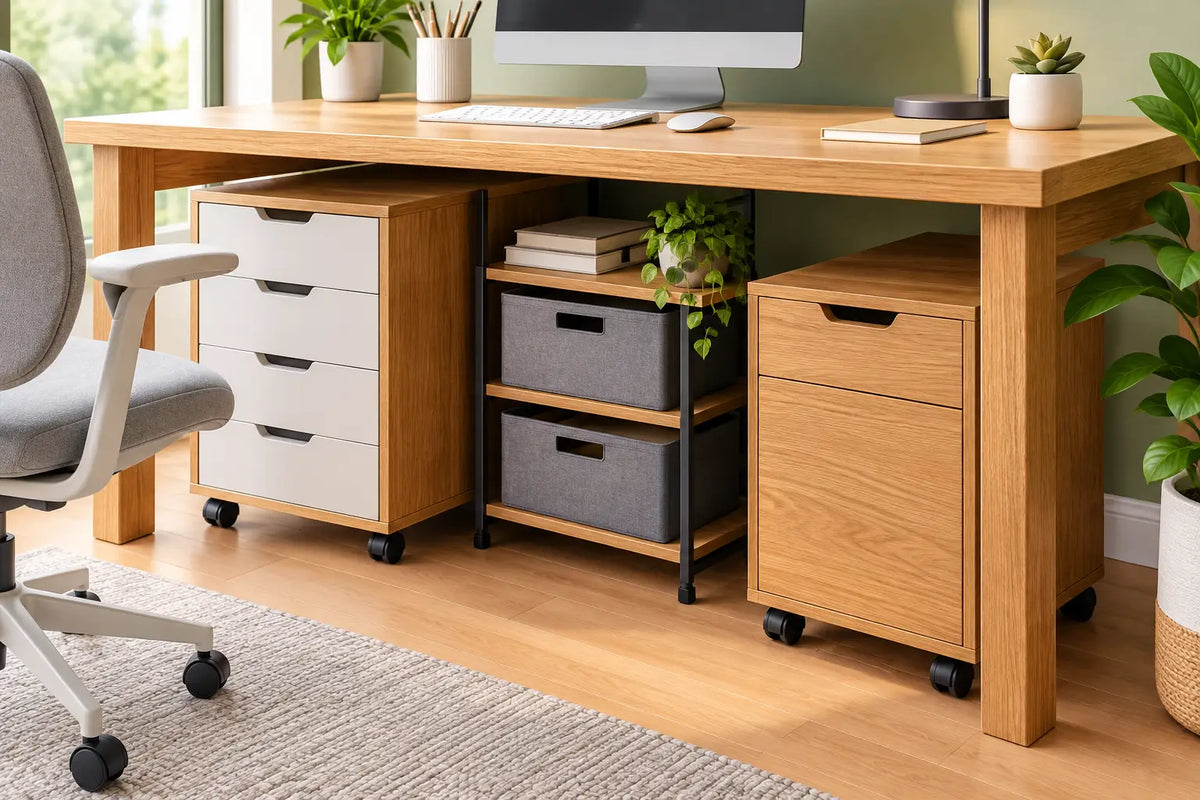
A compact rolling pedestal suits people who need more substantial storage but do not want a permanent fixture under the desk. It can hold files, a laptop stand, design samples or a larger stationery collection, then move aside when you want to create more space.
This is often the better choice for shared rooms and home offices that serve more than one purpose. A pedestal can be placed beside the desk during focused work and moved away when the room needs to feel quieter or more open.
Look for lockable castors and a stable build. A light, poorly made unit is frustrating on hard floors and can make a premium workspace feel temporary. Material also matters: powder-coated steel, quality veneer or solid wood will generally age with more dignity than thin plastic drawer towers.
A CPU holder where a tower is essential
Desktop computers can take up valuable floor space and collect dust when placed directly on the ground. An adjustable underdesk CPU holder lifts the tower away from the floor and keeps it close to the cable tray, creating a cleaner setup with fewer visible leads.
It is not right for every desk. A heavy computer adds weight beneath the top, and the holder must be compatible with the desk frame and the tower’s dimensions. Check ventilation too. A computer that runs warm needs open space around its intake and exhaust points.
For many home offices, a laptop and monitor setup is simpler. But for editors, architects, developers and other professionals who rely on a desktop tower, a well-engineered CPU holder can make the area beneath the desk far more purposeful.
Protect legroom and standing movement
The most common mistake in underdesk storage is treating every empty centimetre as an invitation to fill it. Your knees need a clear path. Your feet need room to shift. When standing, you may naturally step closer to the desk or change your stance throughout the day.
Keep the central area beneath the desk largely open. Storage is usually best positioned toward one side, while cable trays belong at the rear. If you use an ergonomic chair with armrests, check that a drawer or pedestal does not prevent the chair from tucking in comfortably.
For standing desks, movement is part of the design. Any underdesk solution should support that movement rather than quietly working against it. Test the setup sitting down, at your usual standing height and at the desk’s highest position. This practical check reveals issues that product dimensions alone do not.
Match materials with intention, not perfectly
A coordinated workspace does not require every item to be oak. In fact, a little contrast is often what gives a desk its architectural clarity. Black or white steel storage can echo a desk frame, while oak drawers or accessories can create a more continuous, furniture-like expression.
What matters is consistency of quality. Thick steel, natural wood, quiet runners and precise fittings all communicate permanence. Flimsy storage does the opposite, regardless of how tidy it looks on the first day.
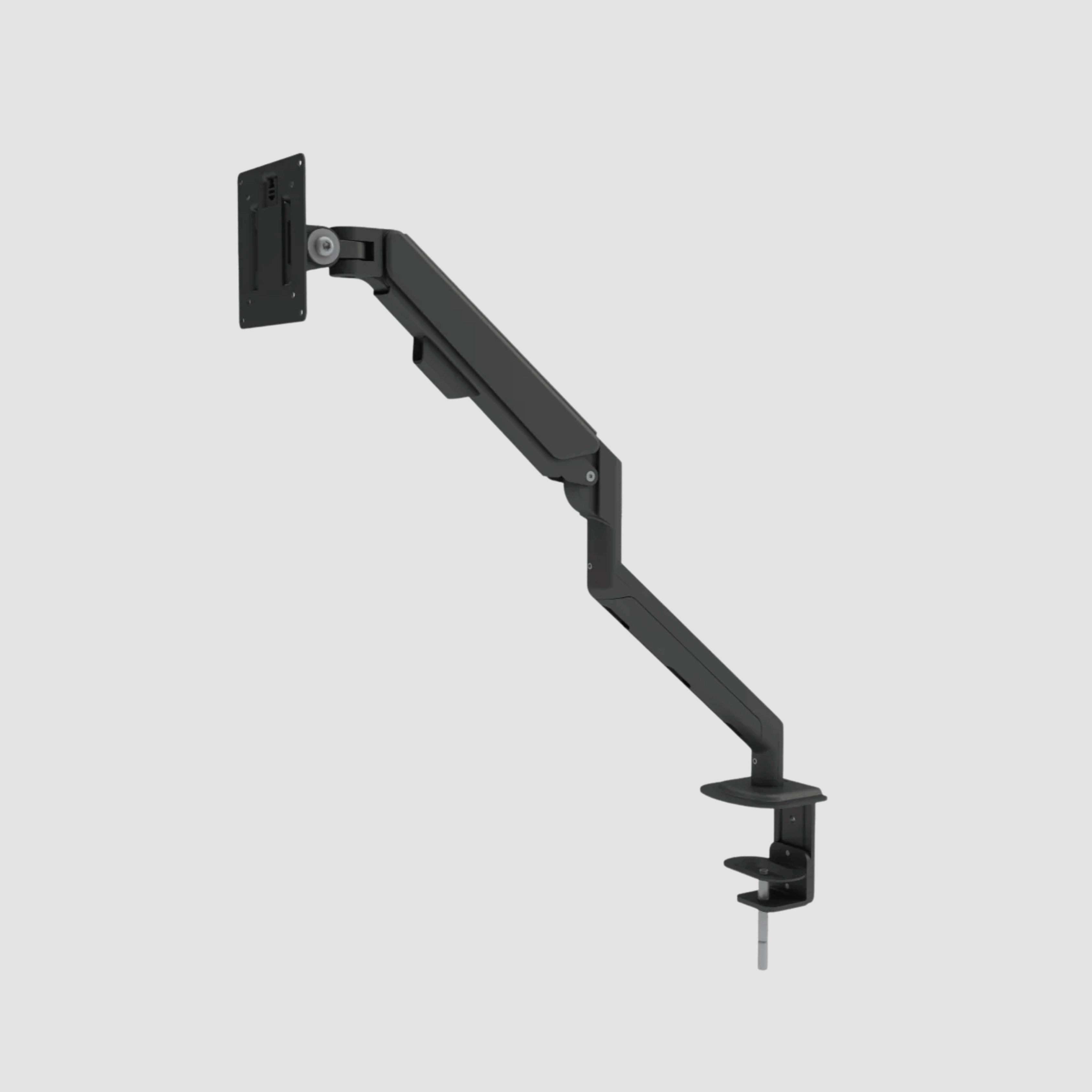
OAKO’s approach to the workspace is grounded in this balance: where oak meets technology, materials should feel considered rather than concealed. The cable tray, drawer and monitor arm are functional pieces, but they still contribute to the character of the room.
Choose storage that can adapt with your work
The most satisfying desk setups are rarely built all at once. Your work may change from laptop-based tasks to dual-monitor days. You may move home, share an office or decide that paper files no longer deserve daily access. Fixed storage can be excellent when the need is certain, but flexible pieces give a workspace longer relevance.
Start with cable management, then add a shallow drawer if small items are taking over the surface. Introduce a mobile pedestal only when you genuinely need the volume. This measured approach keeps the desk from becoming crowded and lets the natural grain of the oak remain part of the experience.
A clear workspace is not about owning less for its own sake. It is about keeping what supports your work close, and letting everything else step back. When the storage beneath your desk is quiet, capable and well made, the desk above it has room to do what it was built for: support better work, every day.


Laisser un commentaire
Ce site est protégé par hCaptcha, et la Politique de confidentialité et les Conditions de service de hCaptcha s’appliquent.