


A desk is not a background object. It is where early ideas become finished work, where long calls take place, and where the character of a home office is set. When comparing solid oak versus veneer desks, the difference is not simply visual. It affects how the desk feels, ages, handles daily use, and earns its place in your workspace over time.
For buyers who care about real materials, the answer may seem obvious. Yet veneer has a legitimate role in furniture, and not every solid-wood desk is made with equal care. The useful question is not whether one material is universally better. It is what you expect your desk to do for the next five, ten, or twenty years.
Solid oak versus veneer desks starts with construction
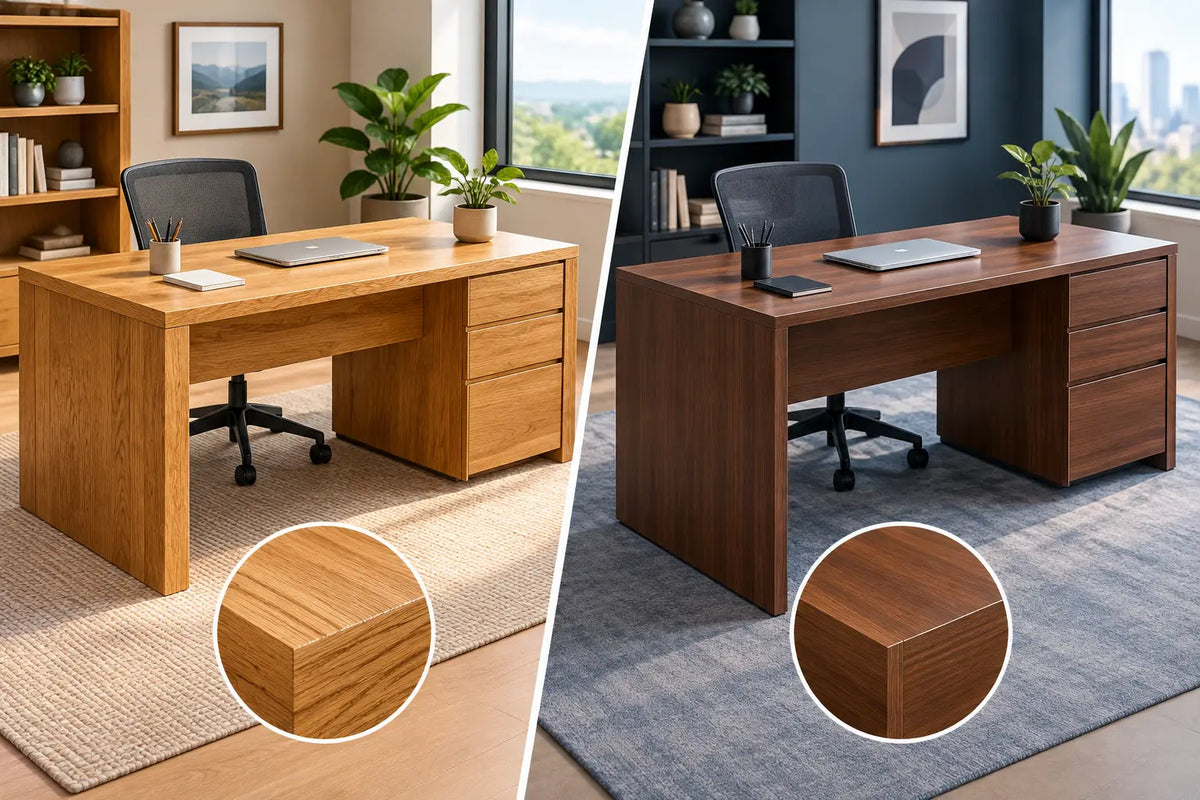
A solid oak desktop is made from oak throughout its thickness. It may be built from carefully joined staves rather than one single, wide slab, but the material remains oak from the upper surface to the underside and edges. This gives it a depth, weight, and natural variation that cannot be printed or applied as a surface layer.
A veneer desktop uses a thin layer of real wood, usually oak, bonded to a core material. That core may be MDF, particleboard, or plywood. Veneer is not the same as laminate: a genuine oak veneer has real grain, texture, and colour variation. In a well-made piece, it can look refined and feel far more considered than a plastic wood-effect finish.
The distinction matters because the visible surface is only part of the desk. The core determines much of its structure, edge treatment, screw-holding strength, weight, and response to knocks. A premium veneer desk with a strong plywood core can be an intelligent choice where stability, budget, or a particular finish is the priority. A low-cost veneer top over lightweight particleboard is a different proposition entirely.
Solid oak brings a more honest material experience. The grain continues around the edges. Small changes in colour and figuring are part of the board itself, not a pattern selected from a sheet. For a workspace intended to feel calm, warm, and substantial, that authenticity is difficult to replace.
The real test is how the desk ages
A desk top meets coffee cups, keyboard marks, cable clips, pens, backpacks, and the occasional hurried rearrangement. The most meaningful difference between solid oak and veneer is what happens after years of these ordinary moments.
Solid oak can be renewed
Oak is naturally hard-wearing, but it is not untouchable. It can pick up dents, scratches, and the gentle marks of a working life. The advantage is that a solid oak surface can usually be repaired, sanded, refinished, or re-oiled when needed. A scratch is rarely the end of the desk. It is simply a surface issue in material that has depth to spare.
That repairability changes the ownership experience. Rather than replacing a desk because it no longer looks new, you can restore it. Over time, oak also develops a richer tone as it responds to light and use. Many owners come to value this patina because it makes the workspace feel lived in rather than worn out.
Veneer has less room for error
Veneer can remain beautiful for many years when it is properly sealed and treated with care. However, its oak layer is thin. Deep damage, heavy sanding, lifted edges, or water reaching the core can be more difficult to correct. Once a veneer is sanded through, the underlying substrate becomes visible and repair options become limited.
This does not mean veneer is fragile by definition. It means the margin for restoration is smaller. If you want a desk that can evolve with moves, changing interiors, and a demanding work routine, solid oak offers more forgiveness.
Stability matters, especially on a standing desk
A height-adjustable desk asks more from its top than a fixed table does. It needs to remain stable while moving, support monitors and arms safely, and feel composed at standing height. Here, the quality of the whole build matters as much as the surface material.
Veneered panels are generally very dimensionally stable because their layered construction limits natural movement. Solid oak reacts modestly to changes in humidity, expanding and contracting across the grain through the seasons. This is normal for real wood, not a fault. It simply requires knowledgeable construction, appropriate finishing, and mounting methods that allow the wood to move naturally.
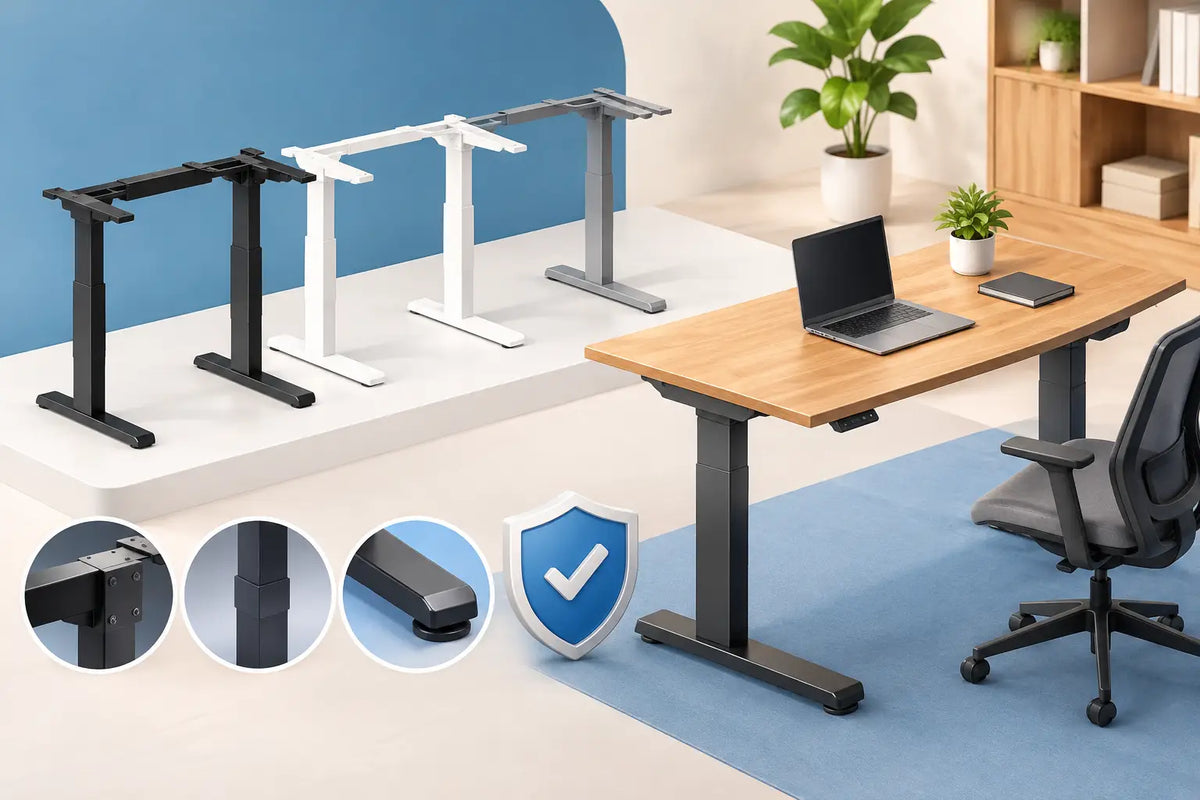
A thoughtfully made solid oak desktop is entirely suited to a premium standing desk. It should be paired with a frame designed for the load, particularly if your setup includes dual monitors, speakers, a desktop computer, or a monitor arm. The desk should feel steady at your working heights, and the fixing points should be considered as carefully as the visible oak.
At OAKO, this is the point where oak meets technology: a natural, handcrafted top supported by a capable dual-motor steel frame. The result is not only a more attractive workstation, but one designed to work hard every day.
Why price differences can be substantial
Solid oak requires more raw material than veneer, and it demands more from the maker. The wood must be selected, joined, shaped, sanded, finished, and checked for quality. Those stages take time, skill, and careful control of moisture and grain.
Veneer can use a single log more efficiently because one piece of oak can be sliced into many surface layers. This can make it a sensible option for furniture where material efficiency and a lower upfront price are central concerns. It can also deliver a clean, consistent look that suits some commercial interiors.
Still, lower cost is not automatically better value. A desk that needs replacing after a few years can become the more expensive choice, both financially and materially. For a home office you use most weekdays, it is worth weighing purchase price against lifespan, repairability, and how satisfied you will be with the surface after thousands of working hours.
The visual difference is felt, not just seen
A solid oak desk brings visual depth to a room without demanding attention. Its grain catches changing daylight. Its edges show the material rather than conceal it. Each top has subtle variation, which means the desk feels personal from the moment it arrives.
Veneer can offer a neater and more uniform appearance. That is useful if you want multiple desks to match precisely or prefer a highly controlled grain pattern. But uniformity can also remove some of the character that draws people to oak in the first place.
For design-conscious professionals, this comes down to the atmosphere you want to create. A workspace filled with synthetic, short-life surfaces can feel temporary. Real oak adds warmth beside black steel, softens the technology in the room, and works naturally with accessories in wool, leather, metal, or felt.
What to inspect before you buy
Material descriptions can be vague, so ask direct questions before choosing a desk. Four details reveal far more than polished product photography:
- Is the top solid oak throughout, or oak veneer over a core material?
- If it is veneer, what is the core and how thick is the veneer layer?
- How is the surface finished, and can it be maintained or repaired?
- What desk-frame load capacity and stability can support your full setup?
Which desk is right for you?
Choose a veneer desk if you need the look of oak at a more accessible price, prefer maximum dimensional consistency, and expect relatively light use. A well-made veneer top can be a thoughtful, attractive part of a workspace, particularly when the maker is transparent about its materials.
Choose solid oak if your desk is a long-term purchase, you value material honesty, or you want the freedom to restore the surface rather than replace it. It is especially compelling for a standing desk that will be central to your daily routine and visible in your home for years.
The best desk is not the one that looks convincing in a product image. It is the one you will still want to sit or stand behind after the finish has settled, your work has changed, and the room around it has evolved. Choose the material that makes that future feel worth building around.


Laat een reactie achter
Deze site wordt beschermd door hCaptcha en het privacybeleid en de servicevoorwaarden van hCaptcha zijn van toepassing.