






A workspace can look perfectly organised and still feel temporary. Thin laminate surfaces, hollow drawers and plastic-edged desks often reveal themselves in the small moments: the sound of a coffee cup landing, the flex beneath a monitor arm, the marks that appear after a few months of work. This european oak furniture guide is for people who want something more substantial - furniture with warmth, weight and the ability to improve with use.
European oak has long earned its place in considered interiors. It is strong enough for hardworking furniture, expressive enough to bring character to a room, and versatile enough to sit comfortably beside clean Scandinavian lines, black steel and modern technology. For a home office, that balance matters. Your desk is not simply a surface for a laptop. It is where ideas are shaped, meetings happen and long working days are supported.
What makes European oak different?
European oak generally refers to oak grown across Europe, commonly from species such as Quercus robur and Quercus petraea. Compared with many pale, uniform furniture materials, it has a recognisable grain structure, visible medullary rays and natural variation in tone. One board may carry gentle cathedral grain; another may show deeper lines, small knots or mineral marks formed over decades of growth.
That variation is not a flaw to be erased. It is the point of choosing real wood. A solid oak tabletop will never be identical to the next one, and a well-made piece should allow the material to remain visible rather than burying it under a heavy, artificial-looking coating.
European oak is also valued for its density and hardness. It handles everyday use well, which makes it an excellent choice for desks, dining tables, shelving and storage. It is not indestructible, however. Solid wood can mark, dry or move with changing humidity. The difference is that quality oak furniture is designed with this natural behaviour in mind, rather than pretending it does not exist.
Why solid oak belongs in a serious workspace
A desk is often the largest visible piece in a home office. Choosing solid European oak gives the room a calmer, more grounded centre than a manufactured board with a printed wood finish. It also creates a useful contrast with the technology on top of it: the cool precision of a monitor, keyboard and steel frame set against a tactile natural surface.
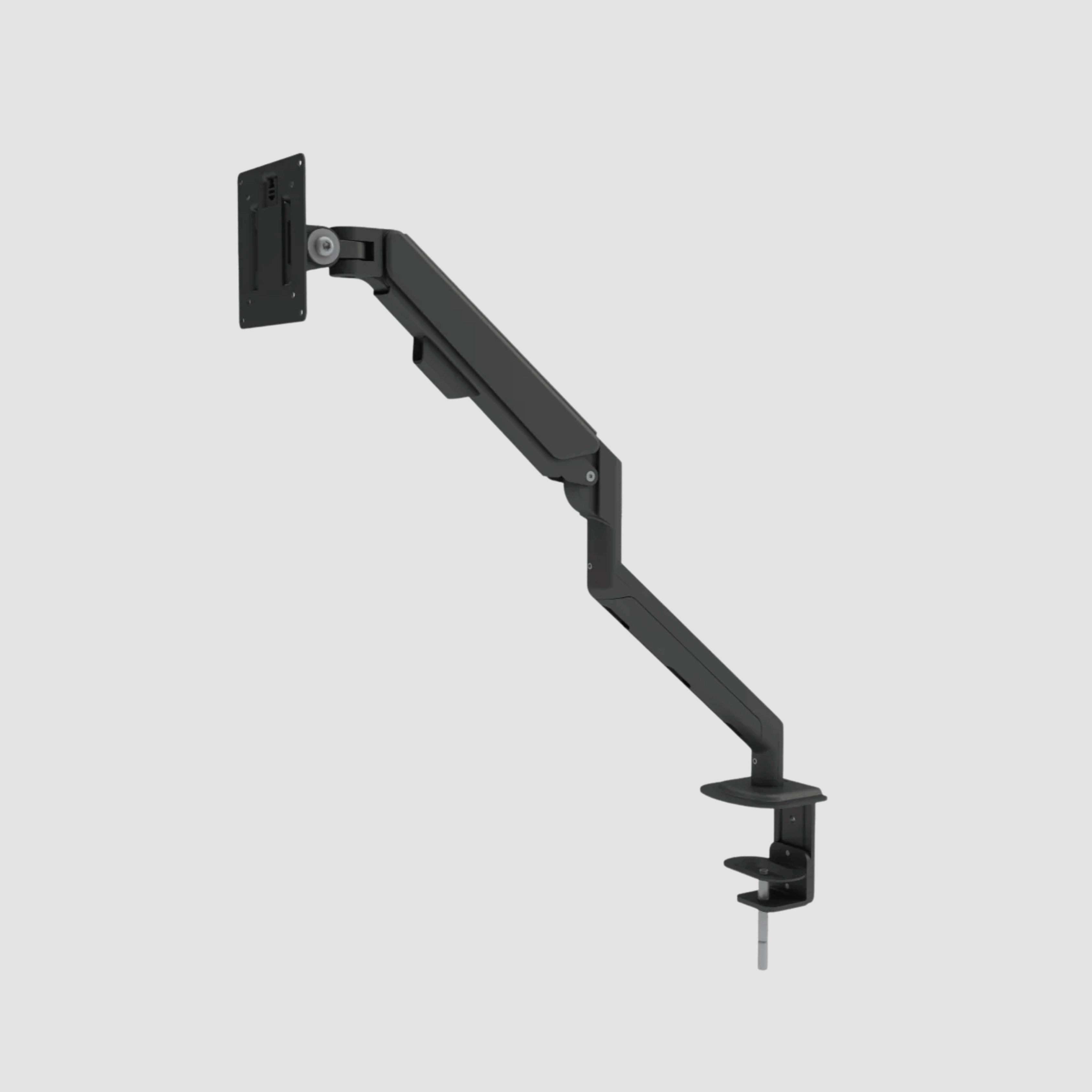
There is a practical advantage too. A properly built solid oak top has the strength and mass to support daily work, from dual monitors and monitor arms to notebooks, speakers and charging equipment. Thickness matters here. A substantial tabletop feels stable under pressure and holds its visual presence over a strong sit-stand frame.
For height-adjustable desks, the pairing is especially compelling. Oak brings permanence and warmth; dual-motor technology brings movement and ergonomic flexibility. Together, they turn the desk from a static piece of furniture into a workspace that can adapt to your day.
Strength is only part of the story
Solid oak is not the same as oak veneer, laminate or oak-effect furniture. Veneer can be a sensible material in certain applications and budgets, but it is a thin layer of wood applied to another core. Laminate is a decorative surface designed to imitate wood. Neither offers the same depth, edge detail or opportunity for repair as a solid oak top.
A genuine solid wood surface can be refreshed when life leaves a trace. Small scratches can often be softened, local marks can be treated, and an oiled finish can be renewed. This makes solid oak a long-term material rather than a short-cycle purchase.
European oak furniture guide: what to look for before buying
The best choice depends on the furniture’s role, the room’s light and how you work. A compact desk for a bedroom office has different demands from a wide workstation shared with screens, sketchbooks and peripherals. Still, a few details separate furniture made to last from furniture made to look convincing online.
Start with construction. Look for solid oak where it matters most: the tabletop, visible fronts and load-bearing elements. Examine how components are joined and supported. A heavy top needs a frame or base designed for its weight, particularly if it will move up and down several times a day.
Then consider the grain selection. Clean, straight grain creates a quieter, more architectural appearance. Knottier boards and live-edge details bring a more expressive, organic character. Neither is inherently better. The right choice depends on whether you want the desk to recede into the room or become its defining material feature.
Before committing, ask these questions:
- Is the main working surface solid European oak, rather than veneer or printed board?
- What finish protects the wood, and can it be maintained or renewed?
- Is the frame rated to carry the tabletop and the equipment you plan to use?
- Does the desk depth leave enough room for a screen at a comfortable viewing distance?
- Are cable management, monitor arms and storage considered as part of the overall setup?
Choose dimensions around your working habits
Desk width affects more than appearance. A 120 cm desk can work well for a laptop-based setup or a single monitor, while 140 cm to 160 cm often gives more breathing room for larger displays, documents and creative tools. If you use two monitors, a desk with generous width and depth will make the space feel composed rather than crowded.
Depth deserves equal attention. A deeper top helps position your monitor at a comfortable distance and leaves room for a keyboard, notebook and forearm support. In compact rooms, it may be tempting to choose the shallowest desk possible, but insufficient depth can compromise posture every day.
For standing desks, check the frame’s height range as well as its load capacity. The right desk should reach a comfortable seated position and a relaxed standing position without forcing raised shoulders or bent wrists. Oak has presence, so scale it carefully to the room. A larger top can feel generous in an open office and overwhelming in a narrow alcove.
Finishes, colour and the beauty of change
Oak is not one colour. Freshly finished European oak may appear light honey, warm beige or softly golden, depending on the boards and finish. Over time, exposure to daylight can deepen and mellow the tone. This gradual patina is part of the material’s appeal.
Oil finishes are popular because they retain the tactile feel of the grain and can usually be refreshed when needed. They suit buyers who appreciate a natural, low-sheen appearance and are willing to give the surface occasional care. Lacquered finishes can provide a more sealed layer of protection and may suit busy family environments or spaces with a higher risk of spills. The trade-off is often a slightly less direct connection to the wood itself.
Neither option is universally right. An oiled oak desk may be the more satisfying choice for a design-led office where material feel matters most. A more protective finish may make sense for a shared workspace, studio or dining-work table that sees frequent contact with food and drinks.
How to care for solid oak furniture
Care is straightforward, but consistency matters. Dust with a soft, dry or lightly damp cloth, then dry the surface if necessary. Avoid harsh sprays, abrasive pads and products that leave a silicone-heavy residue. They can dull the finish or create problems when the wood eventually needs maintenance.
Wipe spills promptly, especially coffee, wine, ink and water left beneath a cold glass. Use a desk mat or coaster where it suits your working style, but do not cover the entire surface simply to preserve it. Oak is meant to be used. A few subtle signs of daily life are different from neglect.
Keep solid wood away from prolonged direct heat, radiators and extreme swings in humidity where possible. Wood responds to its environment, expanding and contracting slightly through the year. Good furniture construction allows for that movement. Your role is simply to avoid making the conditions unnecessarily harsh.
If an oiled surface begins to feel dry or loses its even lustre, a maintenance oil can restore its depth. Follow the maker’s care guidance rather than treating every oak piece the same way. The specific oil, tint and finish system will determine the correct approach.
Build a workspace that feels considered
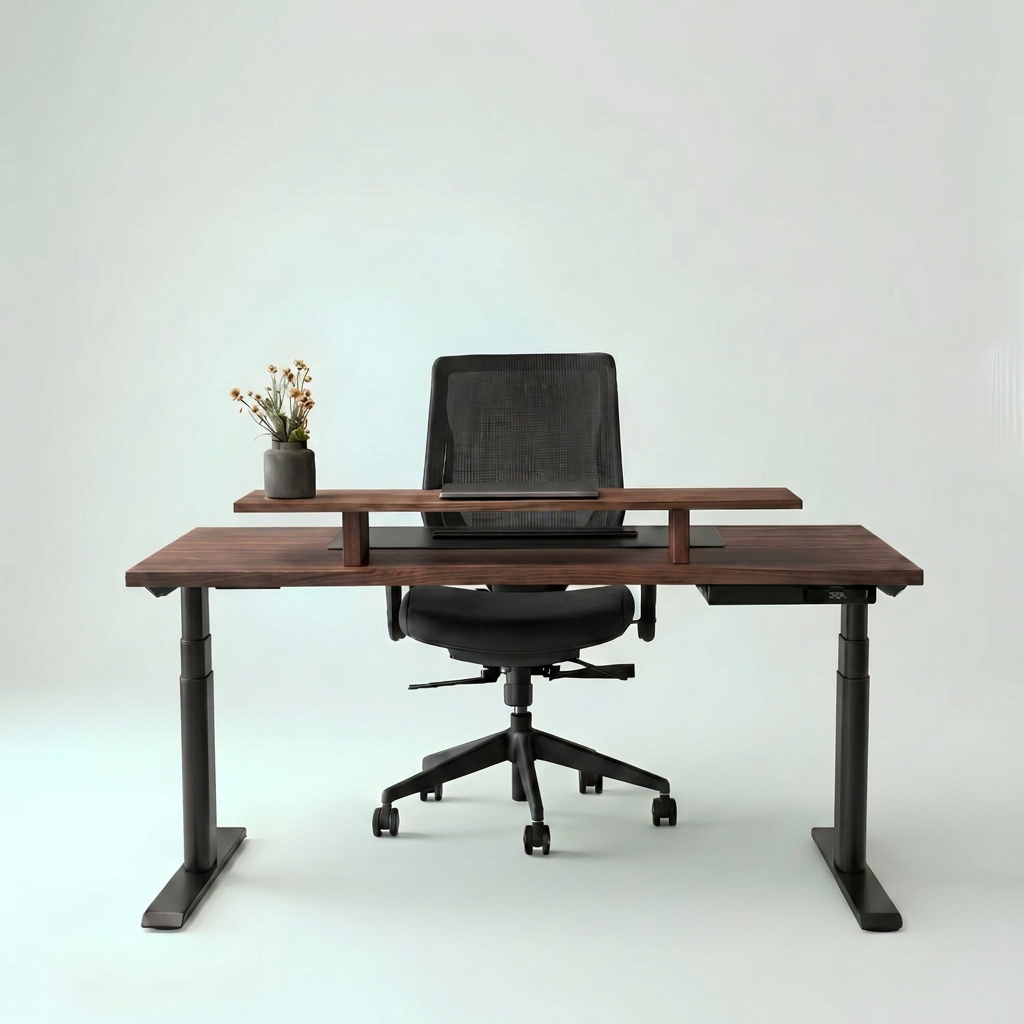
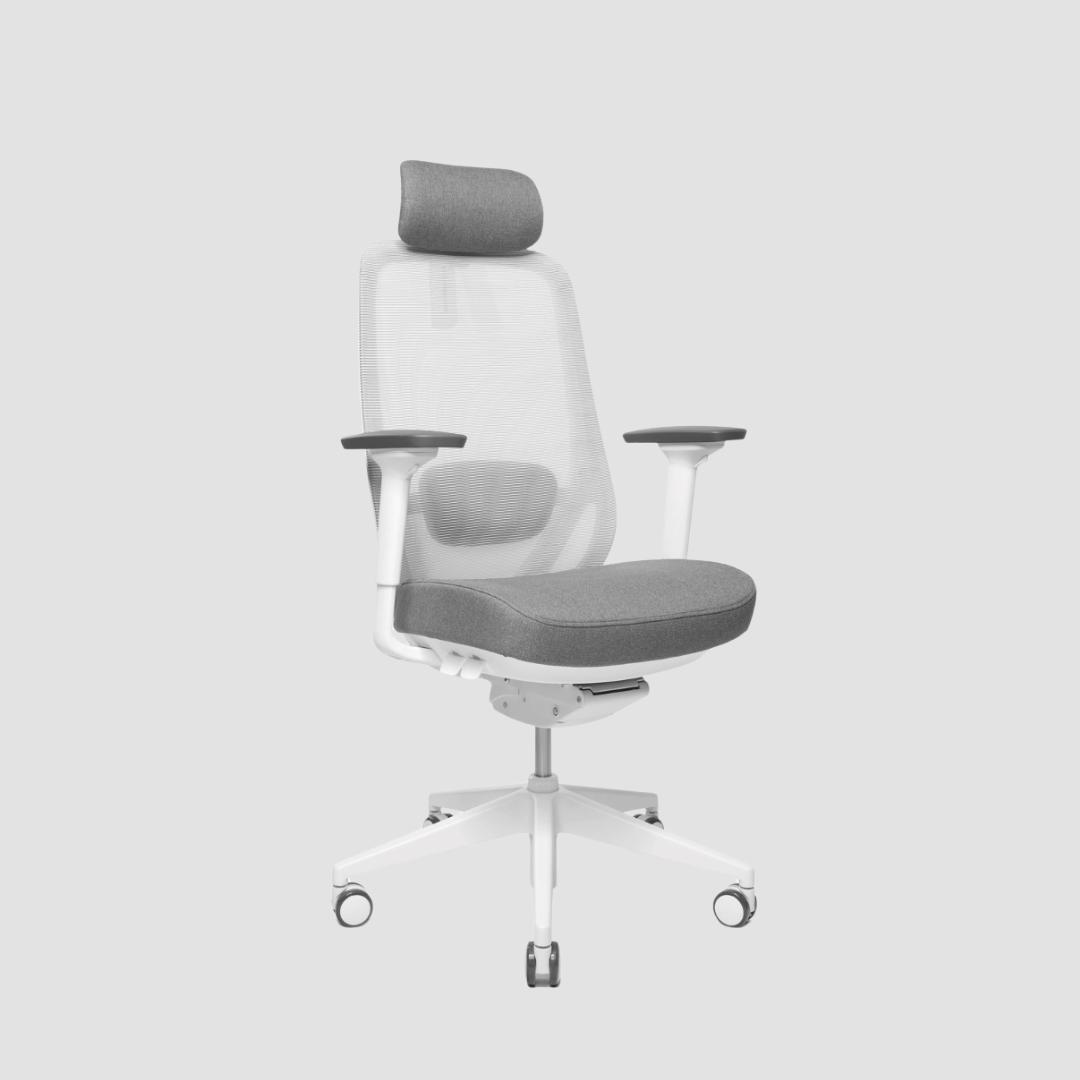
Oak works best when the whole setup is treated as a system. A black or dark steel desk frame gives it crisp definition. A matching oak shelf, drawer unit or monitor stand can bring visual continuity without making the room feel overly coordinated. Add a supportive ergonomic chair, purposeful cable management and lighting that shows the grain rather than flattening it.
This is where premium workspace furniture earns its place. The aim is not to fill a room with matching products. It is to remove friction from the way you work while creating an environment you are genuinely pleased to enter each morning. OAKO approaches this balance by pairing handcrafted solid oak with the practical engineering a modern sit-stand workspace requires.
European oak is an investment because it asks you to value the material beyond the first photograph. Choose a piece with honest construction, a proportion that supports your body and work, and a finish you are willing to care for. Years from now, it should not feel like an old desk you need to replace. It should feel like part of how you work best.


Laisser un commentaire
Ce site est protégé par hCaptcha, et la Politique de confidentialité et les Conditions de service de hCaptcha s’appliquent.