

A solid oak desk is never a blank surface. Its grain carries the record of a living tree: seasons of growth, changing weather, and the particular cut chosen by the maker. That is why a guide to oak wood grain is useful before you choose a desk or tabletop. It helps you see beyond a product photo and understand what gives real oak its depth, variation and lasting character.
For a workspace built to be used every day, grain is more than decoration. It influences the visual rhythm of the room, the way a surface develops with age, and how the wood should be cared for. No two boards are identical, and that is precisely the point.
A guide to oak wood grain: what you are seeing
Wood grain describes the direction and visible pattern of the wood fibres. In oak, those fibres are shaped by annual growth rings, pores and medullary rays - fine structures that run from the centre of the tree outward. Together, they create the recognisable texture that makes oak feel warm, grounded and substantial.
European oak is a ring-porous hardwood. Its early growth has larger pores, while later growth is denser and darker. On a finished surface, this often appears as a distinct pattern of lines and open texture. Run your hand across a well-made oak tabletop and you may feel a subtle natural contour rather than the perfectly uniform finish of laminate. That tactile quality is part of the material's honesty.
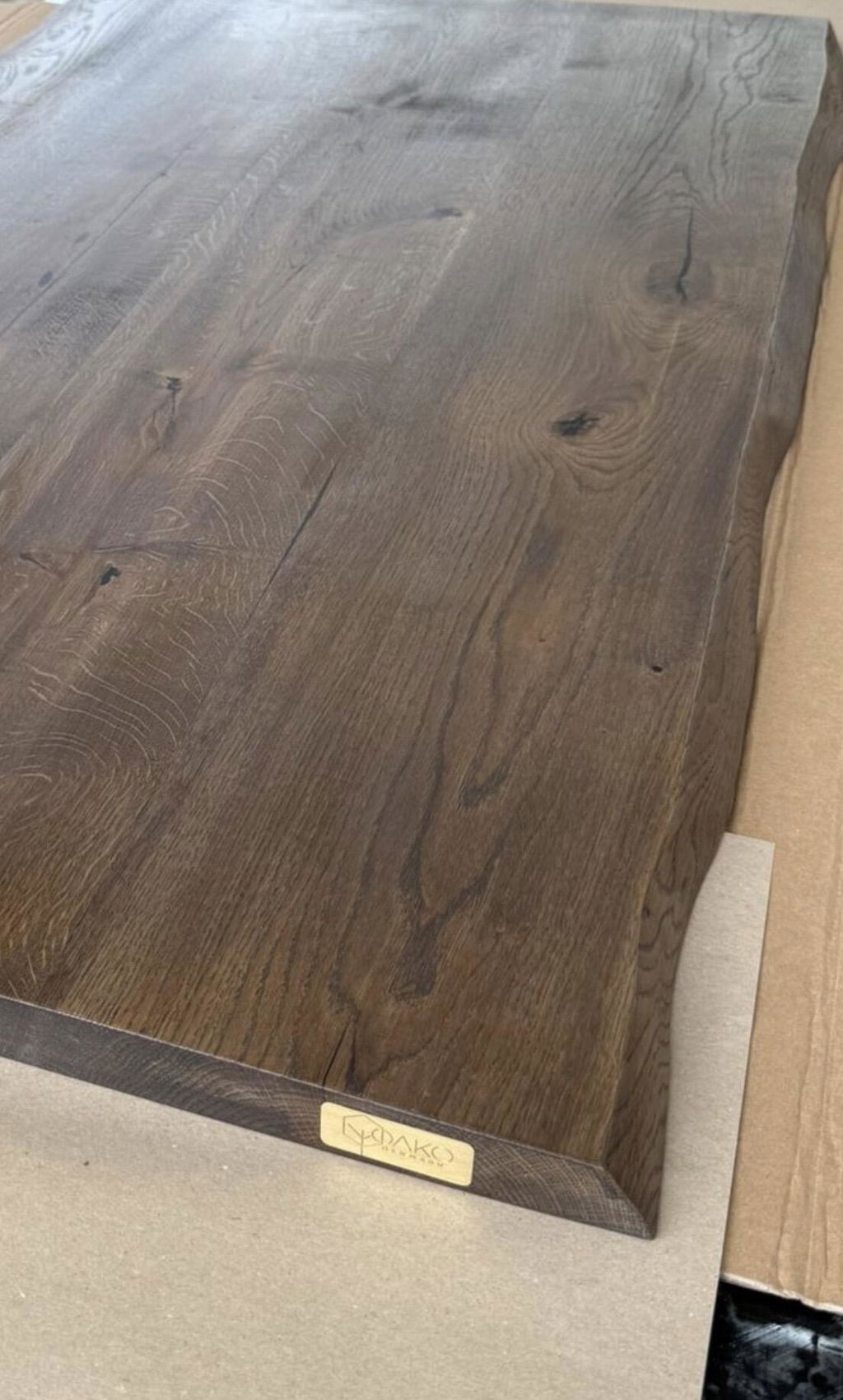
Grain can appear calm and linear on one board, then dramatic and sweeping on the next. Small knots, colour shifts and mineral streaks may also be present. These are not automatically defects. In solid wood furniture, they are signs that the material has not been printed, repeated or disguised.
The grain patterns that shape a desk's character
The same oak tree can produce very different surfaces depending on how the log is cut. This is one reason two solid oak desks can feel entirely different, even when they share the same dimensions and finish.
Plain-sawn oak
Plain-sawn, sometimes called flat-sawn, boards are cut across the log in a way that reveals broad cathedral-like arches. It is the grain pattern many people picture when they think of oak: expressive, varied and full of movement.
For a desk, plain-sawn oak brings warmth and visual energy. It suits rooms that need a natural focal point, especially when paired with clean black steel, soft textiles or restrained Scandinavian interiors. Because the pattern is more active, it may not be the right choice for someone who wants the quietest possible visual field beneath a large monitor setup.
Quarter-sawn oak
Quarter-sawn boards are cut at a different angle, producing straighter, more consistent grain. This method can also reveal oak's medullary rays as pale, shimmering flecks or ribbons, often called ray fleck.
The result is refined and architectural. Quarter-sawn oak works particularly well in a considered home office where the desk should feel calm, precise and enduring. It is often valued for its relative dimensional stability, though every solid wood top still responds to its environment.
Rift-sawn oak
Rift-sawn oak has a close, linear grain with minimal ray fleck. It is elegant, uniform and contemporary, making it a natural fit for minimalist workspaces. The trade-off is material efficiency: this cut produces more waste, so it is generally less common and can command a higher price.
Live-edge oak
A live-edge top retains the natural contour of the tree along one or both long sides. It brings a more organic presence to a workspace and makes the origin of the material immediately visible.
A live edge is not for every room. It asks for visual space around it and suits those who want the desk to feel like a piece of crafted furniture rather than a purely technical object. With the right height-adjustable frame, it creates a compelling meeting point between natural material and modern ergonomics.
Why grain variation matters in a premium workspace
A desk is often the largest horizontal surface in a home office. Its grain sets the visual pace of the room before a chair, monitor arm or cable tray is added. A pronounced pattern can make a spare interior feel warmer. A straighter grain can bring order to a busy room.
There is also a practical consideration. Oak grain changes how light moves across the surface. Near a window, open pores and natural figure can create soft tonal variation throughout the day. Under task lighting, a matte oiled finish usually preserves this depth better than a heavy gloss coating, which can make reflections more noticeable.
This is why photographs should be treated as a guide, not a guarantee. A real solid oak desktop will have its own balance of tone, knots and grain movement. That individuality is the difference between a surface made from wood and one made to imitate it.
Grain direction, construction and long-term stability
Oak is strong, but it is still wood. It expands and contracts across the grain as humidity changes through the year. In Denmark and across Northern Europe, heated indoor air in winter and more humid conditions in summer can make that movement more apparent.
Well-made solid oak tops account for it. Boards are selected, joined and fixed in ways that allow the timber to move naturally without compromising the desk's structure. This is a key reason construction matters as much as the species itself. A thick solid wood top, properly prepared and supported, is designed to work with the material rather than force it into stillness.
Grain direction also affects visual balance. Long boards generally run along the length of a desk, allowing the eye to travel across the work surface. When several boards are joined, skilled matching creates a considered composition instead of a random patchwork. Look for a tabletop where the transitions feel intentional and the overall surface has rhythm.
Do not confuse natural movement with poor quality. Very fine seasonal changes are part of owning solid wood. Significant cupping, splitting or unstable joints are different matters, and they point to unsuitable drying, construction or environmental conditions.
Choosing an oak grain that suits your work style
Start with how you want the workspace to feel, not simply with the most dramatic board available. If your desk is the centrepiece of a calm, design-led room, a straighter or more balanced grain may support that intention. If the room feels sterile, a tabletop with stronger cathedral grain, knots or a live edge can add needed warmth.
Consider what will sit on the surface. A large screen, laptop stand and desk accessories cover much of a tabletop, so a richly figured grain can still read beautifully around the edges. If you work mostly with paper, sketching or photography, a calmer pattern can reduce visual distraction.
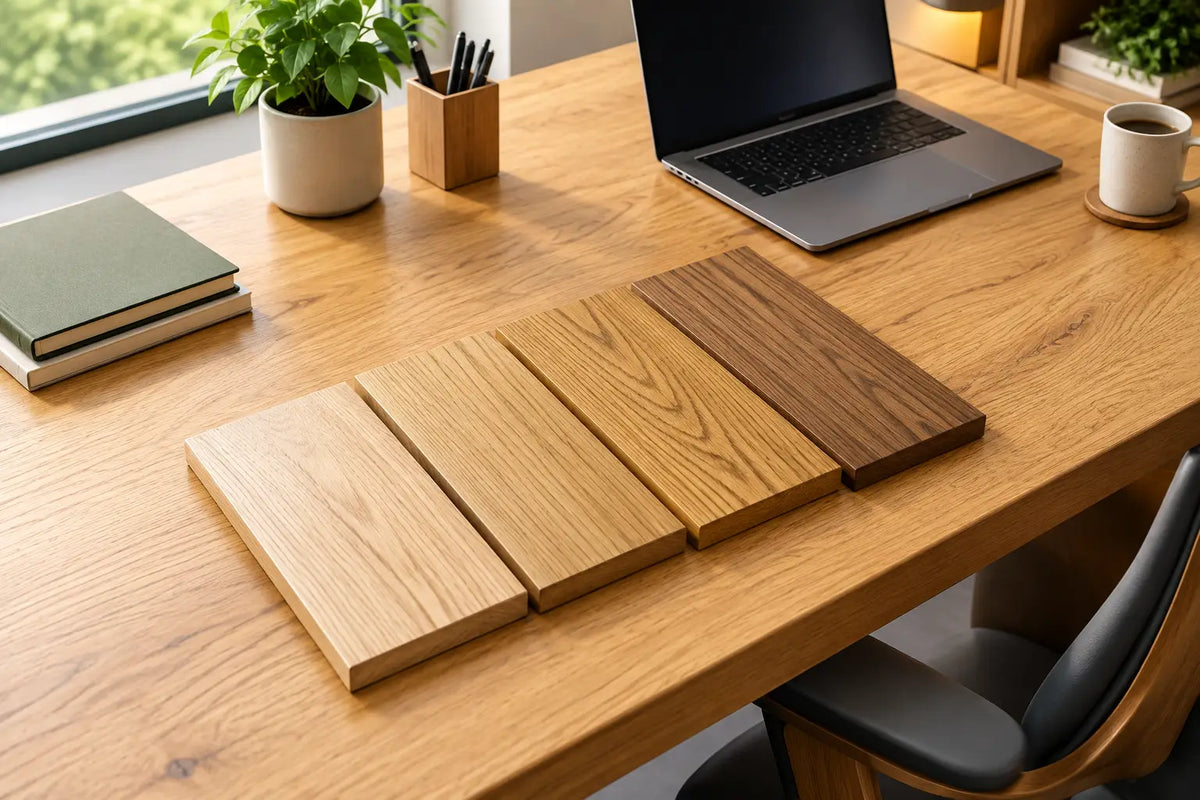
Colour matters too. Oak ranges from pale honey tones to deeper, warmer brown. Natural variation between boards is expected, and exposure to daylight gradually develops the timber's tone. Matching accessories in oak can create a coherent workspace, but exact colour matching is less realistic than a harmonious family of tones.
At OAKO, the appeal of solid European oak lies in this balance: every desk feels individual, while the overall design remains controlled, functional and built for years of work.
How to care for oak without flattening its character
Oak does not need complicated rituals, but it benefits from sensible daily care. Wipe spills promptly with a soft, lightly damp cloth, then dry the area. Avoid harsh household cleaners, abrasive pads and excessive water, which can strip or dull the protective finish.
Use coasters for hot drinks and consider a desk mat where you write, draw or move equipment frequently. A desk mat protects one area, but it should not become an excuse to ignore the rest of the surface. Let the oak remain visible and let it do the work it was chosen to do: bring material depth to the room.
Keep the desk away from direct, intense heat sources and avoid placing it where one side receives dramatically more sunlight than the other. Even, stable conditions help the wood age gracefully. If the surface is oiled, periodic re-oiling may be appropriate depending on use, finish and the manufacturer's care guidance. The aim is not to make oak look new forever. It is to protect it while allowing a well-used patina to emerge.
Look closely before you choose
When comparing solid oak desks, ask what the surface is actually made from. Veneer, laminate and solid wood can all have a place, but they offer different experiences. A printed oak effect delivers consistency. A thin oak veneer brings some real timber to the surface. A solid oak top provides depth, repairability and a relationship with the material that becomes more rewarding over time.
Then look beyond the headline species. Notice the board width, grain matching, edge treatment, finish and thickness. Ask whether knots are filled and stabilised, whether the top is built to accommodate wood movement, and how its natural variation is presented. These details reveal whether oak has been treated as a design shortcut or as the main event.
Choose the grain that makes you want to sit down, clear the surface and begin. The best oak desk does not need to look identical to every other one. It needs to feel right in your room, support the way you work, and acquire more character with every year it is used.


Laisser un commentaire
Ce site est protégé par hCaptcha, et la Politique de confidentialité et les Conditions de service de hCaptcha s’appliquent.