


A small room does not need a small ambition. The right oak desk for small spaces can turn an unused wall, a corner of the living room or a compact spare bedroom into a workspace with real presence. The key is not simply buying the narrowest desk available. It is choosing proportions, materials and ergonomic features that allow the space to work harder without making it feel crowded.
Solid oak is particularly suited to this task. Its natural grain brings warmth and visual depth to a room that may otherwise be defined by screens, cables and practical compromises. Paired with a refined steel standing-desk frame, it gives a compact workspace the substance of considered furniture rather than the temporary feel of a work-from-home fix.
Choosing an oak desk for small spaces
Start with the room, not the desk. Measure the available wall or corner at floor level, then consider how the chair moves when you sit down and stand up. A desk can technically fit in a space and still make daily use frustrating if it blocks a pathway, interferes with a door or leaves no room to pull out a chair.
For most compact home offices, a desktop width of 100 to 120 cm is a strong starting point. It offers enough space for a laptop, a monitor or two, and a notebook without taking over the room. A 60 cm depth is often the sensible minimum for screen work, while 70 cm gives more breathing room if you use a larger monitor, keyboard and mouse. If your work is mainly laptop-based, a shallower top can be an elegant answer, provided your posture remains well supported.
Height-adjustability deserves as much attention as dimensions. In a smaller home, one desk may serve several roles: focused work during the day, household administration in the evening, and a clear surface again when guests arrive. A dual-motor standing frame lets the desk adapt to you rather than asking you to accept a fixed working position. That flexibility is not a luxury when you spend long hours at the same compact workstation.
Leave room for the person, not only the furniture
A common mistake is measuring the tabletop but forgetting the human space around it. Allow roughly 80 to 90 cm behind the chair where possible. If the desk sits in a circulation route, consider placing it against a wall rather than floating it in the room. This keeps the visual line open and makes the room easier to move through.
Corners can be effective, but only when they are genuinely useful. A desk placed diagonally in a corner often wastes more floor area than a simple rectangular desk along one wall. Before committing, mark the footprint on the floor with masking tape. It is a modest step that can prevent a costly mismatch between an attractive product image and the reality of your flat.
Let the desk look lighter than it is
Small spaces benefit from furniture with visual calm. This does not mean choosing flimsy furniture. It means selecting a desk with a clean silhouette, controlled proportions and materials that age well. A solid oak tabletop has weight and character, while a slim, considered frame keeps the overall composition open.
Oak also has a useful quality in Nordic and Danish interiors: it relates naturally to other materials. It sits comfortably beside pale walls, linen curtains, wool rugs, black steel details and the softer daylight common in Scandinavian homes. Rather than introducing another cold office surface, it makes the work area feel connected to the rest of the room.
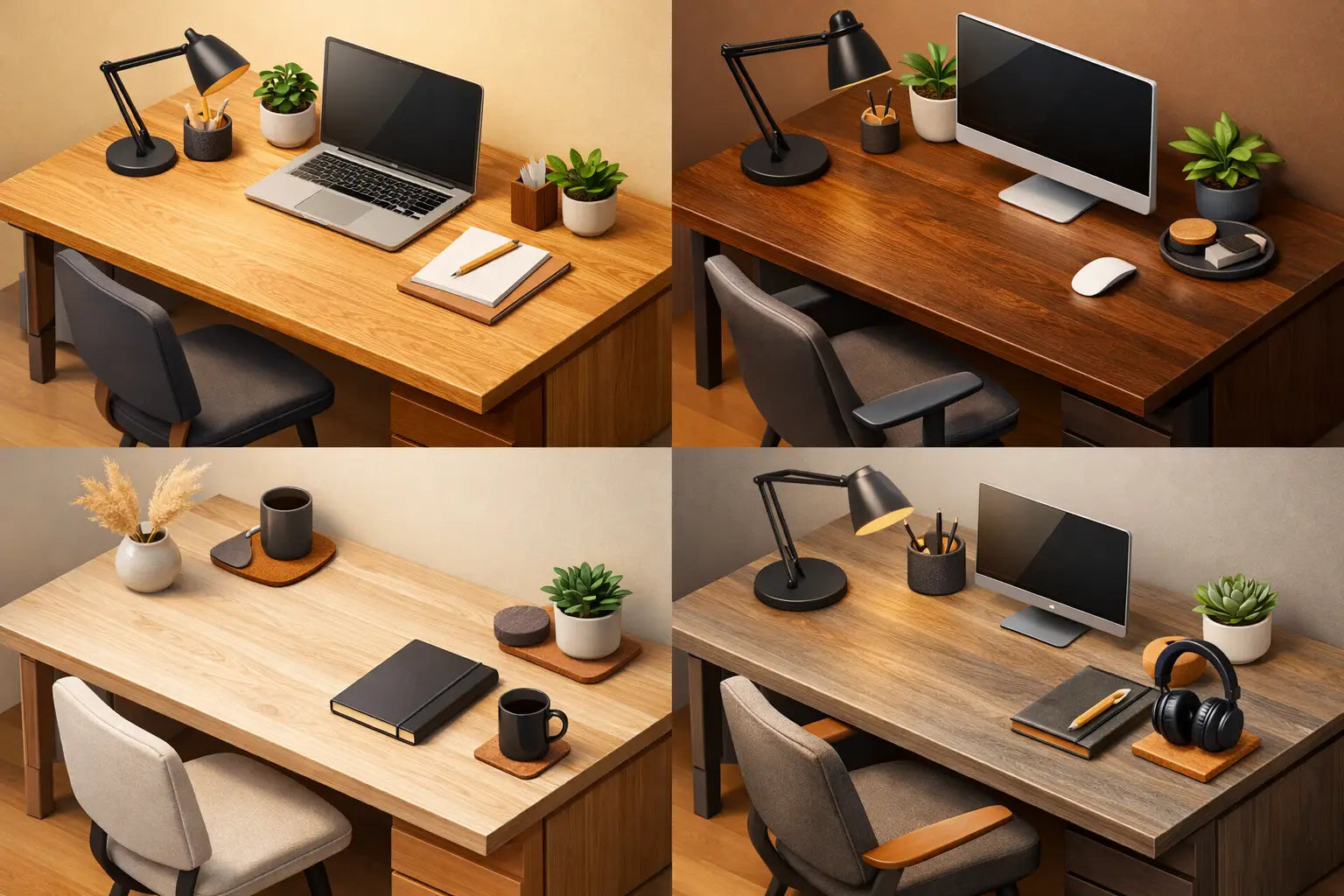
Grain selection matters more in a compact setting because the desk is always in view. A quieter oak top can support a pared-back interior, while a more expressive live edge becomes a deliberate focal point. Neither is automatically better. If the room already has patterned floors, colourful art or visible shelving, a calmer tabletop may create the better balance. In a restrained room, a richer piece of oak can add the depth that prevents the space from feeling anonymous.
Build ergonomics into the smallest footprint
A compact desk should never force a compact posture. The fundamentals still apply: your screen should sit at a height that does not pull your neck forward, your elbows should rest near a 90-degree angle when typing, and your feet should be supported by the floor or a footrest.
With a laptop, this usually means adding a monitor arm or laptop stand and using an external keyboard and mouse. It may seem like extra equipment in a small space, but it often creates more usable surface area than it consumes. Raising the screen frees the desk beneath it for notes, a charging dock or simply a calmer visual field.
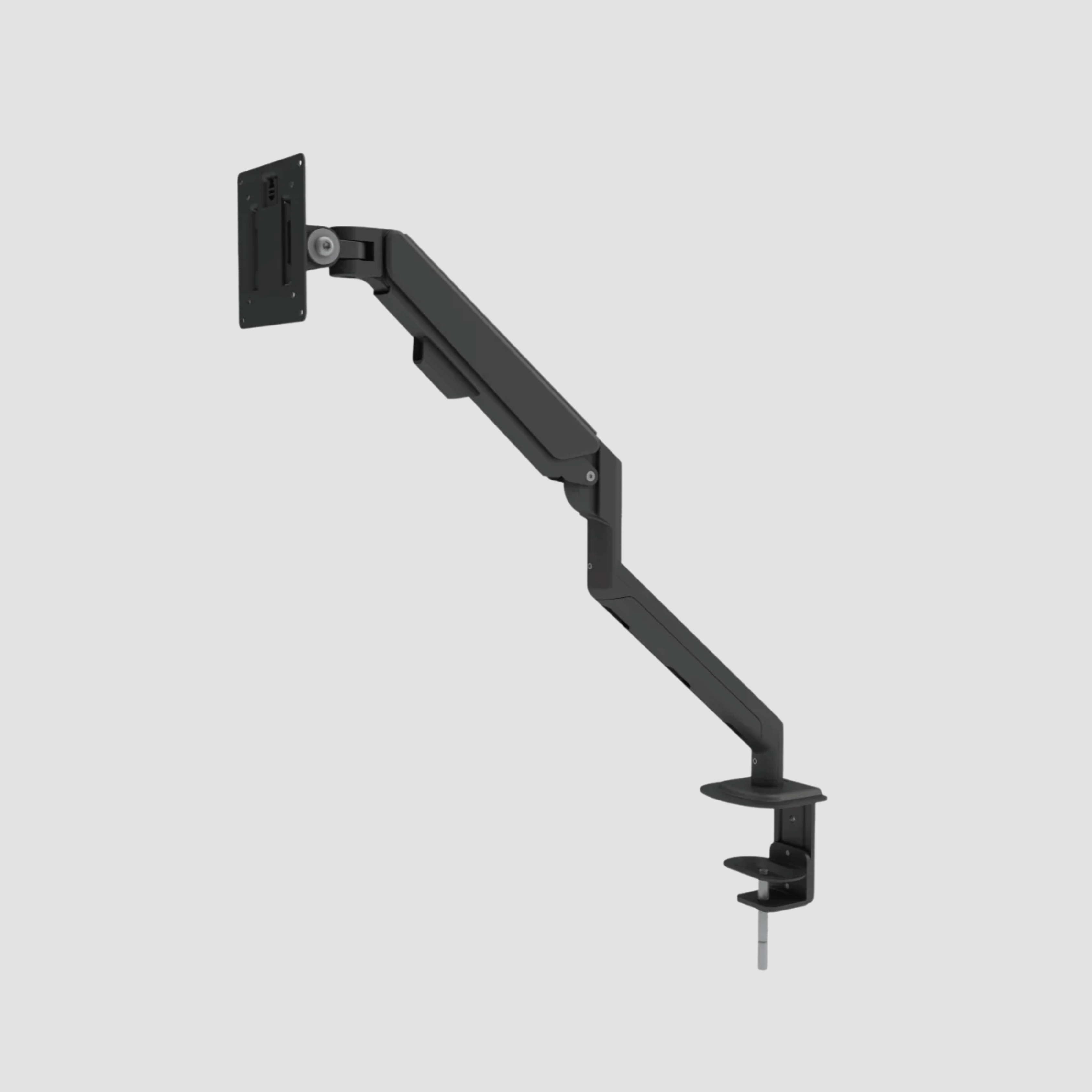
A monitor arm is especially valuable when a desk is narrow. It moves the screen off its original stand, releases desk depth and lets you position the display at a comfortable distance. Choose one that can be pulled close to the wall when you need the room back. Cable management should follow the same principle: keep power strips, chargers and leads beneath the desk or within a cable tray rather than allowing them to gather at floor level.
Standing work is useful in shorter intervals, not as a test of endurance. Alternate between sitting and standing through the day, and use saved height settings if your frame offers them. A supportive chair and an anti-fatigue floor mat can make these changes feel natural rather than disruptive. Good ergonomics is a system, especially where every centimetre has a job to do.
Why solid oak earns its place
There is a practical case for solid oak beyond its appearance. A real wood desk is designed for years of use, not for replacement when its surface begins to show the first signs of working life. Oak develops character over time. Small marks and changes in tone become part of the material rather than evidence that the desk has reached its limit.
That longevity matters in a small home. Furniture in a compact room is handled more often, noticed more closely and asked to do more. The desk may be used for work, study, meals, projects and everyday administration. A thick solid oak top has the strength for that reality, while its surface can be cared for and renewed rather than discarded.
The trade-off is weight. Solid oak is not the easiest material to move through a narrow stairwell or rearrange every weekend. Yet that weight is also part of the desk's stability and sense of permanence. Measure access routes before ordering, especially in older Copenhagen buildings with tight turns and smaller lifts. A desk built to last deserves a route into the home that has been considered properly.
Keep the surface intentionally clear
In a limited workspace, organisation is not about hiding everything away. It is about giving necessary objects a defined place. Keep only the tools you use each day within reach: screen, keyboard, mouse, notebook and task lighting. Less frequent items belong in a drawer unit, shelf or closed storage nearby.
Choose accessories that contribute to the desk rather than merely occupying it. A cable tray clears the floor and protects the line of the frame. A compact desk shelf can create a second level for small essentials. A matching oak accessory can bring cohesion, but avoid over-styling. The grain of the desktop needs room to be seen.
Light should be considered early. If possible, position the desk perpendicular to a window to reduce glare while still benefiting from daylight. A focused lamp is useful for darker Danish mornings and evenings, but select one with a compact base or a clamp fitting so it does not sacrifice valuable surface area.
A compact desk can still feel complete
The best small workspace does not announce every compromise. It feels intentional because each choice supports the next: the right desk width, a real oak surface, an adjustable frame, a properly positioned screen and cables kept out of sight. At OAKO Denmark, that meeting of honest material and ergonomic technology is central to how a desk should perform.
Do not choose a desk solely for the square metres it occupies. Choose one for the quality of the hours you will spend there. A well-proportioned oak desk can make even the smallest room feel calmer, more capable and more distinctly your own.


Lämna en kommentar
Denna webbplats är skyddad av hCaptcha och hCaptchas integritetspolicy . Användarvillkor gäller.